












Influence of Si distribution in framework of SAPO-34 and its particle size on propylene selectivity and production rate for conversion of ethylene to propylene
Literature Information
Publication Date
2009-08-17
DOI
10.1039/B911659A
Impact Factor
3.676
Authors
Yasuyoshi Iwase, Ken Motokura, To-ru Koyama, Akimitsu Miyaji, Toshihide Baba
View Original
Abstract
To investigate the effect of SAPO-34 particle size (with a fixed Si mole fraction in its framework) and that of the Si mole fraction (in a SAPO-34 framework with fixed particle size) on propylene selectivity and production rate for the conversion of ethylene to propylene, SAPO-34 was prepared by hydrothermal synthesis using tetraethyl ammonium hydroxide or morpholine as a structural agent. The conversion of ethylene was carried out at 473 K using SAPO-34. The selectivity for propylene, the rate of propylene production, and the lifetime of the catalyst were strongly influenced by the catalyst crystal size. The SAPO-34 with a ∼2.5 μm particle size had the highest selectivity for propylene (∼80%) up to a high conversion of ethylene (∼70%), while SAPO-34 with smaller particles had a longer catalyst lifetime, implying that catalyst deactivation was suppressed. The mole fraction of Si in the SAPO-34 framework with fixed particle size had little influence on the selectivity for propylene, indicating that the acid strength of SAPO-34 is independent of the Si mole fraction and all protons in SAPO-34 behave equivalently. Furthermore, the acid strength of protons determined by the measurements of NH3-TPD (temperature-programmed desorption) spectra did not depend on either the Si mole fraction or the SAPO-34 particle size. This result was also evident in the cracking rate of n-butane, which increased proportionally with increasing number of protons in SAPO-34.The number of protons generated by the incorporation of Si4+ into the SAPO-34 lattice increased proportionally, up to one Si atom introduced into every cage of SAPO-34, but did not continue to increase with further introduction of Si4+ into the lattice.
Recommended Journals
Related Literature
Mechanical and vibrational characterization of amyloid-like HET-s nanosheets based on the skewed plate theory
Hyun Joon Chang, Myeongsang Lee, Jae In Kim, Sungsoo Na
2017-04-03
Paper
DOI: 10.1039/C7CP01418J
Single-layer MoS2 formation by sulfidation of molybdenum oxides in different oxidation states on Au(111)
Norberto Salazar, Igor Beinik, Jeppe V. Lauritsen
2017-04-20
Paper
DOI: 10.1039/C7CP00958E
Identifying electrochemical effects in a thermal–electrochemical co-driven system for CO2 capture
Guang X. Liu, Yun S. Yu, Ying T. Hong, Geoff G. X. Wang
2017-04-25
Paper
DOI: 10.1039/C7CP01035D
Modulation of the electronic and mechanical properties of phagraphene via hydrogenation and fluorination
Houyang Chen
2017-02-28
Paper
DOI: 10.1039/C6CP08621G
Atomistic non-adiabatic dynamics of the LH2 complex with a GPU-accelerated ab initio exciton model
Clem Stross, Simon McIntosh-Smith, Edward G. Hohenstein, Fred R. Manby
2017-03-28
Paper
DOI: 10.1039/C7CP00492C
Electronic characterization of Geobacter sulfurreducens pilins in self-assembled monolayers unmasks tunnelling and hopping conduction pathways
Krista M. Cosert, Rebecca J. Steidl, Angelines Castro-Forero, Robert M. Worden, Gemma Reguera
2017-03-30
Paper
DOI: 10.1039/C7CP00885F
Impact of lipid composition and photosensitizer hydrophobicity on the efficiency of light-triggered liposomal release
Julien Massiot, Ali Makky, Florent Di Meo, David Chapron, Véronique Rosilio
2017-04-04
Paper
DOI: 10.1039/C7CP00983F
Effect of ion–ligand binding on ion pairing dynamics studied by two-dimensional infrared spectroscopy
YoungAh Kwon, Junho Lee, Sungnam Park
2017-03-24
Paper
DOI: 10.1039/C6CP08852J
Delineating the role of ripples on the thermal expansion of 2D honeycomb materials: graphene, 2D h-BN and monolayer (ML)-MoS2
P. Anees, M. C. Valsakumar, B. K. Panigrahi
2017-03-24
Paper
DOI: 10.1039/C6CP08635G
Surface chemistry of propanal, 2-propenol, and 1-propanol on Ru(001)
Dominic A. Esan, Michael Trenary
2017-03-06
Paper
DOI: 10.1039/C6CP08893G
You might also like
Compound Q&A
How should waste containing N-Methoxy-N-methyl-1,3-thiazole-5-carboxamide (CAS: 898825-89-3) be handled?
Waste containing N-Methoxy-N-methyl-1,3-thiazole-5-carboxamide (CAS: 898825-89-3...
898825-89-3N-Methoxy-N-methyl-1...
Compound Q&A
How should N-(4-Biphenylyl)dibenzo[b,d]furan-4-amine (CAS: 1318338-47-4) be stored?
N-(4-Biphenylyl)dibenzo[b,d]furan-4-amine should be stored in a tightly sealed c...
1318338-47-4N-(4-Biphenylyl)dibe...
Compound Q&A
What is the market or research trend for 3-Acetamido-5-amino-2,4,6-triiodobenzoic acid (CAS: 1713-07-1)?
The market for 3-Acetamido-5-amino-2,4,6-triiodobenzoic acid (CAS: 1713-07-1) is...
1713-07-13-Acetamido-5-amino-...
Compound Q&A
How should Benzyl 2-O-acetyl-3,4,6-tri-O-benzyl-beta-D-galactopyranoside (CAS: 61820-03-9) be stored?
Benzyl 2-O-acetyl-3,4,6-tri-O-benzyl-beta-D-galactopyranoside (CAS: 61820-03-9) ...
61820-03-9Benzyl 2-O-acetyl-3,...
Compound Q&A
What regulatory guidelines apply to 2-Ethylpiperazine dihydrochloride (CAS: 438050-52-3)?
2-Ethylpiperazine dihydrochloride (CAS: 438050-52-3) is regulated under the Glob...
438050-52-32-Ethylpiperazine di...
Compound Q&A
What regulatory guidelines apply to 1,1'-[1,3-Phenylenebis(methylene)]bis(3-methyl-1H-pyrrole-2,5-dione) (CAS: 119462-56-5)?
1,1'-[1,3-Phenylenebis(methylene)]bis(3-methyl-1H-pyrrole-2,5-dione) (CAS: 11946...
119462-56-51,1'-[1,3-Phenyleneb...
Compound Q&A
Are there alternatives to 5-Fluoro-2-(1-pyrrolidinyl)pyridine (CAS: 1287217-79-1) in synthesis?
Several alternatives can be used in the synthesis of 5-Fluoro-2-(1-pyrrolidinyl)...
1287217-79-15-Fluoro-2-(1-pyrrol...
Compound Q&A
What precautions should be taken when handling 1-((2R,3R,4R,5R)-5-((bis(4-methoxyphenyl)(phenyl)methoxy)methyl)-4-hydroxy-3-methoxytetrahydrofuran-2-yl)-5-methylpyrimidine-2,4(1H,3H)-dione (CAS: 153631-19-7)?
Proper personal protective equipment (PPE) must be worn when handling this compo...
153631-19-71-((2R,3R,4R,5R)-5-(...
Compound Q&A
What precautions should be taken when handling 6-Bromoimidazo[1,2-a]pyridin-8-amine (CAS: 676371-00-9)?
When handling 6-Bromoimidazo[1,2-a]pyridin-8-amine, it is important to wear appr...
676371-00-96-Bromoimidazo[1,2-a...
Compound Q&A
Are there alternatives to (2S,4R)-4-(4-Nitrobenzyl)pyrrolidine-2-carboxylic acid hydrochloride (CAS: 1049740-22-8) in synthesis?
Alternatives to (2S,4R)-4-(4-Nitrobenzyl)pyrrolidine-2-carboxylic acid hydrochlo...
1049740-22-8(2S,4R)-4-(4-Nitrobe...
Source Journal
Physical Chemistry Chemical Physics

CiteScore:
5.5
Self-citation Rate:
10.3%
Articles per Year:
3036
Physical Chemistry Chemical Physics (PCCP) is an international journal co-owned by 19 physical chemistry and physics societies from around the world. This journal publishes original, cutting-edge research in physical chemistry, chemical physics and biophysical chemistry. To be suitable for publication in PCCP, articles must include significant innovation and/or insight into physical chemistry; this is the most important criterion that reviewers and Editors will judge against when evaluating submissions. The journal has a broad scope and welcomes contributions spanning experiment, theory, computation and data science. Topical coverage includes spectroscopy, dynamics, kinetics, statistical mechanics, thermodynamics, electrochemistry, catalysis, surface science, quantum mechanics, quantum computing and machine learning. Interdisciplinary research areas such as polymers and soft matter, materials, nanoscience, energy, surfaces/interfaces, and biophysical chemistry are welcomed if they demonstrate significant innovation and/or insight into physical chemistry. Joined experimental/theoretical studies are particularly appreciated when complementary and based on up-to-date approaches.
Recommended Compounds

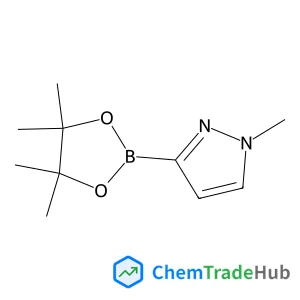
1-Methyl-3-(4,4,5,5-tetramethyl-1,3,2-dioxaborolan-2-yl)-1H-pyrazole
CAS Number:
1020174-04-2
Molecular Formula:
C10H17BN2O2
![4-{2-[4-(2-Methyl-2-propanyl)phenyl]ethoxy}quinazoline structure](https://static.chemtradehub.com/structs/120/120928-09-8-d3db.webp "4-{2-[4-(2-Methyl-2-propanyl)phenyl]ethoxy}quinazoline structure")
4-{2-[4-(2-Methyl-2-propanyl)phenyl]ethoxy}quinazoline
CAS Number:
120928-09-8
Molecular Formula:
C20H22N2O
Recommended Suppliers





Disclaimer
This page provides academic journal information for reference and research purposes only. We are not affiliated with any journal publishers and do not handle publication submissions. For publication-related inquiries, please contact the respective journal publishers directly.
If you notice any inaccuracies in the information displayed, please contact us at support@chemtradehub.com. We will promptly review and address your concerns.