












![[4-Amino-2-(methylsulfanyl)-5-pyrimidinyl]methanol structure](https://static.chemtradehub.com/structs/588/588-36-3-fc73.webp "[4-Amino-2-(methylsulfanyl)-5-pyrimidinyl]methanol structure")
Mesomorphic properties of the neat enantiomers of a chiral pyramidic liquid crystal
Literature Information
Publication Date
2009-08-20
DOI
10.1039/B908029P
Impact Factor
3.676
Authors
Zeev Luz, Raphy Poupko, Ellen J. Wachtel, Herbert Zimmermann
View Original
Abstract
The crown form of nona-octanoyloxy tribenzocyclononatriene (C8) with C3 symmetry was prepared and separated into its enantiomers (C8A and C8B) by HPLC. Like the racemate, the neat enantiomers are also mesogenic, exhibiting two mesophases, M and Colh. Differential scanning calorimetry, X-ray diffraction, carbon-13 NMR and UV circular dichroism are used to study the structural and dynamic properties of these chiral mesophases. The high-temperature mesophase (Colh) was identified by X-ray diffraction as columnar hexagonal; this phase is thermally unstable, undergoing racemization on heating before its clearing point is reached. The low-temperature mesophase (M) is most likely also columnar, but its symmetry could not be determined. In comparison with the racemate, the chiral mesophases are less well ordered, more tightly packed and they have a lower tendency to crystallize. On the other hand they are considerably more mobile, as reflected in their NMR spectra. No helical structure has been identified in the X-ray diffraction of the mesophases.
Related Literature
Electrode potential dependent desolvation and resolvation of germanium(100) in contact with aqueous perchlorate electrolytes
Fang Niu, Rainer Schulz, Arcesio Castañeda Medina, Rochus Schmid
2017-05-10
Paper
DOI: 10.1039/C6CP08908A
Molecular dynamics simulations of solvent-exfoliation and stabilization of graphene with the assistance of compressed carbon dioxide and pyrene–polyethylene glycol
Xiaodan Xu, Lu Cai, Xiaoli Zheng, Qun Xu
2017-05-31
Paper
DOI: 10.1039/C7CP01277B
Metal-free spin and spin-gapless semiconducting heterobilayers: monolayer boron carbonitrides on hexagonal boron nitride
Hongyu Zhang, Yuanyuan Sun, Yingchun Ding, Jie Chen, Youwei Du, Nujiang Tang
2017-05-08
Paper
DOI: 10.1039/C7CP01088E
The effect of Y3+ substitution on the structural, optical band-gap, and magnetic properties of cobalt ferrite nanoparticles
H. V. S. Pessoni, A. Franco Jr.
2017-06-01
Paper
DOI: 10.1039/C7CP02167D
Editorial of the PCCP themed issue on “Physical Chemistry for Life Sciences”
Christoph van Wüllen, Kirsten Schwing, Christoph Riehn, Markus Gerhards
2017-04-19
Editorial
DOI: 10.1039/C7CP90069D
Phonons spreading from laser-heated gold nanoparticle array accelerate diffusion of excitons in an underlying polythiophene thin film
David Rais, Miroslav Menšík, Bartosz Paruzel, Dharmalingam Kurunthu, Jiří Pfleger
2017-03-24
Paper
DOI: 10.1039/C7CP00286F
Rovibrational spectroscopic constants of the interaction between ammonia and metallo-phthalocyanines: a theoretical protocol for ammonia sensor design
Daniel F. S. Machado, Valter H. Carvalho-Silva, Leonardo G. Paterno, Heibbe Cristhian B. de Oliveira
2017-02-15
Paper
DOI: 10.1039/C6CP07900H
Electron transfer in silicon-bridged adjacent chromophores: the source for blue-green emission
Malgorzata Bayda, Gonzalo Angulo, Jerzy Karolczak, Jacek Koput, Jacek Dobkowski, Bronislaw Marciniak
2017-04-03
Paper
DOI: 10.1039/C7CP00590C
Unexpected coordination number and phase diagram of niobium diselenide under compression
Zhong-Li Liu, Hong Jia, Rui Li, Xiu-Lu Zhang, Ling-Cang Cai
2017-05-03
Paper
DOI: 10.1039/C7CP00805H
Water-repellent hydrophilic nanogrooves
Yu-Hsuan Weng, I-Fan Hsieh, Yu-Jane Sheng
2017-04-27
Paper
DOI: 10.1039/C7CP01409K
You might also like
Compound Q&A
How should waste containing N-Methoxy-N-methyl-1,3-thiazole-5-carboxamide (CAS: 898825-89-3) be handled?
Waste containing N-Methoxy-N-methyl-1,3-thiazole-5-carboxamide (CAS: 898825-89-3...
898825-89-3N-Methoxy-N-methyl-1...
Compound Q&A
How should N-(4-Biphenylyl)dibenzo[b,d]furan-4-amine (CAS: 1318338-47-4) be stored?
N-(4-Biphenylyl)dibenzo[b,d]furan-4-amine should be stored in a tightly sealed c...
1318338-47-4N-(4-Biphenylyl)dibe...
Compound Q&A
What is the market or research trend for 3-Acetamido-5-amino-2,4,6-triiodobenzoic acid (CAS: 1713-07-1)?
The market for 3-Acetamido-5-amino-2,4,6-triiodobenzoic acid (CAS: 1713-07-1) is...
1713-07-13-Acetamido-5-amino-...
Compound Q&A
How should Benzyl 2-O-acetyl-3,4,6-tri-O-benzyl-beta-D-galactopyranoside (CAS: 61820-03-9) be stored?
Benzyl 2-O-acetyl-3,4,6-tri-O-benzyl-beta-D-galactopyranoside (CAS: 61820-03-9) ...
61820-03-9Benzyl 2-O-acetyl-3,...
Compound Q&A
What regulatory guidelines apply to 2-Ethylpiperazine dihydrochloride (CAS: 438050-52-3)?
2-Ethylpiperazine dihydrochloride (CAS: 438050-52-3) is regulated under the Glob...
438050-52-32-Ethylpiperazine di...
Compound Q&A
What regulatory guidelines apply to 1,1'-[1,3-Phenylenebis(methylene)]bis(3-methyl-1H-pyrrole-2,5-dione) (CAS: 119462-56-5)?
1,1'-[1,3-Phenylenebis(methylene)]bis(3-methyl-1H-pyrrole-2,5-dione) (CAS: 11946...
119462-56-51,1'-[1,3-Phenyleneb...
Compound Q&A
Are there alternatives to 5-Fluoro-2-(1-pyrrolidinyl)pyridine (CAS: 1287217-79-1) in synthesis?
Several alternatives can be used in the synthesis of 5-Fluoro-2-(1-pyrrolidinyl)...
1287217-79-15-Fluoro-2-(1-pyrrol...
Compound Q&A
What precautions should be taken when handling 1-((2R,3R,4R,5R)-5-((bis(4-methoxyphenyl)(phenyl)methoxy)methyl)-4-hydroxy-3-methoxytetrahydrofuran-2-yl)-5-methylpyrimidine-2,4(1H,3H)-dione (CAS: 153631-19-7)?
Proper personal protective equipment (PPE) must be worn when handling this compo...
153631-19-71-((2R,3R,4R,5R)-5-(...
Compound Q&A
What precautions should be taken when handling 6-Bromoimidazo[1,2-a]pyridin-8-amine (CAS: 676371-00-9)?
When handling 6-Bromoimidazo[1,2-a]pyridin-8-amine, it is important to wear appr...
676371-00-96-Bromoimidazo[1,2-a...
Compound Q&A
Are there alternatives to (2S,4R)-4-(4-Nitrobenzyl)pyrrolidine-2-carboxylic acid hydrochloride (CAS: 1049740-22-8) in synthesis?
Alternatives to (2S,4R)-4-(4-Nitrobenzyl)pyrrolidine-2-carboxylic acid hydrochlo...
1049740-22-8(2S,4R)-4-(4-Nitrobe...
Source Journal
Physical Chemistry Chemical Physics

CiteScore:
5.5
Self-citation Rate:
10.3%
Articles per Year:
3036
Physical Chemistry Chemical Physics (PCCP) is an international journal co-owned by 19 physical chemistry and physics societies from around the world. This journal publishes original, cutting-edge research in physical chemistry, chemical physics and biophysical chemistry. To be suitable for publication in PCCP, articles must include significant innovation and/or insight into physical chemistry; this is the most important criterion that reviewers and Editors will judge against when evaluating submissions. The journal has a broad scope and welcomes contributions spanning experiment, theory, computation and data science. Topical coverage includes spectroscopy, dynamics, kinetics, statistical mechanics, thermodynamics, electrochemistry, catalysis, surface science, quantum mechanics, quantum computing and machine learning. Interdisciplinary research areas such as polymers and soft matter, materials, nanoscience, energy, surfaces/interfaces, and biophysical chemistry are welcomed if they demonstrate significant innovation and/or insight into physical chemistry. Joined experimental/theoretical studies are particularly appreciated when complementary and based on up-to-date approaches.
Recommended Compounds

(3beta,7beta,12beta)-3,7,12-Trihydroxy-11,15,23-trioxolanost-8-en-26-oic acid
CAS Number:
98665-22-6
Molecular Formula:
C30H44O8
![[4-(Heptyloxy)phenyl]boronic acid structure](https://static.chemtradehub.com/structs/136/136370-19-9-ad33.webp "[4-(Heptyloxy)phenyl]boronic acid structure")

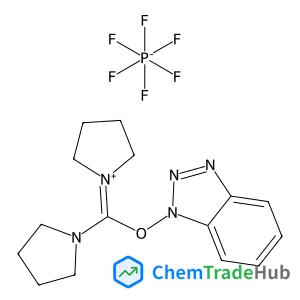
(1H-Benzotriazol-1-yloxy)(di-1-pyrrolidinyl)methylium hexafluorophosphate
CAS Number:
105379-24-6
Molecular Formula:
C15H21F6N5OP
Recommended Suppliers




Disclaimer
This page provides academic journal information for reference and research purposes only. We are not affiliated with any journal publishers and do not handle publication submissions. For publication-related inquiries, please contact the respective journal publishers directly.
If you notice any inaccuracies in the information displayed, please contact us at support@chemtradehub.com. We will promptly review and address your concerns.