













Contents and Chemical Biology
Literature Information
Publication Date
DOI
10.1039/B903899J
Impact Factor
0
Authors
View Original
Abstract
The first page of this article is displayed as the abstract.
Recommended Journals
Related Literature
Fabrication of reusable sensor for detection of Cu2+ in an aqueous solution using a self-assembled monolayer with surface plasmon resonance spectroscopy
Taewook Kang, Surin Hong, Jungwoo Moon, Seogil Oh, Jongheop Yi
2005-06-15
Communication
DOI: 10.1039/B504064G
Infrared spectroscopic determination of the degree of charge transfer in complexes of TCNE with methyl-substituted benzenes
John C. Stires, IV, Emily J. McLaurin, Clifford P. Kubiak
2005-06-09
Communication
DOI: 10.1039/B504416B
Hydrogen bond mediated open-frame networks in coordination polymers: supramolecular assemblies of Pr(iii) and 3,5-dinitro-4-methylbenzoic acid with aza-donor compounds
Sunil Varughese, V. R. Pedireddi
2005-02-07
Communication
DOI: 10.1039/B417754A
Polyethyl substituted weakly coordinating carborane anions: a sequential dehydrogenative borylation–hydrogenation route
Eduardo Molinos, Gabriele Kociok-Köhn, Andrew S. Weller
2005-06-09
Communication
DOI: 10.1039/B504630K
The measurement of the fluorescence detected circular dichroism (FDCD) from a chiral Eu(iii) system
Gilles Muller, Françoise C. Muller, Christine L. Maupin, James P. Riehl
2005-06-09
Communication
DOI: 10.1039/B504421A
Rich chemistry of nitroso compounds
Hisashi Yamamoto, Norie Momiyama
2005-06-24
Feature Article
DOI: 10.1039/B503212C
You might also like
Compound Q&A
What is Ethyl 3-cyclohexylpropanoate (CAS: 10094-36-7)?
Ethyl 3-cyclohexylpropanoate is a clear, colorless to light yellow liquid with a...
10094-36-7Ethyl 3-cyclohexylpr...
Compound Q&A
How should waste containing 2-(Hydroxymethyl)-5-(methoxycarbonyl)-6-methyl-4-(2-nitrophenyl)nicotinic acid (CAS: 34783-31-8) be handled?
Waste containing 2-(Hydroxymethyl)-5-(methoxycarbonyl)-6-methyl-4-(2-nitrophenyl...
34783-31-82-(Hydroxymethyl)-5-...
Compound Q&A
How should waste containing 2,4,6-Tris(pentafluoroethyl)-1,3,5-triazine (CAS: 858-46-8) be handled?
Waste containing 2,4,6-Tris(pentafluoroethyl)-1,3,5-triazine (CAS: 858-46-8) sho...
858-46-82,4,6-Tris(pentafluo...
Compound Q&A
What precautions should be taken when handling Chloroac-nle-oh (CAS: 56787-36-1)?
When handling Chloroac-nle-oh (CAS: 56787-36-1), it is essential to wear appropr...
56787-36-1Chloroac-nle-oh
Compound Q&A
What industries use Ethyl 6-phenylimidazo[2,1-b][1,3]thiazole-3-carboxylate (CAS: 752244-05-6)?
Ethyl 6-phenylimidazo[2,1-b][1,3]thiazole-3-carboxylate is primarily used in the...
752244-05-6Ethyl 6-phenylimidaz...
Compound Q&A
Are there alternatives to alpha-(2-Bromophenyl)benzylamine (CAS: 55095-15-3) in synthesis?
Alternatives to alpha-(2-Bromophenyl)benzylamine (CAS: 55095-15-3) in synthesis ...
55095-15-3alpha-(2-Bromophenyl...
Compound Q&A
How should waste containing 2-Chloro-5-methoxypyridine (CAS: 139585-48-1) be handled?
Waste containing 2-Chloro-5-methoxypyridine (CAS: 139585-48-1) should be managed...
139585-48-12-Chloro-5-methoxypy...
Compound Q&A
What industries use 1-(4-Methoxyphenyl)-2,5-dimethyl-1H-pyrrole (CAS: 5044-27-9)?
1-(4-Methoxyphenyl)-2,5-dimethyl-1H-pyrrole (CAS: 5044-27-9) is used in various ...
5044-27-91-(4-Methoxyphenyl)-...
Compound Q&A
Are there alternatives to 3-Bromo-5-(N-Boc)aminomethylisoxazole (CAS: 903131-45-3) in synthesis?
There are alternative reagents and compounds that can be used in the synthesis o...
903131-45-33-Bromo-5-(N-Boc)ami...
Compound Q&A
What is Tungsten(IV) oxide (CAS: 12036-22-5)?
Tungsten(IV) oxide, also known as tungsten dioxide, is a chemical compound with ...
12036-22-5Tungsten(IV) oxide
Source Journal
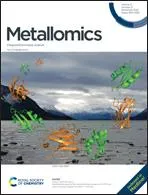
Metallomics
CiteScore:
7
Self-citation Rate:
6.9%
Articles per Year:
77
Metallomics publishes cutting-edge investigations aimed at elucidating the identification, distribution, dynamics, role and impact of metals and metalloids in biological systems. Studies that address the “what, where, when, how and why” of these inorganic elements in cells, tissues, organisms, and various environmental niches are welcome, especially those employing multidisciplinary approaches drawn from the analytical, bioinorganic, medicinal, environmental, biophysical, cell biology, plant biology and chemical biology communities. We are particularly interested in articles that enhance our chemical and/or physical understanding of the molecular mechanisms of metal-dependent life processes, and those that probe the common space between metallomics and other ‘omics approaches to uncover new insights into biological processes. Metallomics seeks to position itself at the forefront of those advances in analytical chemistry destined to clarify the enormous complexity of biological systems. As such, we particularly welcome those papers that outline cutting-edge analytical technologies, e.g., in the development and application of powerful new imaging, spectroscopic and mass spectrometric modalities. Work that describes new insights into metal speciation, trafficking and dynamics in complex systems or as a function of microenvironment are also strongly encouraged. Studies that examine the interconnectivity of metal-dependent processes with systems level responses relevant to organismal health or disease are also strongly encouraged, for example those that probe the effect of chemical exposure on metal homeostasis or the impact of metal-based drugs on cellular processes.
Recommended Compounds



Recommended Suppliers



Disclaimer
This page provides academic journal information for reference and research purposes only. We are not affiliated with any journal publishers and do not handle publication submissions. For publication-related inquiries, please contact the respective journal publishers directly.
If you notice any inaccuracies in the information displayed, please contact us at support@chemtradehub.com. We will promptly review and address your concerns.