












Effect of microwave irradiation on covalent ligand–DNA interactions
Literature Information
Publication Date
2009-04-03
DOI
10.1039/B902357G
Impact Factor
6.222
Authors
Khondaker M. Rahman, David E. Thurston
View Original
Abstract
A 30 second burst of microwave irradiation at an energy level insufficient to cause DNA denaturation or damage drives the covalent reaction between pyrrolobenzodiazepine (PBD) antitumour agents and double-stranded or hairpin oligonucleotides to completion, a process that normally takes between 3–24 hours and thus offering the opportunity for higher-throughput screening of covalent-binding DNA-interactive agents.
Related Literature
Impact of long-range van der Waals forces on chiral recognition in a Cinchona alkaloid chiral selector system
Petr Milko, Jana Roithová, Kevin A. Schug, Karel Lemr
2013-03-18
Paper
DOI: 10.1039/C3CP44444A
TiO2nanowire electron transport pathways inside organic photovoltaics
Pinyi Yang, Diane K. Zhong, Mingjian Yuan, Andrew H. Rice, Daniel R. Gamelin, Christine K. Luscombe
2013-02-01
Paper
DOI: 10.1039/C3CP50325A
Towards a lattice-matching solid-state battery: synthesis of a new class of lithium-ion conductors with the spinel structure
Fabio Rosciano, Paolo P. Pescarmona, Kristof Houthoofd, Andre Persoons, Patrick Bottke, Martin Wilkening
2013-02-25
Paper
DOI: 10.1039/C3CP50803J
Stability, surface features, and atom leaching of palladium nanoparticles: toward prediction of catalytic functionality
Hadi Ramezani-Dakhel, Peter A. Mirau, Rajesh R. Naik, Marc R. Knecht, Hendrik Heinz
2013-03-04
Communication
DOI: 10.1039/C3CP00135K
Electric-field induced mutation of DNA: a theoretical investigation of the GC base pair
José P. Cerón-Carrasco
2012-12-14
Paper
DOI: 10.1039/C2CP44066K
Molecular sentinel-on-chip for SERS-based biosensing
Anuj Dhawan, Yan Du, Dale Batchelor, Donovan N. Leonard, Veena Misra
2013-02-20
Paper
DOI: 10.1039/C3CP00076A
A model theoretical study on ligand exchange reactions of CooA
Toshimasa Ishida, Shigetoshi Aono
2013-03-20
Paper
DOI: 10.1039/C3CP43253J
High-precision measurement-based correlation studies among atomic force microscopy, Rayleigh scattering, and surface-enhanced Raman scattering at the single-molecule level
Hae Mi Lee, Jung-Hoon Lee, Hyung Min Kim, Seung Min Jin, Hyo Sun Park, Jwa-Min Nam, Yung Doug Suh
2013-01-08
Paper
DOI: 10.1039/C3CP43817A
You might also like
Compound Q&A
How should waste containing (6-Bromo-2-naphthyl)oxy](dimethyl)(2-methyl-2-propanyl)silane be handled?
Waste containing (6-Bromo-2-naphthyl)oxy](dimethyl)(2-methyl-2-propanyl)silane (...
100751-65-3[(6-Bromo-2-naphthyl...
Compound Q&A
How is 7-Fluoro-4-isoquinolinecarboxylic acid (CAS: 1841081-40-0) typically synthesized?
7-Fluoro-4-isoquinolinecarboxylic acid can be synthesized via a multi-step proce...
1841081-40-07-Fluoro-4-isoquinol...
Compound Q&A
What are the physical and chemical properties of 2,3,5,6-Tetrabromothieno[3,2-b]thiophene (CAS: 124638-53-5)?
2,3,5,6-Tetrabromothieno[3,2-b]thiophene is a crystalline compound with a high m...
124638-53-52,3,5,6-Tetrabromoth...
Compound Q&A
Is 1-[4-(Benzylamino)-7,8-dihydro-5H-pyrano[4,3-d]pyrimidin-2-yl]-2-methyl-1H-indole-4-carboxamide (CAS: 1542705-92-9) safe?
1-[4-(Benzylamino)-7,8-dihydro-5H-pyrano[4,3-d]pyrimidin-2-yl]-2-methyl-1H-indol...
1542705-92-91-[4-(Benzylamino)-7...
Compound Q&A
What is the market or research trend for imidazo[5,1-d]-1,2,3,5-tetrazine-8-carboxylic acid, 3,4-dihydro-3-methyl-4-oxo- (CAS: 113942-30-6)?
The market for imidazo[5,1-d]-1,2,3,5-tetrazine-8-carboxylic acid, 3,4-dihydro-3...
113942-30-6Imidazo[5,1-d]-1,2,3...
Compound Q&A
What is 3-(Triisopropylsilyl)propiolaldehyde (CAS: 163271-80-5)?
3-(Triisopropylsilyl)propiolaldehyde is a synthetic organic compound with the CA...
163271-80-53-(Triisopropylsilyl...
Compound Q&A
What regulatory guidelines apply to 6-Nitro-2H-1,4-benzoxazin-3(4H)-one (CAS: 81721-87-1)?
6-Nitro-2H-1,4-benzoxazin-3(4H)-one (CAS: 81721-87-1) is subject to various regu...
81721-87-16-Nitro-2H-1,4-benzo...
Compound Q&A
How should waste containing (3-Fluorophenyl)(4-{[(2-methyl-2-propanyl)oxy]carbonyl}-1-piperazinyl)acetic acid (CAS: 885272-91-3) be handled?
Waste containing (3-Fluorophenyl)(4-{[(2-methyl-2-propanyl)oxy]carbonyl}-1-piper...
885272-91-3(3-Fluorophenyl)(4-{...
Compound Q&A
What are the physical and chemical properties of N,N'-4,4'-Biphenyldiyldiisonicotinamide (CAS: 55119-40-9)?
N,N'-4,4'-Biphenyldiyldiisonicotinamide is a white crystalline solid with a mole...
55119-40-9N,N'-4,4'-Biphenyldi...
Compound Q&A
What industries use 6-Bromo-8-fluoro-2-quinazolinol (CAS: 1036756-15-6)?
6-Bromo-8-fluoro-2-quinazolinol is primarily used in the pharmaceutical industry...
1036756-15-66-Bromo-8-fluoro-2-q...
Source Journal
Chemical Communications

CiteScore:
8.6
Self-citation Rate:
4.7%
Articles per Year:
2458
ChemComm publishes urgent research which is of outstanding significance and interest to experts in the field, while also appealing to the journal’s broad chemistry readership. Our communication format is ideally suited to short, urgent studies that are of such importance that they require accelerated publication. Our scope covers all topics in chemistry, and research at the interface of chemistry and other disciplines (such as materials science, nanoscience, physics, engineering and biology) where there is a significant novelty in the chemistry aspects. Major topic areas covered include: Analytical Chemistry Catalysis Chemical Biology and medicinal chemistry Computational Chemistry and Machine Learning Energy and sustainable chemistry Environmental Chemistry Green Chemistry Inorganic Chemistry Materials Chemistry Nanoscience Organic Chemistry Physical Chemistry Polymer Chemistry Supramolecular Chemistry
Recommended Compounds
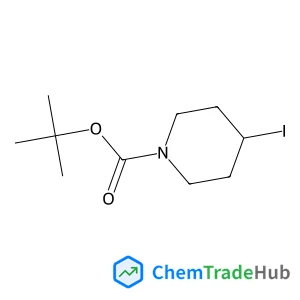
2-Methyl-2-propanyl 4-iodo-1-piperidinecarboxylate
CAS Number:
301673-14-3
Molecular Formula:
C10H18INO2
Recommended Suppliers





Disclaimer
This page provides academic journal information for reference and research purposes only. We are not affiliated with any journal publishers and do not handle publication submissions. For publication-related inquiries, please contact the respective journal publishers directly.
If you notice any inaccuracies in the information displayed, please contact us at support@chemtradehub.com. We will promptly review and address your concerns.