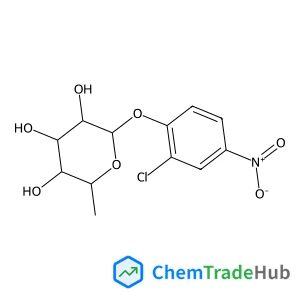
2-Chloro-4-nitrophenyl 6-deoxy-alpha-L-galactopyranoside
CAS Number:
157843-41-9
Molecular Formula:
C12H14ClNO7
Baoshun Liu, Xiujian Zhao, Jiaguo Yu, Akira Fujishima
In the photocatalysis of porous nano-crystalline materials, the transfer of electrons to O2 plays an important role, which includes the electron transport to photocatalytic active centers and successive interfacial transfer to O2. The slowest of them will determine the overall speed of electron transfer in the photocatalysis reaction. Considering the photocatalysis of porous nano-crystalline TiO2 as an example, although some experimental results have shown that the electron kinetics are limited by the interfacial transfer, we still lack the depth of understanding the microscopic mechanism from a theoretical viewpoint. In the present research, a stochastic quasi-equilibrium (QE) theoretical model and a stochastic random walking (RW) model were established to discuss the electron transport and electron interfacial transfer by taking the electron multi-trapping transport and electron interfacial transfer from the photocatalytic active centers to O2 into consideration. By carefully investigating the effect of the electron Fermi level (EF) and the photocatalytic center number on electron transport, we showed that the time taken for an electron to transport to a photocatalytic center predicated by the stochastic RW model was much lower than that predicted by the stochastic QE model, indicating that the electrons cannot reach a QE state during their transport to photocatalytic centers. The stochastic QE model predicted that the electron kinetics of a real photocatalysis for porous nano-crystalline TiO2 should be limited by electron transport, whereas the stochastic RW model showed that the electron kinetics of a real photocatalysis can be limited by the interfacial transfer. Our simulation results show that the stochastic RW model was more in line with the real electron kinetics that have been observed in experiments, therefore it is concluded that the photoinduced electrons cannot reach a QE state before transferring to O2.
(3.beta.)-3-Hydroxy-N,N-dimethyl-chol-5-en-24-amide (CAS: 79066-03-8) is primari...
5-(Aminomethyl)-2-methoxyphenol (CAS: 89702-89-6) is classified under GHS as a s...
Thieno[2,3-c]pyridin-7(6H)-one (CAS: 28981-13-7) is a heterocyclic organic compo...
1-[(6-Methoxy-3-pyridinyl)methyl]-4-piperidinamine dihydrochloride is generally ...
[(2E)-3-Phenyl-2-propen-1-yl]phosphonic acid (CAS: 146404-58-2) is regulated und...
6-Bromo-7-methoxyquinoline (CAS: 1620515-86-7) falls under the scope of the Glob...
This compound is primarily used in the pharmaceutical industry for the developme...
1-Ethyl-7-[2-methyl-6-(4H-1,2,4-triazol-3-yl)-3-pyridinyl]-3,5-dihydropyrazino[2...
Alternative reagents such as 2-[(dimethylamino)methyl]phenylboronic acid or rela...
3-(Piperidin-4-yloxy)pyridine (CAS: 310881-48-2) is an organic compound with the...

Physical Chemistry Chemical Physics (PCCP) is an international journal co-owned by 19 physical chemistry and physics societies from around the world. This journal publishes original, cutting-edge research in physical chemistry, chemical physics and biophysical chemistry. To be suitable for publication in PCCP, articles must include significant innovation and/or insight into physical chemistry; this is the most important criterion that reviewers and Editors will judge against when evaluating submissions. The journal has a broad scope and welcomes contributions spanning experiment, theory, computation and data science. Topical coverage includes spectroscopy, dynamics, kinetics, statistical mechanics, thermodynamics, electrochemistry, catalysis, surface science, quantum mechanics, quantum computing and machine learning. Interdisciplinary research areas such as polymers and soft matter, materials, nanoscience, energy, surfaces/interfaces, and biophysical chemistry are welcomed if they demonstrate significant innovation and/or insight into physical chemistry. Joined experimental/theoretical studies are particularly appreciated when complementary and based on up-to-date approaches.