













Defect structure in lithium-doped polymer-derived SiCN ceramics characterized by Raman and electron paramagnetic resonance spectroscopy
Literature Information
Publication Date
2009-05-05
DOI
10.1039/B822457A
Impact Factor
3.676
Authors
Armin Schulz, Verena Liebau-Kunzmann, Claudia Fasel, Ralf Riedel
View Original
Abstract
Lithium-doped polymer-derived silicon carbonitride ceramics (SiCN : Li) synthesized at various pyrolysis temperatures, have been investigated by means of multifrequency and multipulse electron paramagnetic resonance (EPR) and Raman spectroscopy in order to determine different defect states that may impact the materials electronic properties. In particular, carbon- and silicon-based ‘dangling bonds’ at elevated, as well as metallic networks containing Li0 in the order of 1 μm at low pyrolysis temperatures have been observed in concentrations ranging between 1014 and 1017 spins mg−1.
Recommended Journals
Related Literature
Computational investigations on the catalytic mechanism of maleate isomerase: the role of the active site cysteine residues
Hisham M. Dokainish, Bogdan F. Ion, James W. Gauld
2014-05-08
Paper
DOI: 10.1039/C4CP01342E
Computational study of the Rayleigh light scattering properties of atmospheric pre-nucleation clusters
Jonas Elm, Patrick Norman, Merete Bilde, Kurt V. Mikkelsen
2014-04-15
Paper
DOI: 10.1039/C4CP01206B
Molecular self-assembly at nanometer scale modulated surfaces: trimesic acid on Ag(111), Cu(111) and Ag/Cu(111)
Mahdi Sadeghzadeh Baviloliaei, Lars Diekhöner
2014-04-24
Paper
DOI: 10.1039/C4CP01429D
A conformation-selective IR-UV study of the dipeptides Ac-Phe-Ser-NH2 and Ac-Phe-Cys-NH2: probing the SH⋯O and OH⋯O hydrogen bond interactions
Bin Yan, Sander Jaeqx, Wim J. van der Zande, Anouk M. Rijs
2014-04-23
Paper
DOI: 10.1039/C4CP00810C
Electrochemical properties of oxygenated cup-stacked carbon nanofiber-modified electrodes
Seongjae Ko, Tetsu Tatsuma, Akiyoshi Sakoda, Yasuyuki Sakai, Kikuo Komori
2014-05-12
Paper
DOI: 10.1039/C4CP01278J
Kink energy and kink dipole moments on vicinal Au(001) in halide electrolytes
M. Al-Shakran, G. Beltramo, M. Giesen
2014-03-17
Paper
DOI: 10.1039/C4CP00448E
Efficient water oxidation with organometallic iridium complexes as precatalysts
Anna Lewandowska-Andralojc, Dmitry E. Polyansky, Chiu-Hui Wang, Etsuko Fujita
2014-01-30
Paper
DOI: 10.1039/C3CP55101F
Absolute electron total ionization cross-sections: molecular analogues of DNA and RNA nucleobase and sugar constituents
James N. Bull, Jason W. L. Lee, Claire Vallance
2014-04-03
Paper
DOI: 10.1039/C4CP00490F
Computational investigation of structural and electronic properties of aqueous interfaces of GaN, ZnO, and a GaN/ZnO alloy
Neerav Kharche, Mark S. Hybertsen, James T. Muckerman
2014-03-24
Paper
DOI: 10.1039/C4CP00486H
The nature of coherences in the B820 bacteriochlorophyll dimer revealed by two-dimensional electronic spectroscopy
Marco Ferretti, Vladimir I. Novoderezhkin, Elisabet Romero, Ramunas Augulis, Anjali Pandit, Donatas Zigmantas, Rienk van Grondelle
2013-12-18
Paper
DOI: 10.1039/C3CP54634A
You might also like
Compound Q&A
What precautions should be taken when handling 2-Chloro-1,2-bis(4-methylphenyl)ethanone (CAS: 71193-32-3)?
When handling 2-Chloro-1,2-bis(4-methylphenyl)ethanone (CAS: 71193-32-3), it is ...
71193-32-32-Chloro-1,2-bis(4-m...
Compound Q&A
What industries use 4-Ethoxy-3-(5-methyl-4-oxo-7-propyl-1,4-dihydroimidazo[5,1-f][1,2,4]triazin-2-yl)benzenesulfonyl chloride (CAS: 224789-26-8)?
4-Ethoxy-3-(5-methyl-4-oxo-7-propyl-1,4-dihydroimidazo[5,1-f][1,2,4]triazin-2-yl...
224789-26-84-Ethoxy-3-(5-methyl...
Compound Q&A
How should Methyl 3-Oxo-4-Androsten-17-Carboxylate (CAS: 2681-55-2) be stored?
Methyl 3-Oxo-4-Androsten-17-Carboxylate (CAS: 2681-55-2) should be stored in a c...
2681-55-2Methyl 3-Oxo-4-Andro...
Compound Q&A
What are the main uses of (R)-3-Amino-4-(3-hexylphenylamino)-4-oxobutylphosphonic acid (CAS: 909725-61-7)?
(R)-3-Amino-4-(3-hexylphenylamino)-4-oxobutylphosphonic acid is primarily used i...
909725-61-7(R)-3-Amino-4-(3-hex...
Compound Q&A
What regulatory guidelines apply to 2-Methyl-2-propanyl 3-amino-3-carbamoyl-1-azetidinecarboxylate (CAS: 1254120-14-3)?
2-Methyl-2-propanyl 3-amino-3-carbamoyl-1-azetidinecarboxylate (CAS: 1254120-14-...
1254120-14-32-Methyl-2-propanyl ...
Compound Q&A
Are there alternatives to (E)-4-(tert-Butoxy)-4-oxobut-2-enoic acid (CAS: 135355-96-3) in synthesis?
There are alternative reagents that can be used in synthesis instead of (E)-4-(t...
135355-96-3(E)-4-(tert-Butoxy)-...
Compound Q&A
What are the physical and chemical properties of [2-(3-Chlorophenyl)-1,3-thiazol-4-yl]methanol (CAS: 121202-20-8)?
[2-(3-Chlorophenyl)-1,3-thiazol-4-yl]methanol (CAS: 121202-20-8) is a crystallin...
121202-20-8[2-(3-Chlorophenyl)-...
Compound Q&A
What is the market or research trend for Methyl (2S)-[(4S)-2,2-dimethyl-1,3-dioxolan-4-yl]{[(4-methylphenyl)sulfonyl]oxy}acetate (CAS: 166249-17-8)?
The market and research trends for Methyl (2S)-[(4S)-2,2-dimethyl-1,3-dioxolan-4...
166249-17-8Methyl (2S)-[(4S)-2,...
Compound Q&A
What is the market or research trend for 1-Bromo-2-isocyanatoethane (CAS: 42865-19-0)?
The market for 1-Bromo-2-isocyanatoethane (CAS: 42865-19-0) is driven by its use...
42865-19-01-Bromo-2-isocyanato...
Compound Q&A
What are the main uses of 4-Nitro-D-phenylalanine hydrochloride (CAS: 147065-06-3)?
4-Nitro-D-phenylalanine hydrochloride (CAS: 147065-06-3) is primarily used in re...
147065-06-34-Nitro-D-phenylalan...
Source Journal
Physical Chemistry Chemical Physics

CiteScore:
5.5
Self-citation Rate:
10.3%
Articles per Year:
3036
Physical Chemistry Chemical Physics (PCCP) is an international journal co-owned by 19 physical chemistry and physics societies from around the world. This journal publishes original, cutting-edge research in physical chemistry, chemical physics and biophysical chemistry. To be suitable for publication in PCCP, articles must include significant innovation and/or insight into physical chemistry; this is the most important criterion that reviewers and Editors will judge against when evaluating submissions. The journal has a broad scope and welcomes contributions spanning experiment, theory, computation and data science. Topical coverage includes spectroscopy, dynamics, kinetics, statistical mechanics, thermodynamics, electrochemistry, catalysis, surface science, quantum mechanics, quantum computing and machine learning. Interdisciplinary research areas such as polymers and soft matter, materials, nanoscience, energy, surfaces/interfaces, and biophysical chemistry are welcomed if they demonstrate significant innovation and/or insight into physical chemistry. Joined experimental/theoretical studies are particularly appreciated when complementary and based on up-to-date approaches.
Recommended Compounds


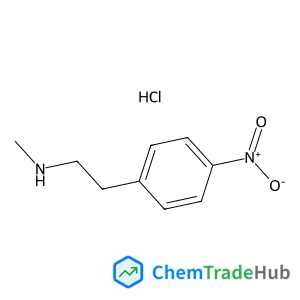
N-Methyl-2-(4-nitrophenyl)ethanamine hydrochloride (1:1)
CAS Number:
166943-39-1
Molecular Formula:
C9H13ClN2O2
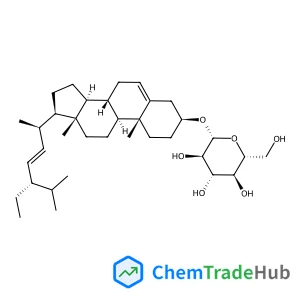
(3beta,22E)-Stigmasta-5,22-dien-3-yl beta-D-glucopyranoside
CAS Number:
19716-26-8
Molecular Formula:
C35H58O6
Recommended Suppliers






Disclaimer
This page provides academic journal information for reference and research purposes only. We are not affiliated with any journal publishers and do not handle publication submissions. For publication-related inquiries, please contact the respective journal publishers directly.
If you notice any inaccuracies in the information displayed, please contact us at support@chemtradehub.com. We will promptly review and address your concerns.