


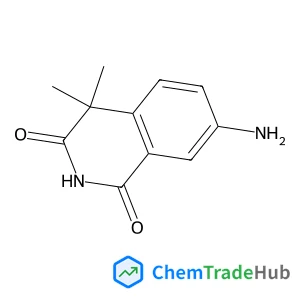
1,3(2H,4H)-Isoquinolinedione, 7-amino-4,4-dimethyl-
CAS Number:
14576-22-8
Molecular Formula:
C11H12N2O2
James N. Bull, Jason W. L. Lee, Claire Vallance
Accurate ionization cross-sections for DNA and RNA constituents in the condensed or aqueous phase are important parameters for models simulating radiation damage to genetic material in living cells. In this work, absolute gas-phase electron total ionization cross-sections (TICSs) have been measured for a series of six aromatic and eight non-aromatic cyclic species that can be considered as prototype functional group analogues for the nucleobases and sugar backbone constituents of DNA and RNA. TICSs for water, hexane, and ethylacetamide (a peptide bond analogue) are also reported. The experimental apparatus utilizes a cylindrical ion collector that surrounds the ionization region, providing essentially unit detection efficiency. Two theoretical models, the polarizability–correlation method and binary-encounter Bethe theory, are able to reproduce the measured maximum TICS well for all species studied. An empirical energy-dependent correction is found to yield improvement in the agreement between experimental energy-dependent cross sections and the predictions of the BEB model. Having characterised and optimised the performance of both models, they are then used to predict TICSs for gas-phase DNA and RNA nucleobases and sugars. Direct experimental determinations of TICSs for these species are difficult because of their low volatility, which makes it difficult to prepare suitable gas-phase samples for measurement.

Biocatalysis and Biotransformation

Acta Metallurgica Sinica-English Letters

Journal of Chemical Sciences

Bioorganic & Medicinal Chemistry

NDT & E International

Journal of Asian Natural Products Research

Main Group Chemistry

Journal of the Indian Institute of Science

Polycyclic Aromatic Compounds

Critical Reviews in Solid State and Materials Sciences
Huimin Dai, Chun-Xiao Li, Chao Yu, Zihao Wang, Hong Yan, Changsheng Lu
DOI: 10.1039/C7QO00333A
Wen-Zhu Bi, Kai Sun, Chen Qu, Xiao-Lan Chen, Shao-Hua Zhu, Xu Li, Hai-Tao Wu, Li-Kun Duan
DOI: 10.1039/C7QO00311K
Peng Chen, Ying Sun, Yile Wu, Liu Leo Liu, Jun Zhu
DOI: 10.1039/C7QO00240H
N. Zink-Lorre, E. Font-Sanchis, Á. Sastre-Santos, F. Fernández-Lázaro
DOI: 10.1039/C7QO00337D
Hai-Tao Tang, Jia-Hao Zeng, Jun-Jia Chen, Yun-Bing Zhou, Ren-Hao Li, Zhuang-Ping Zhan
DOI: 10.1039/C7QO00249A
Yujuan Zhou, Kecheng Jie, Feihe Huang
DOI: 10.1039/C7QO00736A
Xinxing Gong, Jiahao Chen, Jianhe Liu
DOI: 10.1039/C7QO00634A
Wei Chen, Pinhua Li
DOI: 10.1039/C7QO01052D
When handling 4-Methyl-6-(trifluoromethyl)quinoline (CAS: 40716-16-3), safety go...
4-(3,5-Difluorophenyl)aniline is an aromatic organic compound with the CAS numbe...
5-{[4-(Trifluoromethyl)phenyl]sulfanyl}-1,2,3-thiadiazole-4-carboxylic acid can ...
The market for 4-Benzylaniline hydrochloride (CAS: 6317-57-3) is steadily growin...
[3-(Diethylsulfamoyl)phenyl]boronic acid is generally considered safe when handl...
3-Bromo-2,5-dimethoxyaniline is mainly used in the pharmaceutical and chemical i...
N-Methyl-1-(5-methyl-1H-indol-3-yl)methanamine (CAS: 915922-67-7) is subject to ...
This compound is primarily used in the pharmaceutical industry for the synthesis...
2-Methyl-2-propanyl [(1S,3R)-3-aminocyclohexyl]carbamate (CAS: 1298101-47-9) sho...
Ethyl 2-bromo-4,4,4-trifluorobutanoate (CAS: 367-33-9) is utilized in the pharma...

Physical Chemistry Chemical Physics (PCCP) is an international journal co-owned by 19 physical chemistry and physics societies from around the world. This journal publishes original, cutting-edge research in physical chemistry, chemical physics and biophysical chemistry. To be suitable for publication in PCCP, articles must include significant innovation and/or insight into physical chemistry; this is the most important criterion that reviewers and Editors will judge against when evaluating submissions. The journal has a broad scope and welcomes contributions spanning experiment, theory, computation and data science. Topical coverage includes spectroscopy, dynamics, kinetics, statistical mechanics, thermodynamics, electrochemistry, catalysis, surface science, quantum mechanics, quantum computing and machine learning. Interdisciplinary research areas such as polymers and soft matter, materials, nanoscience, energy, surfaces/interfaces, and biophysical chemistry are welcomed if they demonstrate significant innovation and/or insight into physical chemistry. Joined experimental/theoretical studies are particularly appreciated when complementary and based on up-to-date approaches.
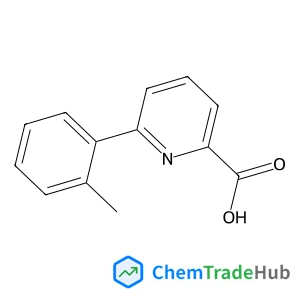
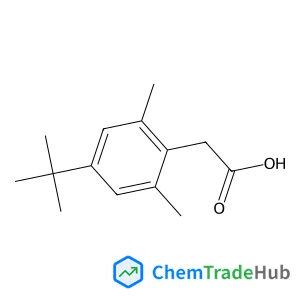
![(2E)-3-(3-Chlorophenyl)-N-{2-[4-(methylsulfonyl)-1-piperazinyl]-2-oxoethyl}acrylamide structure](https://static.chemtradehub.com/structs/250/2505001-54-5-c1e9.webp "(2E)-3-(3-Chlorophenyl)-N-{2-[4-(methylsulfonyl)-1-piperazinyl]-2-oxoethyl}acrylamide structure")
![(3R,5R)-1-[(Benzyloxy)carbonyl]-5-methyl-3-piperidinecarboxylic acid structure](https://static.chemtradehub.com/structs/126/1269757-29-0-c552.webp "(3R,5R)-1-[(Benzyloxy)carbonyl]-5-methyl-3-piperidinecarboxylic acid structure")



