












Computational study of the Rayleigh light scattering properties of atmospheric pre-nucleation clusters
Literature Information
Publication Date
2014-04-15
DOI
10.1039/C4CP01206B
Impact Factor
3.676
Authors
Jonas Elm, Patrick Norman, Merete Bilde, Kurt V. Mikkelsen
View Original
Abstract
The Rayleigh and hyper Rayleigh scattering properties of the binary (H2SO4)(H2O)n and ternary (H2SO4)(NH3)(H2O)n clusters are investigated using a quantum mechanical response theory approach. The molecular Rayleigh scattering intensities are expressed using the dipole polarizability α and hyperpolarizability β tensors. Using density functional theory, we elucidate the effect of cluster morphology on the scattering properties using a combinatorial sampling approach. We find that the Rayleigh scattering intensity depends quadratically on the number of water molecules in the cluster and that a single ammonia molecule is able to induce a high anisotropy, which further increases the scattering intensity. The hyper Rayleigh scattering activities are found to be extremely low. This study presents the first attempt to map the scattering of atmospheric molecular clusters using a bottom-up approach.
Related Literature
Catalytic asymmetric synthesis of hetero-substituted oxindoles
2017-07-05
Review Article
DOI: 10.1039/C7QO00446J
Cu-Catalyzed tertiary alkylation of α-(trifluoromethyl)styrenes with tertiary alkylmagnesium reagents
Wenpeng Dai, Yingyin Lin, Yan Wan, Song Cao
2017-09-18
Research Article
DOI: 10.1039/C7QO00716G
Pd/Ni catalyzed selective N–H/C–H methylation of amides by using peroxides as the methylating reagents via a radical process
Ze-lin Li, Chun Cai
2017-08-15
Research Article
DOI: 10.1039/C7QO00625J
Copper-catalyzed oxidative dehydrogenative coupling of carboxylic acids with H-phosphonates: an efficient and practical approach to acyl phosphate esters
Hong Fu, Tao Yang, Jia-Qi Shang, Jia-Li Zhou, Meng Sun, Ya-Min Li
2017-06-05
Research Article
DOI: 10.1039/C7QO00298J
Manganese-mediated/-catalyzed oxidative carboazidation of acrylamides
Danwei Zhao, Kai Kang, Haizhen Jiang, Hongmei Deng, Yunrong Chen
2017-05-04
Research Article
DOI: 10.1039/C7QO00217C
Photoredox catalytic intramolecular imine C–H bond functionalization using ligand free Cu(ii) salts
Xuhong Ren, Qiyang Wang, Wenjia Yu, Xiaoyu Zhan, Yishan Yao, Bingjie Qin, Mingxin Dong, Xinhua He
2017-07-06
Research Article
DOI: 10.1039/C7QO00348J
A theoretical study on the mechanism of ruthenium(ii)-catalyzed phosphoryl-directed ortho-selective C–H bond activations: the phosphoryl hydroxy group triggered Ru(ii)/Ru(0) catalytic cycle
Peng Chen, Ying Sun, Yile Wu, Liu Leo Liu, Jun Zhu
2017-06-01
Research Article
DOI: 10.1039/C7QO00240H
Rapid construction of the 6/6/5 tricyclic framework via a tandem radical cyclization reaction and its application to the synthesis of 5-epi-7-deoxy-isoabietenin A
Hao Zhang, Shiqiang Ma, Zhimin Xing, Lin Liu, Bowen Fang, Xingang Xie
2017-08-15
Research Article
DOI: 10.1039/C7QO00550D
You might also like
Compound Q&A
What precautions should be taken when handling 4-Methyl-6-(trifluoromethyl)quinoline (CAS: 40716-16-3)?
When handling 4-Methyl-6-(trifluoromethyl)quinoline (CAS: 40716-16-3), safety go...
40716-16-34-Methyl-6-(trifluor...
Compound Q&A
What is 4-(3,5-Difluorophenyl)aniline (CAS: 405058-00-6)?
4-(3,5-Difluorophenyl)aniline is an aromatic organic compound with the CAS numbe...
405058-00-64-(3,5-Difluoropheny...
Compound Q&A
How is 5-{[4-(Trifluoromethyl)phenyl]sulfanyl}-1,2,3-thiadiazole-4-carboxylic acid (CAS: 338982-07-3) typically synthesized?
5-{[4-(Trifluoromethyl)phenyl]sulfanyl}-1,2,3-thiadiazole-4-carboxylic acid can ...
338982-07-35-{[4-(Trifluorometh...
Compound Q&A
What is the market or research trend for 4-Benzylaniline hydrochloride (CAS: 6317-57-3)?
The market for 4-Benzylaniline hydrochloride (CAS: 6317-57-3) is steadily growin...
6317-57-34-Benzylaniline hydr...
Compound Q&A
Is [3-(Diethylsulfamoyl)phenyl]boronic acid (CAS: 871329-58-7) safe?
[3-(Diethylsulfamoyl)phenyl]boronic acid is generally considered safe when handl...
871329-58-7[3-(Diethylsulfamoyl...
Compound Q&A
What are the main uses of 3-Bromo-2,5-dimethoxyaniline (CAS: 115929-62-9)?
3-Bromo-2,5-dimethoxyaniline is mainly used in the pharmaceutical and chemical i...
115929-62-93-Bromo-2,5-dimethox...
Compound Q&A
What regulatory guidelines apply to N-Methyl-1-(5-methyl-1H-indol-3-yl)methanamine (CAS: 915922-67-7)?
N-Methyl-1-(5-methyl-1H-indol-3-yl)methanamine (CAS: 915922-67-7) is subject to ...
915922-67-7N-Methyl-1-(5-methyl...
Compound Q&A
What industries use Carbamic acid, N-[(5S)-5,6-diamino-6-oxohexyl]-, 1,1-dimethylethyl ester (CAS: 24828-96-4)?
This compound is primarily used in the pharmaceutical industry for the synthesis...
24828-96-4Carbamic acid, N-[(5...
Compound Q&A
How should 2-Methyl-2-propanyl [(1S,3R)-3-aminocyclohexyl]carbamate (CAS: 1298101-47-9) be stored?
2-Methyl-2-propanyl [(1S,3R)-3-aminocyclohexyl]carbamate (CAS: 1298101-47-9) sho...
1298101-47-92-Methyl-2-propanyl ...
Compound Q&A
What industries use Ethyl 2-bromo-4,4,4-trifluorobutanoate (CAS: 367-33-9)?
Ethyl 2-bromo-4,4,4-trifluorobutanoate (CAS: 367-33-9) is utilized in the pharma...
367-33-9Ethyl 2-bromo-4,4,4-...
Source Journal
Physical Chemistry Chemical Physics

CiteScore:
5.5
Self-citation Rate:
10.3%
Articles per Year:
3036
Physical Chemistry Chemical Physics (PCCP) is an international journal co-owned by 19 physical chemistry and physics societies from around the world. This journal publishes original, cutting-edge research in physical chemistry, chemical physics and biophysical chemistry. To be suitable for publication in PCCP, articles must include significant innovation and/or insight into physical chemistry; this is the most important criterion that reviewers and Editors will judge against when evaluating submissions. The journal has a broad scope and welcomes contributions spanning experiment, theory, computation and data science. Topical coverage includes spectroscopy, dynamics, kinetics, statistical mechanics, thermodynamics, electrochemistry, catalysis, surface science, quantum mechanics, quantum computing and machine learning. Interdisciplinary research areas such as polymers and soft matter, materials, nanoscience, energy, surfaces/interfaces, and biophysical chemistry are welcomed if they demonstrate significant innovation and/or insight into physical chemistry. Joined experimental/theoretical studies are particularly appreciated when complementary and based on up-to-date approaches.
Recommended Compounds
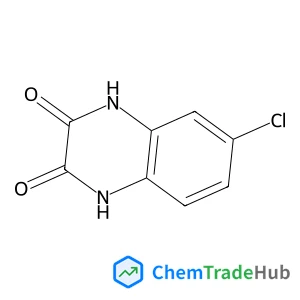
6-CHLORO-2,3-DIOXO-1,2,3,4-TETRAHYDROQUINOXALINE, 97
CAS Number:
169-14-2
Molecular Formula:
C8H5ClN2O2
phosphoryl}methyl 4-methylbenzenesulfonate structure](https://static.chemtradehub.com/structs/864/864068-45-1-ba7c.webp "{[3-(Hexadecyloxy)propoxy](hydroxy)phosphoryl}methyl 4-methylbenzenesulfonate structure")
{[3-(Hexadecyloxy)propoxy](hydroxy)phosphoryl}methyl 4-methylbenzenesulfonate
CAS Number:
864068-45-1
Molecular Formula:
C27H49O7PS
Recommended Suppliers





Disclaimer
This page provides academic journal information for reference and research purposes only. We are not affiliated with any journal publishers and do not handle publication submissions. For publication-related inquiries, please contact the respective journal publishers directly.
If you notice any inaccuracies in the information displayed, please contact us at support@chemtradehub.com. We will promptly review and address your concerns.