



IM-19: a new flexible microporous gallium based-MOF framework with pressure- and temperature-dependent openings
Literature Information
Publication Date
2009-04-24
DOI
10.1039/B822163D
Impact Factor
3.676
Authors
Gérald Chaplais, Angélique Simon-Masseron, Claude Lecomte, Delphine Bazer-Bachi, Nicolas Bats, Joël Patarin
View Original
Abstract
Five metal–organic frameworks (MOFs) based on the same three-dimensional gallium terephthalate network (IM-19) are described, and an incommensurate structure (for the as-synthesized form) as well as two remarkable guest-free polymorphs (open and closed) are highlighted.
Recommended Journals

Journal of Saudi Chemical Society

Current Opinion in Colloid & Interface Science

Current Opinion in Solid State & Materials Science

Russian Journal of Bioorganic Chemistry

Organic Process Research & Development

Drug Discovery Today

New Journal of Chemistry

Crystallography Reports

Chemical Communications

Nature Medicine
Related Literature
Non-innocent side-chains with dipole moments in organic solar cells improve charge separation
Hilde D. de Gier, Ria Broer
2014-05-06
Paper
DOI: 10.1039/C4CP01070A
Selective oxidation of alcohols in aqueous suspensions of rhodium ion-modified TiO2 photocatalysts under irradiation of visible light
Sho Kitano, Atsuhiro Tanaka, Keiji Hashimoto, Hiroshi Kominami
2014-05-08
Paper
DOI: 10.1039/C4CP00863D
Computational study of the Rayleigh light scattering properties of atmospheric pre-nucleation clusters
Jonas Elm, Patrick Norman, Merete Bilde, Kurt V. Mikkelsen
2014-04-15
Paper
DOI: 10.1039/C4CP01206B
Pressure dependent OH yields in the reactions of CH3CO and HOCH2CO with O2
C. B. M. Groß, T. J. Dillon, J. N. Crowley
2014-04-28
Paper
DOI: 10.1039/C4CP01108B
13C NMR relaxation and reorientation dynamics in imidazolium-based ionic liquids: revising interpretation
Petri Ingman, Erkki Lähderanta
2014-04-09
Paper
DOI: 10.1039/C4CP00637B
Confined H2O molecules as local probes of pressure-induced amorphisation in faujasite
Frederico Alabarse, Claire Levelut, Aude Isambert, Philippe Hébert, Shinji Kohara, David Maurin, Jean-Louis Bantignies, Olivier Cambon, Gaëlle Creff, Pascale Roy, Jean-Blaise Brubach, Tahar Hammouda, Denis Andrault, Julien Haines
2014-04-28
Paper
DOI: 10.1039/C4CP00186A
What makes zeolitic imidazolate frameworks hydrophobic or hydrophilic? The impact of geometry and functionalization on water adsorption
Aurélie U. Ortiz, Alexy P. Freitas, Anne Boutin, Alain H. Fuchs, François-Xavier Coudert
2013-12-20
Paper
DOI: 10.1039/C3CP54292K
Steric matching and the concentration induced self-assembled structural variety of 2,7-bis(n-alkoxy)-9-fluorenone at the aliphatic solvent/graphite interface
Xinrui Miao, Li Xu, Lihua Cui, Wenli Deng
2014-05-01
Paper
DOI: 10.1039/C4CP00871E
Excitonic energy transfer in polymer wrapped carbon nanotubes in gradually grown nanoassemblies
Victor A. Karachevtsev, Alexander M. Plokhotnichenko, Victor S. Leontiev
2014-04-14
Paper
DOI: 10.1039/C4CP00776J
Molecular self-assembly at nanometer scale modulated surfaces: trimesic acid on Ag(111), Cu(111) and Ag/Cu(111)
Mahdi Sadeghzadeh Baviloliaei, Lars Diekhöner
2014-04-24
Paper
DOI: 10.1039/C4CP01429D
You might also like
Compound Q&A
What precautions should be taken when handling 2-Chloro-1,2-bis(4-methylphenyl)ethanone (CAS: 71193-32-3)?
When handling 2-Chloro-1,2-bis(4-methylphenyl)ethanone (CAS: 71193-32-3), it is ...
71193-32-32-Chloro-1,2-bis(4-m...
Compound Q&A
What industries use 4-Ethoxy-3-(5-methyl-4-oxo-7-propyl-1,4-dihydroimidazo[5,1-f][1,2,4]triazin-2-yl)benzenesulfonyl chloride (CAS: 224789-26-8)?
4-Ethoxy-3-(5-methyl-4-oxo-7-propyl-1,4-dihydroimidazo[5,1-f][1,2,4]triazin-2-yl...
224789-26-84-Ethoxy-3-(5-methyl...
Compound Q&A
How should Methyl 3-Oxo-4-Androsten-17-Carboxylate (CAS: 2681-55-2) be stored?
Methyl 3-Oxo-4-Androsten-17-Carboxylate (CAS: 2681-55-2) should be stored in a c...
2681-55-2Methyl 3-Oxo-4-Andro...
Compound Q&A
What are the main uses of (R)-3-Amino-4-(3-hexylphenylamino)-4-oxobutylphosphonic acid (CAS: 909725-61-7)?
(R)-3-Amino-4-(3-hexylphenylamino)-4-oxobutylphosphonic acid is primarily used i...
909725-61-7(R)-3-Amino-4-(3-hex...
Compound Q&A
What regulatory guidelines apply to 2-Methyl-2-propanyl 3-amino-3-carbamoyl-1-azetidinecarboxylate (CAS: 1254120-14-3)?
2-Methyl-2-propanyl 3-amino-3-carbamoyl-1-azetidinecarboxylate (CAS: 1254120-14-...
1254120-14-32-Methyl-2-propanyl ...
Compound Q&A
Are there alternatives to (E)-4-(tert-Butoxy)-4-oxobut-2-enoic acid (CAS: 135355-96-3) in synthesis?
There are alternative reagents that can be used in synthesis instead of (E)-4-(t...
135355-96-3(E)-4-(tert-Butoxy)-...
Compound Q&A
What are the physical and chemical properties of [2-(3-Chlorophenyl)-1,3-thiazol-4-yl]methanol (CAS: 121202-20-8)?
[2-(3-Chlorophenyl)-1,3-thiazol-4-yl]methanol (CAS: 121202-20-8) is a crystallin...
121202-20-8[2-(3-Chlorophenyl)-...
Compound Q&A
What is the market or research trend for Methyl (2S)-[(4S)-2,2-dimethyl-1,3-dioxolan-4-yl]{[(4-methylphenyl)sulfonyl]oxy}acetate (CAS: 166249-17-8)?
The market and research trends for Methyl (2S)-[(4S)-2,2-dimethyl-1,3-dioxolan-4...
166249-17-8Methyl (2S)-[(4S)-2,...
Compound Q&A
What is the market or research trend for 1-Bromo-2-isocyanatoethane (CAS: 42865-19-0)?
The market for 1-Bromo-2-isocyanatoethane (CAS: 42865-19-0) is driven by its use...
42865-19-01-Bromo-2-isocyanato...
Compound Q&A
What are the main uses of 4-Nitro-D-phenylalanine hydrochloride (CAS: 147065-06-3)?
4-Nitro-D-phenylalanine hydrochloride (CAS: 147065-06-3) is primarily used in re...
147065-06-34-Nitro-D-phenylalan...
Source Journal
Physical Chemistry Chemical Physics

CiteScore:
5.5
Self-citation Rate:
10.3%
Articles per Year:
3036
Physical Chemistry Chemical Physics (PCCP) is an international journal co-owned by 19 physical chemistry and physics societies from around the world. This journal publishes original, cutting-edge research in physical chemistry, chemical physics and biophysical chemistry. To be suitable for publication in PCCP, articles must include significant innovation and/or insight into physical chemistry; this is the most important criterion that reviewers and Editors will judge against when evaluating submissions. The journal has a broad scope and welcomes contributions spanning experiment, theory, computation and data science. Topical coverage includes spectroscopy, dynamics, kinetics, statistical mechanics, thermodynamics, electrochemistry, catalysis, surface science, quantum mechanics, quantum computing and machine learning. Interdisciplinary research areas such as polymers and soft matter, materials, nanoscience, energy, surfaces/interfaces, and biophysical chemistry are welcomed if they demonstrate significant innovation and/or insight into physical chemistry. Joined experimental/theoretical studies are particularly appreciated when complementary and based on up-to-date approaches.
Recommended Compounds


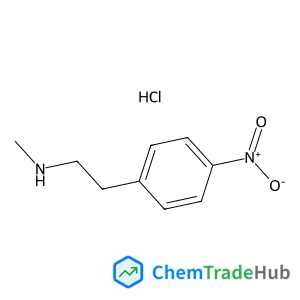
N-Methyl-2-(4-nitrophenyl)ethanamine hydrochloride (1:1)
CAS Number:
166943-39-1
Molecular Formula:
C9H13ClN2O2
Recommended Suppliers





Disclaimer
This page provides academic journal information for reference and research purposes only. We are not affiliated with any journal publishers and do not handle publication submissions. For publication-related inquiries, please contact the respective journal publishers directly.
If you notice any inaccuracies in the information displayed, please contact us at support@chemtradehub.com. We will promptly review and address your concerns.