












Inside front cover
Literature Information
Publication Date
DOI
10.1039/B820250H
Impact Factor
3.676
Authors
View Original
Abstract
The first page of this article is displayed as the abstract.
Related Literature
Ethane C–H bond activation on the Fe(iv)–oxo species in a Zn-based cluster of metal–organic frameworks: a density functional theory study
Sarawoot Impeng, Siwarut Siwaipram, Sareeya Bureekaew, Michael Probst
2017-01-09
Paper
DOI: 10.1039/C6CP07771D
Enhanced selective oxidation of h-BN nanosheet through a substrate-mediated localized charge effect
Xiaojun Wu, Jinlong Yang
2017-01-12
Paper
DOI: 10.1039/C6CP07402B
Ionic liquids and deep eutectic solvents for lignocellulosic biomass fractionation
Dannie J. G. P. van Osch, Laura J. B. M. Kollau, Sari Asikainen, Marisa A. A. Rocha
2016-12-02
Perspective
DOI: 10.1039/C6CP07499E
Mechanisms of absorption and desorption of CO2 by molten NaNO3-promoted MgO
Seung-Ik Jo, Young-In An, Kang-Yeong Kim, Seo-Yeong Choi, Jin-Su Kwak, Kyung-Ryul Oh, Young-Uk Kwon
2017-02-01
Paper
DOI: 10.1039/C6CP07787K
WO3/W:BiVO4/BiVO4 graded photoabsorber electrode for enhanced photoelectrocatalytic solar light driven water oxidation
Junghyun Choi, Pitchaimuthu Sudhagar, Joo Hyun Kim, Jiseok Kwon, Jeonghyun Kim, Chiaki Terashima, Akira Fujishima, Taeseup Song, Ungyu Paik
2017-01-09
Paper
DOI: 10.1039/C6CP08199A
Combining the spin-separated exact two-component relativistic Hamiltonian with the equation-of-motion coupled-cluster method for the treatment of spin–orbit splittings of light and heavy elements
Zhanli Cao, Zhendong Li, Fan Wang, Wenjian Liu
2017-01-10
Paper
DOI: 10.1039/C6CP07588F
The role of OH− in the formation of highly selective gold nanowires at extreme pH: multi-fold enhancement in the rate of the catalytic reduction reaction by gold nanowires
Riham El Kurdi, Digambara Patra
2017-01-16
Paper
DOI: 10.1039/C6CP08607A
Suitability of N-propanoic acid spiropyrans and spirooxazines for use as sensitizing dyes in dye-sensitized solar cells
Noah M. Johnson, Yuriy Y. Smolin, Daniel Hagaman, Masoud Soroush, Kenneth K. S. Lau, Hai-Feng Ji
2017-01-04
Paper
DOI: 10.1039/C6CP07853B
A cationic naphthyl derivative defies the non-equilibrated excited rotamers principle
A. Cesaretti, B. Carlotti, F. Elisei, C. G. Fortuna, G. Consiglio, A. Spalletti
2017-01-16
Paper
DOI: 10.1039/C6CP08311K
You might also like
Compound Q&A
What regulatory guidelines apply to 4-Amino-3-bromophenol (CAS: 74440-80-5)?
4-Amino-3-bromophenol (CAS: 74440-80-5) falls under the classification of a haza...
74440-80-54-Amino-3-bromopheno...
Compound Q&A
How should (17beta)-3-Oxoestr-4-en-17-yl acetate (CAS: 1425-10-1) be stored?
(17beta)-3-Oxoestr-4-en-17-yl acetate should be stored in a cool, dry place away...
1425-10-1(17beta)-3-Oxoestr-4...
Compound Q&A
What are the physical and chemical properties of 2-[(2,2-Diethoxyethyl)disulfanyl]-1,1-diethoxyethane (CAS: 76505-71-0)?
2-[(2,2-Diethoxyethyl)disulfanyl]-1,1-diethoxyethane (CAS: 76505-71-0) is a colo...
76505-71-02-[(2,2-Diethoxyethy...
Compound Q&A
What is the market or research trend for 1-(β-D-ribofuranosyl)-1H-imidazo[4,5-c]pyridin-4-amine?
The market and research for 1-(β-D-ribofuranosyl)-1H-imidazo[4,5-c]pyridin-4-ami...
6736-58-91-(beta-D-Ribofurano...
Compound Q&A
How should waste containing Conjugated Estrogen (CAS: 12126-59-9) be handled?
Waste containing Conjugated Estrogen (CAS: 12126-59-9) should be collected and d...
12126-59-9Conjugated Estrogen
Compound Q&A
What is the market or research trend for Bis(2,2,2-trifluoroethyl) (methoxycarbonylmethyl)phosphonate?
The market for Bis(2,2,2-trifluoroethyl) (methoxycarbonylmethyl)phosphonate (CAS...
88738-78-7Bis(2,2,2-trifluoroe...
Compound Q&A
Are there alternatives to 3,4'-Di-O-methylellagic acid (CAS: 57499-59-9) in synthesis?
There are several alternatives to 3,4'-Di-O-methylellagic acid (CAS: 57499-59-9)...
57499-59-93,4'-Di-O-methylella...
Compound Q&A
What regulatory guidelines apply to 2-Chloro-N,N-dimethylpyridin-4-amine (CAS: 59047-70-0)?
2-Chloro-N,N-dimethylpyridin-4-amine (CAS: 59047-70-0) is regulated under the Gl...
59047-70-02-Chloro-N,N-dimethy...
Compound Q&A
What is cerium(3+);oxygen(2-);vanadium(5+) (CAS: 13597-19-8)?
Cerium(3+);oxygen(2-);vanadium(5+) (CAS: 13597-19-8) is a complex inorganic comp...
13597-19-8cerium(3+);oxygen(2-...
Compound Q&A
Is 7-Chloro-1-iodoisoquinoline (CAS: 1203579-27-4) safe?
7-Chloro-1-iodoisoquinoline (CAS: 1203579-27-4) is generally considered safe whe...
1203579-27-47-Chloro-1-iodoisoqu...
Source Journal
Physical Chemistry Chemical Physics

CiteScore:
5.5
Self-citation Rate:
10.3%
Articles per Year:
3036
Physical Chemistry Chemical Physics (PCCP) is an international journal co-owned by 19 physical chemistry and physics societies from around the world. This journal publishes original, cutting-edge research in physical chemistry, chemical physics and biophysical chemistry. To be suitable for publication in PCCP, articles must include significant innovation and/or insight into physical chemistry; this is the most important criterion that reviewers and Editors will judge against when evaluating submissions. The journal has a broad scope and welcomes contributions spanning experiment, theory, computation and data science. Topical coverage includes spectroscopy, dynamics, kinetics, statistical mechanics, thermodynamics, electrochemistry, catalysis, surface science, quantum mechanics, quantum computing and machine learning. Interdisciplinary research areas such as polymers and soft matter, materials, nanoscience, energy, surfaces/interfaces, and biophysical chemistry are welcomed if they demonstrate significant innovation and/or insight into physical chemistry. Joined experimental/theoretical studies are particularly appreciated when complementary and based on up-to-date approaches.
Recommended Compounds
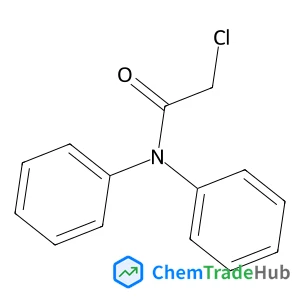
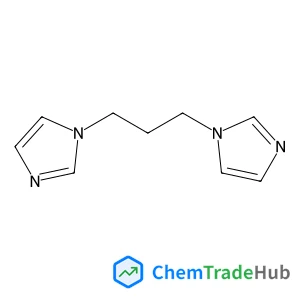
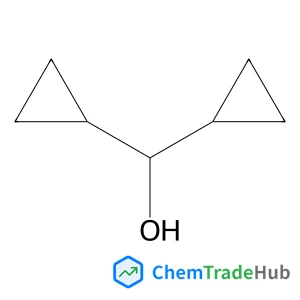
Recommended Suppliers





Disclaimer
This page provides academic journal information for reference and research purposes only. We are not affiliated with any journal publishers and do not handle publication submissions. For publication-related inquiries, please contact the respective journal publishers directly.
If you notice any inaccuracies in the information displayed, please contact us at support@chemtradehub.com. We will promptly review and address your concerns.