












![5,10-Dihydro-11H-dibenzo[b,e][1,4]diazepin-11-one structure](https://static.chemtradehub.com/structs/581/5814-41-5-0b01.webp "5,10-Dihydro-11H-dibenzo[b,e][1,4]diazepin-11-one structure")
Probing the catalytic activity and heterogeneity of Au-nanoparticles at the single-molecule level
Literature Information
Publication Date
2009-02-16
DOI
10.1039/B820052A
Impact Factor
3.676
Authors
Weilin Xu, Jason S. Kong, Peng Chen
View Original
Abstract
Nanoparticles can catalyze many important chemical transformations in organic synthesis, pollutant removal, and energy production. Characterizing their catalytic properties is essential for understanding the fundamental principles governing their activities, but is challenging in ensemble measurements due to their intrinsic heterogeneity from their structural dispersions, heterogeneous surface sites, and surface restructuring dynamics. To remove ensemble averaging, we recently developed a single-particle approach to study the redox catalysis of individual Au-nanoparticles in solution. By detecting the fluorescence of the catalytic product at the single-molecule level, we followed the catalytic turnovers of single Au-nanoparticles in real time at single-turnover resolution. Here we extend our single-nanoparticle studies to examine in detail the activity and heterogeneity of 6 nm spherical Au-nanoparticles. By analyzing the statistical properties of single-particle reaction waiting times across a range of substrate concentrations, we directly determine the distributions of kinetic parameters of individual Au-nanoparticles, including the rate constants and the equilibrium constants of substrate adsorption, and quantify their heterogeneity. Large activity heterogeneity is observed among the Au-nanoparticles in both the catalytic conversion reaction and the product dissociation reaction, which are typically hidden in ensemble-averaged measurements. Analyzing the temporal fluctuation of catalytic activity of individual Au-nanoparticles further reveals that these nanoparticles have two types of surface sites with different catalytic properties—one type-a with lower activity but higher substrate binding affinity, and the other type-b with higher activity but lower substrate binding affinity. Each Au-nanoparticle exhibits type-a behavior at low substrate concentrations and switches to type-b behavior at a higher substrate concentration, and the switching concentration varies largely from one nanoparticle to another. The heterogeneous and dynamic behavior of Au-nanoparticle catalysts highlight the intricate interplay between catalysis, structural dispersion, variable surface sites, and surface restructuring dynamics in nanocatalysis.
Related Literature
Highly selective Cu2+ detection with a naphthalimide-functionalised pillar[5]arene fluorescent chemosensor
Rong Chang, Chan-Yu Chen, Liya Gao, Yana Li, Zui-Harng Lee, Hongxia Zhao, Andrew C.-H. Sue, Kai-Chi Chang
2023-11-14
Paper
DOI: 10.1039/D3OB01558K
FeCl3-catalyzed regioselective ring-opening of aryl oxirane with 4-hydroxycoumarin for the synthesis of furo[3,2-c]coumarins‡
Simra Faraz, Ahmad Ali, Abu Taleb Khan
2023-11-22
Paper
DOI: 10.1039/D3OB01721D
Synthesis of functionalized tetrahydrodibenzo[b,g][1,8]naphthyridin-1(2H)-ones through base-promoted annulation of quinoline-derived dipolarophiles and cyclic enaminones
Wenjun Luo, Xinghua Zheng, Fanglian Zhang, Qiuya Luo, Wen-Ting Deng, Lipeng Long, Daohong Yu, Zhong-Xia Wang, Zhengwang Chen
2023-11-16
Communication
DOI: 10.1039/D3OB01547E
Correction: π-Facial selectivity in the Diels–Alder reaction of glucosamine-based chiral furans and maleimides
Cornelis H. M. van der Loo, Rutger Schim van der Loeff, Avelino Martín, Pilar Gomez-Sal, Mark L. G. Borst, Kees Pouwer, Adriaan J. Minnaard
2023-12-15
Correction
DOI: 10.1039/D3OB90168H
Synthesis of the aminocyclopentenediol fragment of queuosine by way of the stereoselective addition of an organometallic reagent to a N-t-butanesulfinyl glycosylamine
Floriane Heis, Estelle Gallienne, Olivier R. Martin
2023-11-28
Paper
DOI: 10.1039/D3OB01713C
Theoretical investigation of tautomerism of 2- and 4-pyridones: origin, substituent and solvent effects
Marija Baranac-Stojanović, Jovana Aleksić, Milovan Stojanović
2023-11-29
Paper
DOI: 10.1039/D3OB01588B
Visible-light-induced decarboxylative cascade cyclization of acryloylbenzamides with N-hydroxyphthalimide esters via EDA complexes
Qing Li, Zhi-Qiang Zhu, Wen-Yi Zhang, Zhang-Gao Le, Zong-Bo Xie
2024-01-04
Communication
DOI: 10.1039/D3OB01970E
Microbial alcohol dehydrogenases: recent developments and applications in asymmetric synthesis
Anju Chadha, Santosh Kumar Padhi, Selvaraj Stella, Sowmyalakshmi Venkataraman, Thangavelu Saravanan
2023-12-05
Review Article
DOI: 10.1039/D3OB01447A
Transition-metal-free and additive-free intermolecular hydroarylation of alkenes with indoles in hexafluoroisopropanol
Changsheng Zhou, Ming Huang, Yufeng Yao, Chunyu Chen, Xin Yi, Ke-fang Yang, Guo-Qiao Lai, Wenjing Xuan, Pinglu Zhang
2023-11-14
Communication
DOI: 10.1039/D3OB01570J
Cu(ii) salts as terminal oxidants in visible-light photochemical oxidation reactions
Grace A. Lutovsky, Tehshik P. Yoon
2023-11-22
Review Article
DOI: 10.1039/D3OB01678A
You might also like
Compound Q&A
What regulatory guidelines apply to 4-Amino-3-bromophenol (CAS: 74440-80-5)?
4-Amino-3-bromophenol (CAS: 74440-80-5) falls under the classification of a haza...
74440-80-54-Amino-3-bromopheno...
Compound Q&A
How should (17beta)-3-Oxoestr-4-en-17-yl acetate (CAS: 1425-10-1) be stored?
(17beta)-3-Oxoestr-4-en-17-yl acetate should be stored in a cool, dry place away...
1425-10-1(17beta)-3-Oxoestr-4...
Compound Q&A
What are the physical and chemical properties of 2-[(2,2-Diethoxyethyl)disulfanyl]-1,1-diethoxyethane (CAS: 76505-71-0)?
2-[(2,2-Diethoxyethyl)disulfanyl]-1,1-diethoxyethane (CAS: 76505-71-0) is a colo...
76505-71-02-[(2,2-Diethoxyethy...
Compound Q&A
What is the market or research trend for 1-(β-D-ribofuranosyl)-1H-imidazo[4,5-c]pyridin-4-amine?
The market and research for 1-(β-D-ribofuranosyl)-1H-imidazo[4,5-c]pyridin-4-ami...
6736-58-91-(beta-D-Ribofurano...
Compound Q&A
How should waste containing Conjugated Estrogen (CAS: 12126-59-9) be handled?
Waste containing Conjugated Estrogen (CAS: 12126-59-9) should be collected and d...
12126-59-9Conjugated Estrogen
Compound Q&A
What is the market or research trend for Bis(2,2,2-trifluoroethyl) (methoxycarbonylmethyl)phosphonate?
The market for Bis(2,2,2-trifluoroethyl) (methoxycarbonylmethyl)phosphonate (CAS...
88738-78-7Bis(2,2,2-trifluoroe...
Compound Q&A
Are there alternatives to 3,4'-Di-O-methylellagic acid (CAS: 57499-59-9) in synthesis?
There are several alternatives to 3,4'-Di-O-methylellagic acid (CAS: 57499-59-9)...
57499-59-93,4'-Di-O-methylella...
Compound Q&A
What regulatory guidelines apply to 2-Chloro-N,N-dimethylpyridin-4-amine (CAS: 59047-70-0)?
2-Chloro-N,N-dimethylpyridin-4-amine (CAS: 59047-70-0) is regulated under the Gl...
59047-70-02-Chloro-N,N-dimethy...
Compound Q&A
What is cerium(3+);oxygen(2-);vanadium(5+) (CAS: 13597-19-8)?
Cerium(3+);oxygen(2-);vanadium(5+) (CAS: 13597-19-8) is a complex inorganic comp...
13597-19-8cerium(3+);oxygen(2-...
Compound Q&A
Is 7-Chloro-1-iodoisoquinoline (CAS: 1203579-27-4) safe?
7-Chloro-1-iodoisoquinoline (CAS: 1203579-27-4) is generally considered safe whe...
1203579-27-47-Chloro-1-iodoisoqu...
Source Journal
Physical Chemistry Chemical Physics

CiteScore:
5.5
Self-citation Rate:
10.3%
Articles per Year:
3036
Physical Chemistry Chemical Physics (PCCP) is an international journal co-owned by 19 physical chemistry and physics societies from around the world. This journal publishes original, cutting-edge research in physical chemistry, chemical physics and biophysical chemistry. To be suitable for publication in PCCP, articles must include significant innovation and/or insight into physical chemistry; this is the most important criterion that reviewers and Editors will judge against when evaluating submissions. The journal has a broad scope and welcomes contributions spanning experiment, theory, computation and data science. Topical coverage includes spectroscopy, dynamics, kinetics, statistical mechanics, thermodynamics, electrochemistry, catalysis, surface science, quantum mechanics, quantum computing and machine learning. Interdisciplinary research areas such as polymers and soft matter, materials, nanoscience, energy, surfaces/interfaces, and biophysical chemistry are welcomed if they demonstrate significant innovation and/or insight into physical chemistry. Joined experimental/theoretical studies are particularly appreciated when complementary and based on up-to-date approaches.
Recommended Compounds
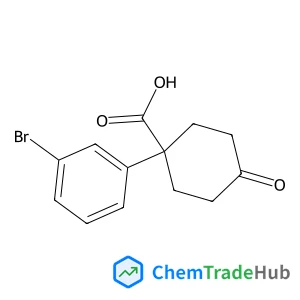
1-(3-Bromophenyl)-4-oxocyclohexanecarboxylic acid
CAS Number:
1385694-53-0
Molecular Formula:
C13H13BrO3
![[3-Formyl-5-(trifluoromethoxy)phenyl]boronic acid structure](https://static.chemtradehub.com/structs/145/1451393-39-7-aebb.webp "[3-Formyl-5-(trifluoromethoxy)phenyl]boronic acid structure")
[3-Formyl-5-(trifluoromethoxy)phenyl]boronic acid
CAS Number:
1451393-39-7
Molecular Formula:
C8H6BF3O4
Recommended Suppliers




Disclaimer
This page provides academic journal information for reference and research purposes only. We are not affiliated with any journal publishers and do not handle publication submissions. For publication-related inquiries, please contact the respective journal publishers directly.
If you notice any inaccuracies in the information displayed, please contact us at support@chemtradehub.com. We will promptly review and address your concerns.