



Motion of single wandering diblock-macromolecules directed by a PTFE nano-fence: real time SFM observations
Literature Information
Publication Date
2009-04-20
DOI
10.1039/B819011A
Impact Factor
3.676
Authors
Marat O. Gallyamov, Shuhui Qin, Krzysztof Matyjaszewski, Martin Möller
View Original
Abstract
Using SFM we have observed a peculiar twisting motion of diblock macromolecules pre-collapsed in ethanol vapour during their subsequent spreading in water vapour. The intrinsic asymmetry of the diblock macromolecules has been considered to be the reason for such twisting. Further, friction-deposited PTFE nano-stripes have been employed as nano-trails with the purpose of inducing lateral directed motion of the asymmetric diblock macromolecules under cyclic impact from the changing vapour surroundings. Indeed, some of the macromolecules have demonstrated a certain tendency to orient along the PTFE stripes, and some of the oriented ones have moved occasionally in a directed manner along the trail. However, it has been difficult to reliably record such directed motion at the single molecule level due to some mobility of the PTFE nano-trails themselves in the changing vapour environment. In vapours, the PTFE stripes have demonstrated a distinct tendency towards conjunction. This tendency has manifested itself in efficient expelling of groups of the mobile brush-like molecules from the areas between two PTFE stripes joining in a zip-fastener manner. This different kind of vapour-induced cooperative macromolecular motion has been reliably observed as being directed. The PTFE nano-frame experiences some deformation when constraining the spreading macromolecules. We have estimated the possible force causing such deformation of the PTFE fence. The force has been found to be a few pN as calculated by a partial contribution from every single molecule of the constrained group.
Recommended Journals

Chemical Communications

Russian Journal of Applied Chemistry

Journal of Peptide Science

Saudi Pharmaceutical Journal

Journal of Saudi Chemical Society

Russian Chemical Bulletin

Russian Journal of General Chemistry

Russian Journal of Coordination Chemistry

Russian Journal of Bioorganic Chemistry

New Journal of Chemistry
Related Literature
Clusters in the adsorbates of vapours and gases: Zeta isotherm approach
Seyed Hadi Zandavi, Charles A. Ward
2014-04-17
Paper
DOI: 10.1039/C4CP00843J
Spiropyran as a reusable chemosensor for selective colorimetric detection of aromatic thiols
Yasuhiro Shiraishi, Kohei Yamamoto, Shigehiro Sumiya, Takayuki Hirai
2014-02-19
Paper
DOI: 10.1039/C3CP55478C
Electrical conductivity and glass formation in nitrile-functionalized pyrrolidinium bis(trifluoromethylsulfonyl)imide ionic liquids: chain length and odd–even effects of the alkyl spacer between the pyrrolidinium ring and the nitrile group
Jan Leys, Chandra Shekhar Pati Tripathi, Christ Glorieux, Stefan Zahn, Barbara Kirchner, Stéphane Longuemart, Kallidanthiyil Chellappan Lethesh, Peter Nockemann, Wim Dehaen, Koen Binnemans
2014-03-24
Paper
DOI: 10.1039/C4CP00259H
Effect of chromophore encapsulation on linear and nonlinear optical properties: the case of “miniSOG”, a protein-encased flavin
Nanna H. List, Frederico M. Pimenta, Lotte Holmegaard, Rasmus L. Jensen, Michael Etzerodt, Tobias Schwabe, Jacob Kongsted, Peter R. Ogilby, Ove Christiansen
2014-01-07
Paper
DOI: 10.1039/C3CP54470B
Effect of ozone exposure on the electrical characteristics of high-purity, large-diameter semiconducting carbon nanotubes
Jia Gao, Yueh-Lin Loo
2014-04-08
Paper
DOI: 10.1039/C4CP00665H
Key scientific challenges in current rechargeable non-aqueous Li–O2 batteries: experiment and theory
Michael Nolan
2014-05-07
Perspective
DOI: 10.1039/C4CP01309C
A conformation-selective IR-UV study of the dipeptides Ac-Phe-Ser-NH2 and Ac-Phe-Cys-NH2: probing the SH⋯O and OH⋯O hydrogen bond interactions
Bin Yan, Sander Jaeqx, Wim J. van der Zande, Anouk M. Rijs
2014-04-23
Paper
DOI: 10.1039/C4CP00810C
Improving BiVO4 photoanodes for solar water splitting through surface passivation
Yongqi Liang, Johannes Messinger
2014-05-01
Paper
DOI: 10.1039/C4CP00674G
Dinuclear manganese complexes for water oxidation: evaluation of electronic effects and catalytic activity
Wael A. A. Arafa, Markus D. Kärkäs, Bao-Lin Lee, Torbjörn Åkermark, Rong-Zhen Liao, Hans-Martin Berends, Johannes Messinger, Per E. M. Siegbahn, Björn Åkermark
2014-01-27
Paper
DOI: 10.1039/C3CP54800G
Optical response of quantum-sized Ag and Au clusters – cage vs. compact structures and the remarkable insensitivity to compression
Robert L. Whetten, Xóchitl López-Lozano
2014-05-07
Paper
DOI: 10.1039/C4CP01277A
You might also like
Compound Q&A
What precautions should be taken when handling 2-Chloro-1,2-bis(4-methylphenyl)ethanone (CAS: 71193-32-3)?
When handling 2-Chloro-1,2-bis(4-methylphenyl)ethanone (CAS: 71193-32-3), it is ...
71193-32-32-Chloro-1,2-bis(4-m...
Compound Q&A
What industries use 4-Ethoxy-3-(5-methyl-4-oxo-7-propyl-1,4-dihydroimidazo[5,1-f][1,2,4]triazin-2-yl)benzenesulfonyl chloride (CAS: 224789-26-8)?
4-Ethoxy-3-(5-methyl-4-oxo-7-propyl-1,4-dihydroimidazo[5,1-f][1,2,4]triazin-2-yl...
224789-26-84-Ethoxy-3-(5-methyl...
Compound Q&A
How should Methyl 3-Oxo-4-Androsten-17-Carboxylate (CAS: 2681-55-2) be stored?
Methyl 3-Oxo-4-Androsten-17-Carboxylate (CAS: 2681-55-2) should be stored in a c...
2681-55-2Methyl 3-Oxo-4-Andro...
Compound Q&A
What are the main uses of (R)-3-Amino-4-(3-hexylphenylamino)-4-oxobutylphosphonic acid (CAS: 909725-61-7)?
(R)-3-Amino-4-(3-hexylphenylamino)-4-oxobutylphosphonic acid is primarily used i...
909725-61-7(R)-3-Amino-4-(3-hex...
Compound Q&A
What regulatory guidelines apply to 2-Methyl-2-propanyl 3-amino-3-carbamoyl-1-azetidinecarboxylate (CAS: 1254120-14-3)?
2-Methyl-2-propanyl 3-amino-3-carbamoyl-1-azetidinecarboxylate (CAS: 1254120-14-...
1254120-14-32-Methyl-2-propanyl ...
Compound Q&A
Are there alternatives to (E)-4-(tert-Butoxy)-4-oxobut-2-enoic acid (CAS: 135355-96-3) in synthesis?
There are alternative reagents that can be used in synthesis instead of (E)-4-(t...
135355-96-3(E)-4-(tert-Butoxy)-...
Compound Q&A
What are the physical and chemical properties of [2-(3-Chlorophenyl)-1,3-thiazol-4-yl]methanol (CAS: 121202-20-8)?
[2-(3-Chlorophenyl)-1,3-thiazol-4-yl]methanol (CAS: 121202-20-8) is a crystallin...
121202-20-8[2-(3-Chlorophenyl)-...
Compound Q&A
What is the market or research trend for Methyl (2S)-[(4S)-2,2-dimethyl-1,3-dioxolan-4-yl]{[(4-methylphenyl)sulfonyl]oxy}acetate (CAS: 166249-17-8)?
The market and research trends for Methyl (2S)-[(4S)-2,2-dimethyl-1,3-dioxolan-4...
166249-17-8Methyl (2S)-[(4S)-2,...
Compound Q&A
What is the market or research trend for 1-Bromo-2-isocyanatoethane (CAS: 42865-19-0)?
The market for 1-Bromo-2-isocyanatoethane (CAS: 42865-19-0) is driven by its use...
42865-19-01-Bromo-2-isocyanato...
Compound Q&A
What are the main uses of 4-Nitro-D-phenylalanine hydrochloride (CAS: 147065-06-3)?
4-Nitro-D-phenylalanine hydrochloride (CAS: 147065-06-3) is primarily used in re...
147065-06-34-Nitro-D-phenylalan...
Source Journal
Physical Chemistry Chemical Physics

CiteScore:
5.5
Self-citation Rate:
10.3%
Articles per Year:
3036
Physical Chemistry Chemical Physics (PCCP) is an international journal co-owned by 19 physical chemistry and physics societies from around the world. This journal publishes original, cutting-edge research in physical chemistry, chemical physics and biophysical chemistry. To be suitable for publication in PCCP, articles must include significant innovation and/or insight into physical chemistry; this is the most important criterion that reviewers and Editors will judge against when evaluating submissions. The journal has a broad scope and welcomes contributions spanning experiment, theory, computation and data science. Topical coverage includes spectroscopy, dynamics, kinetics, statistical mechanics, thermodynamics, electrochemistry, catalysis, surface science, quantum mechanics, quantum computing and machine learning. Interdisciplinary research areas such as polymers and soft matter, materials, nanoscience, energy, surfaces/interfaces, and biophysical chemistry are welcomed if they demonstrate significant innovation and/or insight into physical chemistry. Joined experimental/theoretical studies are particularly appreciated when complementary and based on up-to-date approaches.
Recommended Compounds
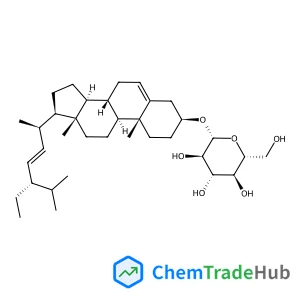
(3beta,22E)-Stigmasta-5,22-dien-3-yl beta-D-glucopyranoside
CAS Number:
19716-26-8
Molecular Formula:
C35H58O6
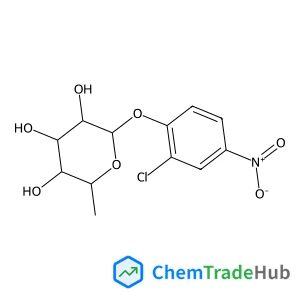
2-Chloro-4-nitrophenyl 6-deoxy-alpha-L-galactopyranoside
CAS Number:
157843-41-9
Molecular Formula:
C12H14ClNO7
Recommended Suppliers







Disclaimer
This page provides academic journal information for reference and research purposes only. We are not affiliated with any journal publishers and do not handle publication submissions. For publication-related inquiries, please contact the respective journal publishers directly.
If you notice any inaccuracies in the information displayed, please contact us at support@chemtradehub.com. We will promptly review and address your concerns.