



On the effect of using RAFT and FRP for the bulk synthesis of acrylic and methacrylic molecularly imprinted polymers
Literature Information
Publication Date
2013-10-24
DOI
10.1039/C3PY01246H
Impact Factor
5.582
Authors
Carlo Gonzato, Pamela Pasetto, Fahmi Bedoui, Pierre-Emmanuel Mazeran, Karsten Haupt
View Original
Abstract
Molecularly imprinted polymers (MIPs) are synthetic polymeric receptors, capable of specifically binding a target molecule, just like a biological antibody. There has been a recent trend to improve the properties of these materials by using modern methods of controlled radical polymerization (CRPs) for their synthesis. Despite the recognized advantages associated with their “living character”, the effect of the “controlled nature” has still to be clearly demonstrated. This is far from obvious as the high amounts of short cross-linkers normally used for their synthesis complicate the formation of homogeneous polymer networks. In order to gain more insights into the potential benefits for the binding properties of MIPs resulting from the use of CRPs, the imprinting of a model target (S-propranolol) has been used to compare reversible addition–fragmentation chain transfer polymerisation (RAFT) and free-radical polymerisation (FRP) on acrylic and methacrylic matrices. While most MIPs are based on methacrylates, we used acrylates as a “difficult imprinting matrix” for comparison. In fact, the absence of the methyl groups in their polymer back-bone reduces their entanglement, resulting in a more flexible network. This renders the material more difficult to imprint, and at the same time makes it easier to evaluate the effects of RAFT polymerization and FRP on structural parameters and thus binding properties. Moreover, we also progressively reduced the amount of cross-linking in order to explore the effects of RAFT and FRP on a wider range of scaffold rigidities. Although MIPs are normally highly cross-linked, some recent emerging applications require lower degrees of cross-linking. Binding experiments, SEM, BET, DMA, swelling and nanoindentation analyses revealed that RAFT is effective in promoting the synthesis of more homogeneous networks compared to FRP, even at very high cross-linker contents, which results in higher target affinities, especially in the case of acrylates.
Recommended Journals

Russian Journal of General Chemistry

Organic Process Research & Development

Crystallography Reports

Russian Journal of Applied Chemistry

Chemistry Education Research and Practice

New Journal of Chemistry

Russian Journal of Organic Chemistry

Nature Medicine

Journal of Natural Medicines

Chemical Communications
Related Literature
Transient absorption spectroscopy of the electron transfer step in the photochemically activated polymerizations of N-ethylcarbazole and 9-phenylcarbazole
Georgia L. Thornton, Ryan Phelps, Andrew J. Orr-Ewing
2021-08-05
Paper
DOI: 10.1039/D1CP03137F
Polar zinc oxide surface in electrolyte solutions: an atomic view of reconstruction, hydration and surface states
Yudai Samejima, Seiichiro Nakabayashi
2021-08-04
Paper
DOI: 10.1039/D1CP02371C
Investigating the role of Cu-oxo species in Cu-nitrate formation over Cu-CHA catalysts
Chiara Negri, Gabriele Deplano, Kirill A. Lomachenko, Ton V. W. Janssens, Elisa Borfecchia, Gloria Berlier, Silvia Bordiga
2021-08-13
Paper
DOI: 10.1039/D1CP01754C
Expression of concern: Preparation and characterization of nano-sized Pt–Ru/C catalysts and their superior catalytic activities for methanol and ethanol oxidation
2021-08-18
Expression of Concern
DOI: 10.1039/D1CP90169A
Analysis of reduced paramagnetic shifts as an effective tool in NMR spectroscopy
Igor A. Nikovskiy, Dmitry Y. Aleshin
2021-12-06
Paper
DOI: 10.1039/D1CP04648A
Exploring the thermodynamic, kinetic and inhibitory mechanisms of 5-iTU targeting mitotic kinase haspin by integrated molecular dynamics
Qianqian Wang, Qinggao Zhang, Elaine Lai Han Leung, Yingqing Chen, Xiaojun Yao
2021-08-03
Paper
DOI: 10.1039/D1CP02783B
First-principles prediction of infrared phonon and dielectric function in biaxial hyperbolic van der Waals crystal α-MoO3
Zhen Tong, Traian Dumitrică
2021-08-11
Paper
DOI: 10.1039/D1CP00682G
Mechanical properties of calcium silicate hydrate under uniaxial and biaxial strain conditions: a molecular dynamics study
Dongyun Liu, Rongjia Wen, Qian Yu, Lennart Elfgren
2021-12-20
Paper
DOI: 10.1039/D1CP04474E
Bonding analysis of water clusters using quasi-atomic orbitals
Jorge L. Galvez Vallejo, Juan Duchimaza Heredia, Mark S. Gordon
2021-08-06
Paper
DOI: 10.1039/D1CP02301B
You might also like
Compound Q&A
What are the main uses of 4-Nitrophenyl phosphate disodium salt hexahydrate (CAS: 333338-18-4)?
4-Nitrophenyl phosphate disodium salt hexahydrate is primarily used as a substra...
333338-18-44-Nitrophenyl phosph...
Compound Q&A
What are the main uses of 2-(Trifluoromethyl)-1,3-oxazole-4-carboxylic Acid (CAS: 1060816-01-4)?
2-(Trifluoromethyl)-1,3-oxazole-4-carboxylic Acid (CAS: 1060816-01-4) is widely ...
1060816-01-42-(Trifluoromethyl)-...
Compound Q&A
How should 2-Fluoro-4-biphenylcarboxylic acid (CAS: 137045-30-8) be stored?
2-Fluoro-4-biphenylcarboxylic acid should be stored in a cool, dry place at room...
137045-30-82-Fluoro-4-biphenylc...
Compound Q&A
What industries use Prednisolone-21-Carboxylic Acid (CAS: 61549-70-0)?
Prednisolone-21-Carboxylic Acid is primarily used in the pharmaceutical industry...
61549-70-0Prednisolone-21-Carb...
Compound Q&A
How should 4-(Hydrazinomethyl)-1,2,3-benzenetriol (CAS: 3614-72-0) be stored?
4-(Hydrazinomethyl)-1,2,3-benzenetriol (CAS: 3614-72-0) should be stored in a co...
3614-72-04-(Hydrazinomethyl)-...
Compound Q&A
What industries use 4-Amino-1-methyl-1H-pyrazole-5-carboxylic acid hydrochloride (CAS: 92534-70-8)?
4-Amino-1-methyl-1H-pyrazole-5-carboxylic acid hydrochloride (CAS: 92534-70-8) i...
92534-70-84-Amino-1-methyl-1H-...
Compound Q&A
What regulatory guidelines apply to dehydropachymic acid (CAS: 77012-31-8)?
Dehydropachymic acid (CAS: 77012-31-8) is regulated by various agencies. It fall...
77012-31-8Dehydropachymic acid
Compound Q&A
What is the market or research trend for 6-[(2,2-Dimethylpropanoyl)amino]nicotinic acid (CAS: 898561-66-5)?
The market and research trends for 6-[(2,2-Dimethylpropanoyl)amino]nicotinic aci...
898561-66-56-[(2,2-Dimethylprop...
Compound Q&A
How should 1,10-Phenanthroline-2,9-dicarbaldehyde (CAS: 57709-62-3) be stored?
1,10-Phenanthroline-2,9-dicarbaldehyde should be stored in a cool, dry place awa...
57709-62-31,10-Phenanthroline-...
Compound Q&A
How is 5-Carbamoyl-11-oxo-10,11-dihydro-5H-dibenzo[b,f]azepin-10-yl acetate (CAS: 113952-21-9) typically synthesized?
5-Carbamoyl-11-oxo-10,11-dihydro-5H-dibenzo[b,f]azepin-10-yl acetate can be synt...
113952-21-95-Carbamoyl-11-oxo-1...
Source Journal
Polymer Chemistry

CiteScore:
8.6
Self-citation Rate:
7.3%
Articles per Year:
457
Polymer Chemistry welcomes submissions in all areas of polymer science that have a strong focus on macromolecular chemistry. Manuscripts may cover a broad range of fields, yet no direct application focus is required.
Recommended Compounds
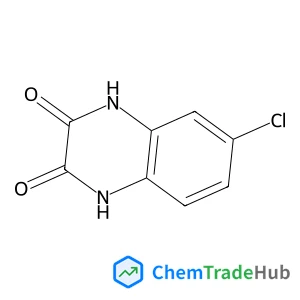
6-CHLORO-2,3-DIOXO-1,2,3,4-TETRAHYDROQUINOXALINE, 97
CAS Number:
169-14-2
Molecular Formula:
C8H5ClN2O2


![1-[(4-Methylphenyl)sulfonyl]-3-(4,4,5,5-tetramethyl-1,3,2-dioxaborolan-2-yl)-1H-pyrrolo[2,3-b]pyridine-5-carbonitrile structure](https://static.chemtradehub.com/structs/143/1434747-57-5-fc0d.webp "1-[(4-Methylphenyl)sulfonyl]-3-(4,4,5,5-tetramethyl-1,3,2-dioxaborolan-2-yl)-1H-pyrrolo[2,3-b]pyridine-5-carbonitrile structure")
1-[(4-Methylphenyl)sulfonyl]-3-(4,4,5,5-tetramethyl-1,3,2-dioxaborolan-2-yl)-1H-pyrrolo[2,3-b]pyridine-5-carbonitrile
CAS Number:
1434747-57-5
Molecular Formula:
C21H22BN3O4S
Recommended Suppliers






Disclaimer
This page provides academic journal information for reference and research purposes only. We are not affiliated with any journal publishers and do not handle publication submissions. For publication-related inquiries, please contact the respective journal publishers directly.
If you notice any inaccuracies in the information displayed, please contact us at support@chemtradehub.com. We will promptly review and address your concerns.