


A comparative study of polymers containing naphthodifuranone and benzodifuranone units in the main chain
Literature Information
Publication Date
2013-09-30
DOI
10.1039/C3PY01101A
Impact Factor
5.582
Authors
Haichang Zhang, Jun Zhang, Bernd Tieke
View Original
Abstract
The synthesis of two new polymers containing the naphtho[2,1-b:3,4-b′]difuran-2,9-dione (1,10-NDF) or the ortho-benzo[1,2-b:6,5-b′]difuran-2,7-dione (1,8-BDF) chromophore in the main chain is described. The polymers P1 and P2′ were prepared upon Suzuki coupling of either 3-(4-bromophenyl)-8-(3-bromo-4,5-dimethoxyphenyl)-naphtho[2,1-b:3,4-b′]difuran-2,9-dione (M1) or 3,6-bis(4-bromophenyl)-1,2,3,5,6,7-hexahydrobenzo[1,2-b:6,5-b′]difuran-2,7-dione (M2′) and 2,2-(9,9-dioctyl-9H-fluorene-2,7-diyl-)bis(4,4,5,5-tetramethyl-1,3,2-dioxaborolane) (M3), respectively. P2′ was subsequently converted into the oxidized form P2 upon reaction with nitrobenzene. Optical and electrochemical properties of P1 and P2 are described and compared with the properties of previously prepared polymer P3, which was synthesized upon Suzuki coupling of symmetrical 3,8-bis(4-bromophenyl)naphtho[2,1-b:3,4-b′]difuran-2,9-dione (M4) and M3. While the NDF-based polymers P1 and P3 exhibit absorption maxima around 480 nm, the BDF-based polymer P2 shows a maximum at 555 nm. Quantum chemical studies by the density functional theory method show that the BDF-based polymer is more planar than the polymers based on NDF. The excitation of the polymers causes a strong electron transfer from the backbone to the NDF/BDF core units. 1,10-NDF-based polymers exhibit excellent photostability in UV-light, while the 1,8-BDF-based polymer is less stable, if irradiated with a 200 W Hg lamp. All polymers exhibit low band gaps of 1.31 to 1.66 eV.
Recommended Journals

Acta Materialia

Chemistry Education Research and Practice

Russian Journal of Coordination Chemistry

Journal of Saudi Chemical Society

Russian Journal of General Chemistry

Journal of Natural Medicines

Chemical Communications

Nature Medicine

Current Opinion in Colloid & Interface Science

Saudi Pharmaceutical Journal
Related Literature
Electronic structures and properties of dianionic pentacarbonyls [TM(CO)5]2− (TM = Cr, Mo, W)
Gerui Pei, Cong-Cong Shu, Mengyang Li, Zhong-Ming Sun, Tao Yang
2021-08-03
Paper
DOI: 10.1039/D1CP01592C
Adsorption of water in Na-LTA zeolites: an ab initio molecular dynamics investigation
Joharimanitra Randrianandraina, Michael Badawi, Bruno Cardey, Manuel Grivet, Jean-Emmanuel Groetz, Christophe Ramseyer, Freddy Torrealba Anzola, Caroline Chambelland, Didier Ducret
2021-08-06
Paper
DOI: 10.1039/D1CP02624K
The extrinsic nature of double broadband photoluminescence from the BaTiO3 perovskite: generation of white light emitters
J. L. Clabel H., G. Nicolodelli, G. Lozano C., V. A. G. Rivera, S. O. Ferreira, Alexandre H. Pinto, M. Siu Li, E. Marega, Jr.
2021-07-26
Paper
DOI: 10.1039/D1CP01765A
Directed gas-phase preparation of the elusive phosphinosilylidyne (SiPH2, X2A′′) and cis/trans phosphinidenesilyl (HSiPH; X2A′) radicals under single-collision conditions
Chao He, Shane J. Goettl, Zhenghai Yang, Srinivas Doddipatla, Ralf I. Kaiser, Mateus Xavier Silva, Breno R. L. Galvão
2021-08-12
Paper
DOI: 10.1039/D1CP02812J
Fitting potential energy and induced dipole surfaces of the van der Waals complex CH4–N2 using non-product quadrature grids
Yulia N. Kalugina, Iouli E. Gordon
2021-08-04
Paper
DOI: 10.1039/D1CP02161C
Effect of Hf doping on He behavior in tritium storage material ZrCo
You Yu, Yanhong Shen, Jiangfeng Song
2021-08-13
Paper
DOI: 10.1039/D1CP01803E
Progress in phase-sensitive sum frequency generation spectroscopy
Shoichi Yamaguchi, Takuhiro Otosu
2021-06-25
Perspective
DOI: 10.1039/D1CP01994E
Designing new ferromagnetic double perovskites: the coexistence of polar distortion and half-metallicity
Neda Rahmani, Mohammad Ebrahim Ghazi, Morteza Izadifard, Alireza Shabani, Jost Adam
2021-08-26
Paper
DOI: 10.1039/D1CP02479E
Vacancy-triggered and dopant-assisted NO electrocatalytic reduction over MoS2
Chao Wu
2021-08-16
Paper
DOI: 10.1039/D1CP02764F
You might also like
Compound Q&A
What are the main uses of 4-Nitrophenyl phosphate disodium salt hexahydrate (CAS: 333338-18-4)?
4-Nitrophenyl phosphate disodium salt hexahydrate is primarily used as a substra...
333338-18-44-Nitrophenyl phosph...
Compound Q&A
What are the main uses of 2-(Trifluoromethyl)-1,3-oxazole-4-carboxylic Acid (CAS: 1060816-01-4)?
2-(Trifluoromethyl)-1,3-oxazole-4-carboxylic Acid (CAS: 1060816-01-4) is widely ...
1060816-01-42-(Trifluoromethyl)-...
Compound Q&A
How should 2-Fluoro-4-biphenylcarboxylic acid (CAS: 137045-30-8) be stored?
2-Fluoro-4-biphenylcarboxylic acid should be stored in a cool, dry place at room...
137045-30-82-Fluoro-4-biphenylc...
Compound Q&A
What industries use Prednisolone-21-Carboxylic Acid (CAS: 61549-70-0)?
Prednisolone-21-Carboxylic Acid is primarily used in the pharmaceutical industry...
61549-70-0Prednisolone-21-Carb...
Compound Q&A
How should 4-(Hydrazinomethyl)-1,2,3-benzenetriol (CAS: 3614-72-0) be stored?
4-(Hydrazinomethyl)-1,2,3-benzenetriol (CAS: 3614-72-0) should be stored in a co...
3614-72-04-(Hydrazinomethyl)-...
Compound Q&A
What industries use 4-Amino-1-methyl-1H-pyrazole-5-carboxylic acid hydrochloride (CAS: 92534-70-8)?
4-Amino-1-methyl-1H-pyrazole-5-carboxylic acid hydrochloride (CAS: 92534-70-8) i...
92534-70-84-Amino-1-methyl-1H-...
Compound Q&A
What regulatory guidelines apply to dehydropachymic acid (CAS: 77012-31-8)?
Dehydropachymic acid (CAS: 77012-31-8) is regulated by various agencies. It fall...
77012-31-8Dehydropachymic acid
Compound Q&A
What is the market or research trend for 6-[(2,2-Dimethylpropanoyl)amino]nicotinic acid (CAS: 898561-66-5)?
The market and research trends for 6-[(2,2-Dimethylpropanoyl)amino]nicotinic aci...
898561-66-56-[(2,2-Dimethylprop...
Compound Q&A
How should 1,10-Phenanthroline-2,9-dicarbaldehyde (CAS: 57709-62-3) be stored?
1,10-Phenanthroline-2,9-dicarbaldehyde should be stored in a cool, dry place awa...
57709-62-31,10-Phenanthroline-...
Compound Q&A
How is 5-Carbamoyl-11-oxo-10,11-dihydro-5H-dibenzo[b,f]azepin-10-yl acetate (CAS: 113952-21-9) typically synthesized?
5-Carbamoyl-11-oxo-10,11-dihydro-5H-dibenzo[b,f]azepin-10-yl acetate can be synt...
113952-21-95-Carbamoyl-11-oxo-1...
Source Journal
Polymer Chemistry

CiteScore:
8.6
Self-citation Rate:
7.3%
Articles per Year:
457
Polymer Chemistry welcomes submissions in all areas of polymer science that have a strong focus on macromolecular chemistry. Manuscripts may cover a broad range of fields, yet no direct application focus is required.
Recommended Compounds

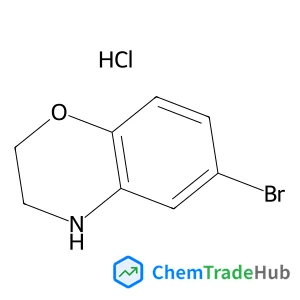
6-Bromo-3,4-dihydro-2H-1,4-benzoxazine hydrochloride (1:1)
CAS Number:
1260803-10-8
Molecular Formula:
C8H9BrClNO
Recommended Suppliers




Disclaimer
This page provides academic journal information for reference and research purposes only. We are not affiliated with any journal publishers and do not handle publication submissions. For publication-related inquiries, please contact the respective journal publishers directly.
If you notice any inaccuracies in the information displayed, please contact us at support@chemtradehub.com. We will promptly review and address your concerns.