












Laser-induced photopatterning of organic–inorganic TiO2-based hybrid materials with tunable interfacial electron transfer
Literature Information
Publication Date
2009-01-08
DOI
10.1039/B814494J
Impact Factor
3.676
Authors
N. Bityurin, A. Kanaev
View Original
Abstract
Hybrid organic–inorganic materials based on TiO2 gels demonstrate high photosensitivity. Associated with their stable photochromic behavior, these make them suitable for laser-induced photopatterning. We show that the electronic coupling along the extended interface between the inorganic, TiO2-based gel, and the organic, poly(hydroxyethyl methacrylate) networks allows (i) a rapid scavenging of the photo-excited holes by the polymer, (ii) an efficient trapping of the photo-exited electrons as small polarons (Ti3+) that develop “dark” absorption continuum covering the spectral range from 350 nm (UV) to 2.5 μm (IR), and (iii) long-term (over months) conservation of trapped charges at high number density. Furthermore, we give the proof that the electron transfer depends on the material microstructure, which can be affected by the material chemistry and processing. Undeniably, a delay between the gelation of the system and the organic polymerization step allows tuning the photochromic responses of the resulting nanocomposites. A comparison is made between the prepared gel-based samples and a reference sample, which is obtained by the organic copolymerization of functional precondensed inorganic building units, titanium oxo-clusters, Ti16O16(OEt)24(OEMA)8 with hydroxyethyl methacrylate. The experiments show the highest values of quantum yield (12%) and Ti3+ concentration (1.7 × 1020 cm−3 or 14% of titanium atoms) attained in samples where the organic polymerization is induced after gelation. This behavior is explained by a strong coupling between the organic and the inorganic components of the hybrid towards the hole exchange and a poor coupling towards the electron exchange.
Recommended Journals
Related Literature
Compact large area and high-quality Au film with a hierarchical structure and its application in SERS
Youyi Xia, Tenjiao Li, Jun Chen
2013-05-15
Paper
DOI: 10.1039/C3CP51080H
Double-hybrid density functionals: merging wavefunction and density approaches to get the best of both worlds
2013-06-18
Perspective
DOI: 10.1039/C3CP50907A
Isoindigo-based small molecules for high-performance solution-processed organic photovoltaic devices: the electron donating effect of the donor group on photo-physical properties and device performance
Chang-Lyoul Lee, Shinuk Cho, Seung-Hwan Oh, Seung-Hyeon Moon, Ahmed Elbarbary
2013-07-17
Paper
DOI: 10.1039/C3CP52151F
Starburst triarylamine based dyes bearing a 3,4-ethylenedioxythiophene linker for efficient dye-sensitized solar cells
Li-Lin Tan, Hong-Yan Chen, Li-Feng Hao, Yong Shen, Li-Min Xiao, Jun-Min Liu, Dai-Bin Kuang, Cheng-Yong Su
2013-05-10
Paper
DOI: 10.1039/C3CP51633D
Marine natural products from the deep Pacific as potential non-linear optical chromophores
Bruce F. Milne, Patrick Norman, Fernando Nogueira, Cláudia Cardoso
2013-07-24
Paper
DOI: 10.1039/C3CP52528G
Chemically synthesised atomically precise gold clusters deposited and activated on titania. Part II
David P. Anderson, Jason F. Alvino, Oliver Shipper, Baira Donoeva, Jan-Yves Ruzicka, Hassan Al Qahtani, Hugh H. Harris, Bruce Cowie, Jade B. Aitken, Vladimir B. Golovko, Gregory F. Metha, Gunther G. Andersson
2013-07-24
Paper
DOI: 10.1039/C3CP52497C
Effect of the state of distribution of supported Pt nanoparticles on effective Pt utilization in polymer electrolyte fuel cells
Makoto Uchida, Young-Chul Park, Katsuyoshi Kakinuma, Hiroshi Yano, Donald A. Tryk, Takeo Kamino, Hiroyuki Uchida, Masahiro Watanabe
2013-05-29
Paper
DOI: 10.1039/C3CP51801A
Highly sensitive, selective and reusable mercury(ii) ion sensor based on a ssDNA-functionalized photonic crystal film
Yuqi Zhang, Loujun Gao, Liping Wen, Liping Heng, Yanlin Song
2013-05-10
Paper
DOI: 10.1039/C3CP51324F
Remarkable magnetism and ferromagnetic coupling in semi-sulfuretted transition-metal dichalcogenides
Yungang Zhou, Chengfei Yang, Xia Xiang, Xiaotao Zu
2013-06-18
Paper
DOI: 10.1039/C3CP51518D
Facile synthesis of novel Si nanoparticles–graphene composites as high-performance anode materials for Li-ion batteries
Min Zhou, Fan Pu, Zhao Wang, Tingwei Cai, Hao Chen, Haiyong Zhang, Shiyou Guan
2013-05-20
Paper
DOI: 10.1039/C3CP51276B
You might also like
Compound Q&A
Are there alternatives to 1-(4-Chlorophenyl)-N-hydroxymethanimine (CAS: 3848-36-0) in synthesis?
When considering alternatives to 1-(4-Chlorophenyl)-N-hydroxymethanimine (CAS: 3...
3848-36-01-(4-Chlorophenyl)-N...
Compound Q&A
How should (1R,9S,10S,12S,14E,16S,19R,20R,21S,22R)-3,9,21-Trihydroxy-5,10,12,14,16,20,22-heptamethyl-23,24-dioxatetracyclo[17.3.1.1~6,9~.0~2,7~]tetracosa-2,5,7,14-tetraen-4-one (CAS: 183202-73-5) be stored?
This compound should be stored in a cool, dry place away from direct sunlight. I...
183202-73-5(1R,9S,10S,12S,14E,1...
Compound Q&A
How is 3-(4-Bromophenyl)-5-(2-fluorophenyl)-1,2,4-oxadiazole (CAS: 419553-16-5) typically synthesized?
3-(4-Bromophenyl)-5-(2-fluorophenyl)-1,2,4-oxadiazole is synthesized through a m...
419553-16-53-(4-Bromophenyl)-5-...
Compound Q&A
How is 5-Chloro-2-(4-chlorophenyl)-4-methyl-6-[3-(1-piperidinyl)propoxy]pyrimidine (CAS: 1639220-19-1) typically synthesized?
5-Chloro-2-(4-chlorophenyl)-4-methyl-6-[3-(1-piperidinyl)propoxy]pyrimidine (CAS...
1639220-19-15-Chloro-2-(4-chloro...
Compound Q&A
What industries use 2-Chloro-4-(difluoromethoxy)pyridine (CAS: 1206978-15-5)?
2-Chloro-4-(difluoromethoxy)pyridine is used in the pharmaceutical industry for ...
1206978-15-52-Chloro-4-(difluoro...
Compound Q&A
What regulatory guidelines apply to 3-Chloro-6-methylpyridazine (CAS: 1121-79-5)?
3-Chloro-6-methylpyridazine (CAS: 1121-79-5) is classified under the Globally Ha...
1121-79-53-Chloro-6-methylpyr...
Compound Q&A
Are there alternatives to Methyl 4,5-dimethyl-2-nitrobenzoate in synthesis?
Several alternatives can be used in the synthesis of Methyl 4,5-dimethyl-2-nitro...
90922-74-0Methyl 4,5-dimethyl-...
Compound Q&A
Are there alternatives to (2E,2'E)-3,3'-(1,4-Phenylene)bisacrylaldehyde in synthesis?
Alternatives to (2E,2'E)-3,3'-(1,4-Phenylene)bisacrylaldehyde include other acry...
63405-68-5(2E,2'E)-3,3'-(1,4-P...
Compound Q&A
What is 3-Amino-5-chloropyridin-2-ol hydrochloride (CAS: 1261906-29-9)?
3-Amino-5-chloropyridin-2-ol hydrochloride is an organic compound with the CAS n...
1261906-29-93-Amino-5-chloropyri...
Compound Q&A
What precautions should be taken when handling 6,7-Difluoro-2,3-dihydro-4H-chromen-4-one (CAS: 1092349-93-3)?
When handling 6,7-Difluoro-2,3-dihydro-4H-chromen-4-one, it is essential to wear...
1092349-93-36,7-Difluoro-2,3-dih...
Source Journal
Physical Chemistry Chemical Physics

CiteScore:
5.5
Self-citation Rate:
10.3%
Articles per Year:
3036
Physical Chemistry Chemical Physics (PCCP) is an international journal co-owned by 19 physical chemistry and physics societies from around the world. This journal publishes original, cutting-edge research in physical chemistry, chemical physics and biophysical chemistry. To be suitable for publication in PCCP, articles must include significant innovation and/or insight into physical chemistry; this is the most important criterion that reviewers and Editors will judge against when evaluating submissions. The journal has a broad scope and welcomes contributions spanning experiment, theory, computation and data science. Topical coverage includes spectroscopy, dynamics, kinetics, statistical mechanics, thermodynamics, electrochemistry, catalysis, surface science, quantum mechanics, quantum computing and machine learning. Interdisciplinary research areas such as polymers and soft matter, materials, nanoscience, energy, surfaces/interfaces, and biophysical chemistry are welcomed if they demonstrate significant innovation and/or insight into physical chemistry. Joined experimental/theoretical studies are particularly appreciated when complementary and based on up-to-date approaches.
Recommended Compounds
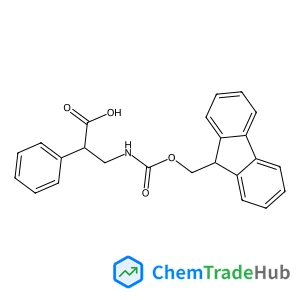
(S)-3-((((9H-Fluoren-9-yl)methoxy)carbonyl)amino)-2-phenylpropanoic acid
CAS Number:
1217663-60-9
Molecular Formula:
C24H21NO4
![4-[(3-Chloro-2-fluorophenyl)amino]-7-methoxy-6-quinazolinyl acetate structure](https://static.chemtradehub.com/structs/740/740081-22-5-f58f.webp "4-[(3-Chloro-2-fluorophenyl)amino]-7-methoxy-6-quinazolinyl acetate structure")
4-[(3-Chloro-2-fluorophenyl)amino]-7-methoxy-6-quinazolinyl acetate
CAS Number:
740081-22-5
Molecular Formula:
C17H13ClFN3O3
Recommended Suppliers






Disclaimer
This page provides academic journal information for reference and research purposes only. We are not affiliated with any journal publishers and do not handle publication submissions. For publication-related inquiries, please contact the respective journal publishers directly.
If you notice any inaccuracies in the information displayed, please contact us at support@chemtradehub.com. We will promptly review and address your concerns.