












Quantum chemical studies of the adsorption of single acetone molecules on hexagonal ice Ih and cubic ice Ic
Literature Information
Publication Date
2008-12-17
DOI
10.1039/B814467B
Impact Factor
3.676
Authors
Holger Somnitz
View Original
Abstract
The interaction energies of free acetone molecules with surfaces of two different ice polymorphs have been investigated by quantum chemical methods. Special emphasis has been given to sites for adsorption on the (0001) surface of hexagonal ice (Ih) and the (01) surface of cubic ice (Ic), respectively. The structural optimisations made use of conventional electronic structure methods including HF and B3LYP using moderate basis sets up to 6-31+G(d) as well as local and ONIOM methods using 2 or 3 layers which were treated at different levels of theory. The adsorption energies at T = 0 K were calculated for the optimised adsorption geometries performing single points at the B3LYP, MP2 and LMP2 level in conjunction with valence triple-ζ basis sets up to 6-311+G(d,p). Including corrections for basis set superposition errors (BSSE) the most extensive calculations provide adsorption energies (T = 0 K) of −39.1 and −57.5 kJ mol−1 for the energetically most favourable sites for adsorption of a single acetone molecule on ice Ih and ice Ic, respectively. By vibrational analysis this can be transformed to adsorption enthalpies at around a temperature of 200 K yielding values of −31.5 for adsorption on ice Ih and −49.9 kJ mol−1 for adsorption on ice Ic. The current results support experimental observations of Behr et al. (J. Phys. Chem. A, 2006, 110, 8098) in which evidence was presented that acetone adsorbs on ice around 200 K at two different sites; each of which has a different adsorption enthalpy.
Related Literature
Synthesis of poly(vinylidene fluoride-co-bromotrifluoroethylene) and effects of molecular defects on microstructure and dielectric properties
Matthew R. Gadinski, Chalatorn Chanthad, Kuo Han, Lijie Dong, Qing Wang
2014-06-26
Paper
DOI: 10.1039/C4PY00690A
A two-dimensional conjugated polymer framework with fully sp2-bonded carbon skeleton
Xiaodong Zhuang, Wuxue Zhao, Fan Zhang, Yu Cao, Feng Liu, Shuai Bi
2016-05-09
Paper
DOI: 10.1039/C6PY00561F
Synthesis and properties of a well-defined copolymer of chlorotrifluoroethylene and N-vinylpyrrolidone by xanthate-mediated radical copolymerization under 60Co γ-ray irradiation
Pucheng Wang, Jingwen Dai, Lei Liu, Qibao Dong, Hu Wang, Ruke Bai
2014-07-24
Paper
DOI: 10.1039/C4PY00902A
Hyperbranched polyester nanorods with pyrrolo[2,1-a]isoquinoline end groups for fluorescent recognition of Fe3+
Qiaorong Han, Yuliang Jiang, Can Jin, Shanshan Cheng, Xiaoxia Wang, Xiangyu Wang, Bingxiang Wang
2014-07-09
Communication
DOI: 10.1039/C4PY00787E
Di-magnesium and zinc catalysts for the copolymerization of phthalic anhydride and cyclohexene oxide
Prabhjot K. Saini, Charles Romain, Yunqing Zhu, Charlotte K. Williams
2014-07-15
Paper
DOI: 10.1039/C4PY00748D
Design, synthesis and photovoltaic properties of two π-bridged cyclopentadithiophene-based polymers
Manjun Xiao, Xichang Bao, Liangliang Han, Ning Wang, Shuguang Wen, Weiguo Zhu, Renqiang Yang
2014-07-29
Paper
DOI: 10.1039/C4PY00881B
Six-membered-ring photocyclization in phenyl-substituted p-phenylenevinylene derivatives: a potential factor of instability in conjugated polymers
Linlin Liu, Hongcheng Gao, Yupeng Li, Muddasir Hanif, Chuan Li, Yu Gao, Bing Yang, Zengqi Xie, Yuguang Ma
2016-04-25
Communication
DOI: 10.1039/C6PY00180G
A base–conjugate-acid pair for living/controlled ring-opening polymerization of trimethylene carbonate through hydrogen-bonding bifunctional synergistic catalysis
Xin Wang, Saide Cui, Zhenjiang Li, Suli Kan, Qiguo Zhang, Chengxu Zhao, Hao Wu, Jingjing Liu, Wenzhuo Wu, Kai Guo
2014-06-27
Paper
DOI: 10.1039/C4PY00773E
You might also like
Compound Q&A
Are there alternatives to 1-(4-Chlorophenyl)-N-hydroxymethanimine (CAS: 3848-36-0) in synthesis?
When considering alternatives to 1-(4-Chlorophenyl)-N-hydroxymethanimine (CAS: 3...
3848-36-01-(4-Chlorophenyl)-N...
Compound Q&A
How should (1R,9S,10S,12S,14E,16S,19R,20R,21S,22R)-3,9,21-Trihydroxy-5,10,12,14,16,20,22-heptamethyl-23,24-dioxatetracyclo[17.3.1.1~6,9~.0~2,7~]tetracosa-2,5,7,14-tetraen-4-one (CAS: 183202-73-5) be stored?
This compound should be stored in a cool, dry place away from direct sunlight. I...
183202-73-5(1R,9S,10S,12S,14E,1...
Compound Q&A
How is 3-(4-Bromophenyl)-5-(2-fluorophenyl)-1,2,4-oxadiazole (CAS: 419553-16-5) typically synthesized?
3-(4-Bromophenyl)-5-(2-fluorophenyl)-1,2,4-oxadiazole is synthesized through a m...
419553-16-53-(4-Bromophenyl)-5-...
Compound Q&A
How is 5-Chloro-2-(4-chlorophenyl)-4-methyl-6-[3-(1-piperidinyl)propoxy]pyrimidine (CAS: 1639220-19-1) typically synthesized?
5-Chloro-2-(4-chlorophenyl)-4-methyl-6-[3-(1-piperidinyl)propoxy]pyrimidine (CAS...
1639220-19-15-Chloro-2-(4-chloro...
Compound Q&A
What industries use 2-Chloro-4-(difluoromethoxy)pyridine (CAS: 1206978-15-5)?
2-Chloro-4-(difluoromethoxy)pyridine is used in the pharmaceutical industry for ...
1206978-15-52-Chloro-4-(difluoro...
Compound Q&A
What regulatory guidelines apply to 3-Chloro-6-methylpyridazine (CAS: 1121-79-5)?
3-Chloro-6-methylpyridazine (CAS: 1121-79-5) is classified under the Globally Ha...
1121-79-53-Chloro-6-methylpyr...
Compound Q&A
Are there alternatives to Methyl 4,5-dimethyl-2-nitrobenzoate in synthesis?
Several alternatives can be used in the synthesis of Methyl 4,5-dimethyl-2-nitro...
90922-74-0Methyl 4,5-dimethyl-...
Compound Q&A
Are there alternatives to (2E,2'E)-3,3'-(1,4-Phenylene)bisacrylaldehyde in synthesis?
Alternatives to (2E,2'E)-3,3'-(1,4-Phenylene)bisacrylaldehyde include other acry...
63405-68-5(2E,2'E)-3,3'-(1,4-P...
Compound Q&A
What is 3-Amino-5-chloropyridin-2-ol hydrochloride (CAS: 1261906-29-9)?
3-Amino-5-chloropyridin-2-ol hydrochloride is an organic compound with the CAS n...
1261906-29-93-Amino-5-chloropyri...
Compound Q&A
What precautions should be taken when handling 6,7-Difluoro-2,3-dihydro-4H-chromen-4-one (CAS: 1092349-93-3)?
When handling 6,7-Difluoro-2,3-dihydro-4H-chromen-4-one, it is essential to wear...
1092349-93-36,7-Difluoro-2,3-dih...
Source Journal
Physical Chemistry Chemical Physics

CiteScore:
5.5
Self-citation Rate:
10.3%
Articles per Year:
3036
Physical Chemistry Chemical Physics (PCCP) is an international journal co-owned by 19 physical chemistry and physics societies from around the world. This journal publishes original, cutting-edge research in physical chemistry, chemical physics and biophysical chemistry. To be suitable for publication in PCCP, articles must include significant innovation and/or insight into physical chemistry; this is the most important criterion that reviewers and Editors will judge against when evaluating submissions. The journal has a broad scope and welcomes contributions spanning experiment, theory, computation and data science. Topical coverage includes spectroscopy, dynamics, kinetics, statistical mechanics, thermodynamics, electrochemistry, catalysis, surface science, quantum mechanics, quantum computing and machine learning. Interdisciplinary research areas such as polymers and soft matter, materials, nanoscience, energy, surfaces/interfaces, and biophysical chemistry are welcomed if they demonstrate significant innovation and/or insight into physical chemistry. Joined experimental/theoretical studies are particularly appreciated when complementary and based on up-to-date approaches.
Recommended Compounds
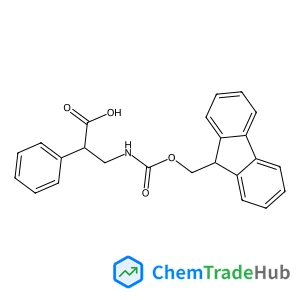
(S)-3-((((9H-Fluoren-9-yl)methoxy)carbonyl)amino)-2-phenylpropanoic acid
CAS Number:
1217663-60-9
Molecular Formula:
C24H21NO4
![4-[(3-Chloro-2-fluorophenyl)amino]-7-methoxy-6-quinazolinyl acetate structure](https://static.chemtradehub.com/structs/740/740081-22-5-f58f.webp "4-[(3-Chloro-2-fluorophenyl)amino]-7-methoxy-6-quinazolinyl acetate structure")
4-[(3-Chloro-2-fluorophenyl)amino]-7-methoxy-6-quinazolinyl acetate
CAS Number:
740081-22-5
Molecular Formula:
C17H13ClFN3O3
Recommended Suppliers







Disclaimer
This page provides academic journal information for reference and research purposes only. We are not affiliated with any journal publishers and do not handle publication submissions. For publication-related inquiries, please contact the respective journal publishers directly.
If you notice any inaccuracies in the information displayed, please contact us at support@chemtradehub.com. We will promptly review and address your concerns.