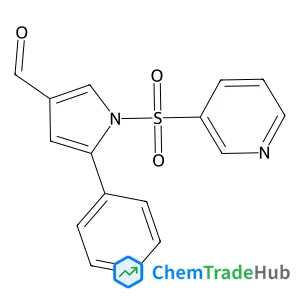
5-Phenyl-1-(pyridin-3-ylsulfonyl)-1H-pyrrole-3-carbaldehyde
CAS Number:
881676-90-0
Molecular Formula:
C16H12N2O3S
Sang-Hee Shim, Martin T. Zanni
We have recently developed a new and simple way of collecting 2D infrared and visible spectra that utilizes a pulse shaper and a partly collinear beam geometry. 2D IR and Vis spectroscopies are powerful tools for studying molecular structures and their dynamics. They can be used to correlate vibrational or electronic eigenstates, measure energy transfer rates, and quantify the dynamics of lineshapes, for instance, all with femtosecond time-resolution. As a result, they are finding use in systems that exhibit fast dynamics, such as sub-millisecond chemical and biological dynamics, and in hard-to-study environments, such as in membranes. While powerful, these techniques have been difficult to implement because they require a series of femtosecond pulses to be spatially and temporally overlapped with precise time-resolution and interferometric phase stability. However, many of the difficulties associated with implementing 2D spectroscopies are eliminated by using a pulse shaper and a simple beam geometry, which substantially lowers the technical barriers required for researchers to enter this exciting field while simultaneously providing many new capabilities. The aim of this paper is to provide an overview of the methods for collecting 2D spectra so that an outsider considering using 2D spectroscopy in their own research can judge which approach would be most suitable for their research aims. This paper focuses primarily on 2D IR spectroscopy, but also includes our recent work on adapting this technology to collecting 2D Vis spectra. We review work that has already been published as well as cover several topics that we have not reported previously, including phase cycling methods to remove background signals, eliminate unwanted scatter, and shift data collection into the rotating frame.

Saudi Pharmaceutical Journal

Journal of Peptide Science

Chemistry Education Research and Practice

Russian Journal of Coordination Chemistry

Journal of Natural Medicines

Journal of Saudi Chemical Society

Organic Process Research & Development

Russian Chemical Bulletin

Acta Materialia

Russian Journal of Applied Chemistry
DOI: 10.1039/C3CP51650D
DOI: 10.1039/C3CP50907A
David P. Anderson, Jason F. Alvino, Oliver Shipper, Baira Donoeva, Jan-Yves Ruzicka, Hassan Al Qahtani, Hugh H. Harris, Bruce Cowie, Jade B. Aitken, Vladimir B. Golovko, Gregory F. Metha, Gunther G. Andersson
DOI: 10.1039/C3CP52497C
DOI: 10.1039/C3CP50606A
Yang Song
DOI: 10.1039/C3CP52154K
Yungang Zhou, Chengfei Yang, Xia Xiang, Xiaotao Zu
DOI: 10.1039/C3CP51518D
Minhua Shao, Brandon H. Smith, Sandra Guerrero, Lesia Protsailo, Dong Su, Keiichi Kaneko, Jonathan H. Odell, Michael P. Humbert, Kotaro Sasaki, Jesse Marzullo, Robert M. Darling
DOI: 10.1039/C3CP52252K
Divya Nayar, Charusita Chakravarty
DOI: 10.1039/C3CP51114F
Dae Sung Chung, Il Kang, Yun-Hi Kim, Soon-Ki Kwon
DOI: 10.1039/C3CP52422A
When considering alternatives to 1-(4-Chlorophenyl)-N-hydroxymethanimine (CAS: 3...
This compound should be stored in a cool, dry place away from direct sunlight. I...
3-(4-Bromophenyl)-5-(2-fluorophenyl)-1,2,4-oxadiazole is synthesized through a m...
5-Chloro-2-(4-chlorophenyl)-4-methyl-6-[3-(1-piperidinyl)propoxy]pyrimidine (CAS...
2-Chloro-4-(difluoromethoxy)pyridine is used in the pharmaceutical industry for ...
3-Chloro-6-methylpyridazine (CAS: 1121-79-5) is classified under the Globally Ha...
Several alternatives can be used in the synthesis of Methyl 4,5-dimethyl-2-nitro...
Alternatives to (2E,2'E)-3,3'-(1,4-Phenylene)bisacrylaldehyde include other acry...
3-Amino-5-chloropyridin-2-ol hydrochloride is an organic compound with the CAS n...
When handling 6,7-Difluoro-2,3-dihydro-4H-chromen-4-one, it is essential to wear...

Physical Chemistry Chemical Physics (PCCP) is an international journal co-owned by 19 physical chemistry and physics societies from around the world. This journal publishes original, cutting-edge research in physical chemistry, chemical physics and biophysical chemistry. To be suitable for publication in PCCP, articles must include significant innovation and/or insight into physical chemistry; this is the most important criterion that reviewers and Editors will judge against when evaluating submissions. The journal has a broad scope and welcomes contributions spanning experiment, theory, computation and data science. Topical coverage includes spectroscopy, dynamics, kinetics, statistical mechanics, thermodynamics, electrochemistry, catalysis, surface science, quantum mechanics, quantum computing and machine learning. Interdisciplinary research areas such as polymers and soft matter, materials, nanoscience, energy, surfaces/interfaces, and biophysical chemistry are welcomed if they demonstrate significant innovation and/or insight into physical chemistry. Joined experimental/theoretical studies are particularly appreciated when complementary and based on up-to-date approaches.