












Isolation, structure and fatty acid synthesis inhibitory activities of platensimycin B1–B3 from Streptomyces platensis
Literature Information
Publication Date
2008-09-05
DOI
10.1039/B810113B
Impact Factor
6.222
Authors
Chaowei Zhang, John Ondeyka, Deborah L. Zink, Bruce Burgess, Jun Wang, Sheo B. Singh
View Original
Abstract
Platensimycin B1–B3 are natural congeners of platensimycin with modest to significant changes in the benzoic acid portion of the molecule, leading to attenuation in the biological activities and thus confirming the significance of the free carboxylate for the potent activity.
Related Literature
Prediction of optimal structural water concentration for maximized performance in tunnel manganese oxide electrodes
Nathan C. Frey, Bryan W. Byles, Hemant Kumar, Dequan Er, Ekaterina Pomerantseva, Vivek B. Shenoy
2018-03-16
Paper
DOI: 10.1039/C8CP00761F
Correction: Unravelling the impact of hydrocarbon structure on the fumarate addition mechanism – a gas-phase ab initio study
Vivek S. Bharadwaj, Stephanie M. Villano, C. Mark Maupin, Anthony M. Dean
2018-03-22
Correction
DOI: 10.1039/C8CP90064G
Lysine residues control the conformational dynamics of beta 2-glycoprotein I
2018-09-03
Paper
DOI: 10.1039/C8CP03234C
Aggregation response of triglyceride hydrolysis products in cyclohexane and triolein
Sampsa Vierros, Monika Österberg, Maria Sammalkorpi
2018-10-11
Paper
DOI: 10.1039/C8CP05104F
Multianalytical approach for surface- and tip-enhanced infrared spectroscopy study of a molecule–metal conjugate: deducing its adsorption geometry
E. Pięta, C. Paluszkiewicz, W. M. Kwiatek
2018-10-18
Paper
DOI: 10.1039/C8CP05587D
Magnetic studies of layer-by-layer assembled polyvinyl alcohol/iron oxide nanofilms
Ewa Mosiniewicz-Szablewska, Antonia R. Clavijo, Ana P. O. R. Castilho, Leonardo G. Paterno, Jarosław Więckowski, Maria A. G. Soler
2018-09-28
Paper
DOI: 10.1039/C8CP05404E
Connectivity-driven bi-thermoelectricity in heteroatom-substituted molecular junctions
Sara Sangtarash, Hatef Sadeghi, Colin J. Lambert
2018-03-12
Paper
DOI: 10.1039/C8CP00381E
The influence of manganese concentration on the sensitivity of bandshape and lifetime luminescent thermometers based on Y3Al5O12:Mn3+,Mn4+,Nd3+ nanocrystals
K. Trejgis, L. Marciniak
2018-03-07
Paper
DOI: 10.1039/C8CP00558C
Does Rashba splitting in CH3NH3PbBr3 arise from 2 × 2 surface reconstruction?
Boubacar Traore, Claudine Katan, Mikaël Kepenekian, Jacky Even
2018-03-08
Paper
DOI: 10.1039/C8CP00745D
The adsorption of helium atoms on small cationic gold clusters
Marcelo Goulart, Lorenz Kranabetter, Martin Kuhn, Paul Martini, Norbert Gitzl, Manuel Rainer, Johannes Postler, Paul Scheier, Andrew M. Ellis
2018-03-19
Paper
DOI: 10.1039/C8CP01273C
You might also like
Compound Q&A
What are the main uses of 1-(3-Aminophenyl)-3-[(3R)-1-(3,3-dimethyl-2-oxobutyl)-2-oxo-5-(2-pyridinyl)-2,3-dihydro-1H-1,4-benzodiazepin-3-yl]urea (CAS: 155412-88-7)?
This compound is mainly used as an intermediate in the synthesis of antipsychoti...
155412-88-71-(3-Aminophenyl)-3-...
Compound Q&A
How should waste containing 1-(D-Ribofuranosyl)-1,4-dihydro-3-pyridinecarboxamide (CAS: 19132-12-8) be handled?
Waste containing 1-(D-Ribofuranosyl)-1,4-dihydro-3-pyridinecarboxamide (CAS: 191...
19132-12-81-(D-Ribofuranosyl)-...
Compound Q&A
What regulatory guidelines apply to 2-Methyl-2-propanyl 3-bromo-3-(hydroxymethyl)-1-azetidinecarboxylate (CAS: 2007919-81-3)?
2-Methyl-2-propanyl 3-bromo-3-(hydroxymethyl)-1-azetidinecarboxylate (CAS: 20079...
2007919-81-32-Methyl-2-propanyl ...
Compound Q&A
What is N-(4-Chloro-2-pyridinyl)acetamide (CAS: 245056-66-0)?
N-(4-Chloro-2-pyridinyl)acetamide (CAS: 245056-66-0) is a chemical compound with...
245056-66-0N-(4-Chloro-2-pyridi...
Compound Q&A
What is 5-Chloro-2-hydroxybenzoic acid (CAS: 321-14-2)?
5-Chloro-2-hydroxybenzoic acid, also known as 5-chlorosalicylic acid, is an arom...
321-14-25-Chloro-2-hydroxybe...
Compound Q&A
What precautions should be taken when handling 1,1-Dichloro-1-fluoroethane (CAS: 1717-00-6)?
When handling 1,1-Dichloro-1-fluoroethane (CAS: 1717-00-6), it is important to u...
1717-00-61,1-Dichloro-1-fluor...
Compound Q&A
What are the physical and chemical properties of Fmoc-(2S,3R)-3-phenylpyrrolidine-2-carboxylic acid (CAS: 281655-32-1)?
Fmoc-(2S,3R)-3-phenylpyrrolidine-2-carboxylic acid is a white crystalline solid ...
281655-32-1Fmoc-(2S,3R)-3-pheny...
Compound Q&A
What are the main uses of 4-Amino-5-bromo-2-pyridinecarboxylic acid (CAS: 1363381-01-4)?
4-Amino-5-bromo-2-pyridinecarboxylic acid is primarily used as a precursor in th...
1363381-01-44-Amino-5-bromo-2-py...
Compound Q&A
What precautions should be taken when handling (S)-tert-butyl 2-((2-(4-bromophenyl)-2-oxoethyl)carbamoyl)pyrrolidine-1-carboxylate (CAS: 1007881-98-2)?
Handling this compound should be done with personal protective equipment (PPE) i...
1007881-98-2(S)-tert-butyl 2-((2...
Compound Q&A
What precautions should be taken when handling 8-bromo-2,2-dimethyl-3,4-dihydro-2H-1,4-benzoxazin-3-one (CAS: 688363-73-7)?
When handling 8-bromo-2,2-dimethyl-3,4-dihydro-2H-1,4-benzoxazin-3-one, use prop...
688363-73-78-bromo-2,2-dimethyl...
Source Journal
Chemical Communications

CiteScore:
8.6
Self-citation Rate:
4.7%
Articles per Year:
2458
ChemComm publishes urgent research which is of outstanding significance and interest to experts in the field, while also appealing to the journal’s broad chemistry readership. Our communication format is ideally suited to short, urgent studies that are of such importance that they require accelerated publication. Our scope covers all topics in chemistry, and research at the interface of chemistry and other disciplines (such as materials science, nanoscience, physics, engineering and biology) where there is a significant novelty in the chemistry aspects. Major topic areas covered include: Analytical Chemistry Catalysis Chemical Biology and medicinal chemistry Computational Chemistry and Machine Learning Energy and sustainable chemistry Environmental Chemistry Green Chemistry Inorganic Chemistry Materials Chemistry Nanoscience Organic Chemistry Physical Chemistry Polymer Chemistry Supramolecular Chemistry
Recommended Compounds
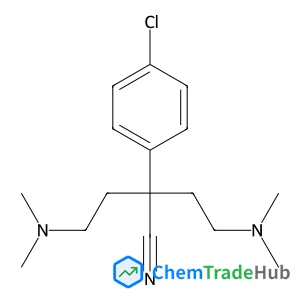
2-(4-Chlorophenyl)-4-(dimethylamino)-2-(2-(dimethylamino)ethyl)butanenitrile
CAS Number:
1246816-57-8
Molecular Formula:
C16H24ClN3
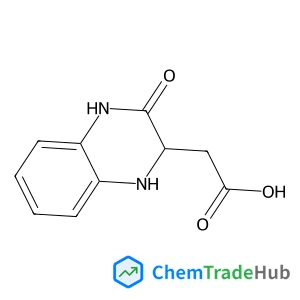
(3-Oxo-1,2,3,4-tetrahydro-2-quinoxalinyl)acetic acid
CAS Number:
136584-14-0
Molecular Formula:
C10H10N2O3
Recommended Suppliers





Disclaimer
This page provides academic journal information for reference and research purposes only. We are not affiliated with any journal publishers and do not handle publication submissions. For publication-related inquiries, please contact the respective journal publishers directly.
If you notice any inaccuracies in the information displayed, please contact us at support@chemtradehub.com. We will promptly review and address your concerns.