phosphoryl}methyl 4-methylbenzenesulfonate structure](https://static.chemtradehub.com/structs/864/864068-45-1-ba7c.webp "{[3-(Hexadecyloxy)propoxy](hydroxy)phosphoryl}methyl 4-methylbenzenesulfonate structure")
{[3-(Hexadecyloxy)propoxy](hydroxy)phosphoryl}methyl 4-methylbenzenesulfonate
CAS Number:
864068-45-1
Molecular Formula:
C27H49O7PS
Bin Liu, Lingfeng Li, Cuiling Lin, Jingdan Zhou, Zhexin Zhu, Hongyao Xu, Huayu Qiu, Shouchun Yin
A group of novel polyacetylenes containing BODIPY pendants have been synthesized in satisfactory yield using a [Rh(nbd)Cl]2–Et3N catalyst. The pendant BODIPY unit has been directly conjugated to the polyacetylene backbone either through the 8 position of the BODIPY cores in P1, or through the 3 position in P2 and P3. Their optoelectronic properties have been investigated by UV-vis, FL, CV and Z-scan techniques. Interestingly, the spectroscopy results show that little electronic interaction exists between the BODIPY chromophoric units and the polyacetylene main chain for P1. However, the electronic interaction between the side pendant and the main chain becomes notable for P2 and P3, resulting in a significant broadening and red-shift of their UV-vis absorption and fluorescence emission wavelengths in comparison with those of their respective monomers. The polymers display thermal stabilities and nonlinear optical properties that are dependent on the connectivities of the BODIPY pendants and the polyacetylene backbones. P1 exhibits relatively better thermal stability and poorer nonlinear optical properties than P1 and P2. The third-order nonlinear optical coefficient (χ(3)) of P1 is 8.5 × 10⁻¹² esu, which is shown to be ∼15 times smaller than those of P2 and P3.

Current Opinion in Colloid & Interface Science

Chemical Communications

Current Opinion in Solid State & Materials Science

Crystallography Reports

Acta Materialia

Journal of Natural Medicines

Russian Journal of Organic Chemistry

Drug Discovery Today

Russian Journal of General Chemistry

Journal of Saudi Chemical Society
Chun Zhang, Yi-Tao Sun, Xue Yan, Xue-Hui Guo, Ai-Min Ren, Wen-Long Wang
DOI: 10.1039/D1CP04268H
Pandurangan Kalipillai, Ethayaraja Mani
DOI: 10.1039/D1CP01652K
Kuan-Ching Wu, Chieh-Ming Hsieh, Bor Kae Chang
DOI: 10.1039/D1CP04517B
Qianqian Wang, Qinggao Zhang, Elaine Lai Han Leung, Yingqing Chen, Xiaojun Yao
DOI: 10.1039/D1CP02783B
Bo Kong, Wentao Wang
DOI: 10.1039/D1CP02794H
Arjun Kafle, P. B. Armentrout
DOI: 10.1039/D1CP04263G
Mircea Guna, Bradley B. Schneider, J. C. Yves Le Blanc, Marcel Nooijen
DOI: 10.1039/D1CP02688G
Shun Kataoka, Makoto Harada, Tetsuo Okada
DOI: 10.1039/D1CP01655E
Long Zhao, Matthew Prendergast, Ralf I. Kaiser, Bo Xu, Wenchao Lu, Musahid Ahmed, A. Hasan Howlader, Stanislaw F. Wnuk, Alexander S. Korotchenko, Mikhail M. Evseev, Eugene K. Bashkirov, Alexander M. Mebel
DOI: 10.1039/D1CP02169A
4-Nitrophenyl phosphate disodium salt hexahydrate is primarily used as a substra...
2-(Trifluoromethyl)-1,3-oxazole-4-carboxylic Acid (CAS: 1060816-01-4) is widely ...
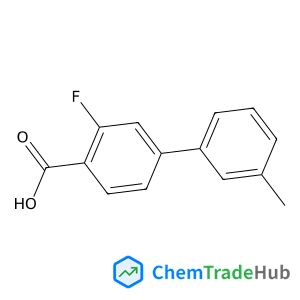
2-Fluoro-4-biphenylcarboxylic acid should be stored in a cool, dry place at room...
Prednisolone-21-Carboxylic Acid is primarily used in the pharmaceutical industry...
4-(Hydrazinomethyl)-1,2,3-benzenetriol (CAS: 3614-72-0) should be stored in a co...
4-Amino-1-methyl-1H-pyrazole-5-carboxylic acid hydrochloride (CAS: 92534-70-8) i...
Dehydropachymic acid (CAS: 77012-31-8) is regulated by various agencies. It fall...
The market and research trends for 6-[(2,2-Dimethylpropanoyl)amino]nicotinic aci...
1,10-Phenanthroline-2,9-dicarbaldehyde should be stored in a cool, dry place awa...
5-Carbamoyl-11-oxo-10,11-dihydro-5H-dibenzo[b,f]azepin-10-yl acetate can be synt...

Polymer Chemistry welcomes submissions in all areas of polymer science that have a strong focus on macromolecular chemistry. Manuscripts may cover a broad range of fields, yet no direct application focus is required.