












Interactions between protein and porphyrin-containing cyclodextrin supramolecular system: a fluorescent sensing approach for albumin
Literature Information
Publication Date
2008-07-28
DOI
10.1039/B808754G
Impact Factor
4.616
Authors
Jian Yu Jin, Ying Zhang, Keming Wang
View Original
Abstract
The interactions of meso-tetraphenylporphyrin (TPP), meso-tetraphenylporphyrin cobalt(II) (CoTPP) and protein in the presence of a cyclodextrin derivative, heptakis(2,6-di-O-n-octyl)-β-cyclodextrin (Oc-β-CD), have been investigated. In the presence of Oc-β-CD, significant increase of TPP fluorescence was realized, but the increased fluorescence was quenched by CoTPP. To further investigate the fluorescence-quenched system and explore its potential application in bioanalysis, a strategy has been devised to restore the quenching fluorescence of TPP upon interacting with protein. The restoration of TPP fluorescence in the present system is fast and accomplished upon interaction with bovine serum albumin (BSA) or human serum albumin (HSA). On the basis of the spectroscopic measurement and excited state fluorescence lifetime, the mechanism of TPP fluorescence quenching is attributed to formation of a ground-state complex of TPP and CoTPP, and the fluorescence restoration is attributed to the binding of CoTPP with the protein molecule which destroys the aggregate, releasing the free base porphyrin. With optimized conditions, the calibration equations are linear from 0.80 to 75.4 μg mL−1 BSA and from 3.20 to 93.2 μg mL−1 HSA. The corresponding detection limits are 0.32 μg mL−1 for BSA and 1.06 μg mL−1 for HSA, respectively. The method was used for the direct assay of HSA content in human serum. The result is comparable to that obtained by another method. The recovery from BSA in synthetic sample is also satisfactory.
Related Literature
Lithium doping on 2D squaraine-bridged covalent organic polymers for enhancing adsorption properties: a theoretical study
Ling Huang, Xianfeng Yi, Anmin Zheng
2018-01-31
Paper
DOI: 10.1039/C7CP07686J
Phenyl radical + propene: a prototypical reaction surface for aromatic-catalyzed 1,2-hydrogen-migration and subsequent resonance-stabilized radical formation
Zachary J. Buras, Te-Chun Chu, Adeel Jamal, Nathan W. Yee, Joshua E. Middaugh, William H. Green
2018-04-13
Paper
DOI: 10.1039/C8CP01159A
Bandgap scaling and negative differential resistance behavior of zigzag phosphorene antidot nanoribbons (ZPANRs)
Santhia Carmel, Adhithan Pon, N. Meenakshisundaram, R. Ramesh, Arkaprava Bhattacharyya
2018-05-01
Paper
DOI: 10.1039/C8CP01435C
Reverse electrodialysis in bilayer nanochannels: salinity gradient-driven power generation
Rui Long, Zhengfei Kuang, Zhichun Liu, Wei Liu
2018-02-19
Paper
DOI: 10.1039/C7CP08394G
A first-principles study of hydrogen storage capacity based on Li–Na-decorated silicene
Zhe Sheng, Shujing Wu, Xianying Dai, Tianlong Zhao, Yue Hao
2018-04-25
Paper
DOI: 10.1039/C8CP00722E
Substituent control of the ultrafast twisted intramolecular charge transfer rate in dimethylaminochalcone derivatives
2018-02-06
Paper
DOI: 10.1039/C7CP08239H
Isomer-specific detection in the UV photodissociation of the propargyl radical by chirped-pulse mm-wave spectroscopy in a pulsed quasi-uniform flow
Bernadette M. Broderick, Nicolas Suas-David, Nureshan Dias, Arthur G. Suits
2017-11-13
Paper
DOI: 10.1039/C7CP06211G
A drastic influence of the anion nature and concentration on high pressure intrusion–extrusion of electrolyte solutions in Silicalite-1
A. Ryzhikov, H. Nouali, T. J. Daou, J. Patarin
2018-02-01
Paper
DOI: 10.1039/C7CP06520E
Facile synthesis of yolk shell Mn2O3@Mn5O8 as an effective catalyst for peroxymonosulfate activation
Aimal Khan, Shuhua Zou, Ting Wang, Jerosha Ifthikar, Ali Jawad, Zhuwei Liao, Ajmal Shahzad, Audrey Ngambia, Zhuqi Chen
2018-04-18
Paper
DOI: 10.1039/C8CP02080A
Newly synthesized quercetin derivatives as corrosion inhibitors for mild steel in 1 M HCl: combined experimental and theoretical investigation
Dipankar Sukul, Aparesh Pal, Sanjoy Satpati, Utpal Adhikari
2018-02-02
Paper
DOI: 10.1039/C7CP06848D
You might also like
Compound Q&A
What precautions should be taken when handling 2-Chloro-1,2-bis(4-methylphenyl)ethanone (CAS: 71193-32-3)?
When handling 2-Chloro-1,2-bis(4-methylphenyl)ethanone (CAS: 71193-32-3), it is ...
71193-32-32-Chloro-1,2-bis(4-m...
Compound Q&A
What industries use 4-Ethoxy-3-(5-methyl-4-oxo-7-propyl-1,4-dihydroimidazo[5,1-f][1,2,4]triazin-2-yl)benzenesulfonyl chloride (CAS: 224789-26-8)?
4-Ethoxy-3-(5-methyl-4-oxo-7-propyl-1,4-dihydroimidazo[5,1-f][1,2,4]triazin-2-yl...
224789-26-84-Ethoxy-3-(5-methyl...
Compound Q&A
How should Methyl 3-Oxo-4-Androsten-17-Carboxylate (CAS: 2681-55-2) be stored?
Methyl 3-Oxo-4-Androsten-17-Carboxylate (CAS: 2681-55-2) should be stored in a c...
2681-55-2Methyl 3-Oxo-4-Andro...
Compound Q&A
What are the main uses of (R)-3-Amino-4-(3-hexylphenylamino)-4-oxobutylphosphonic acid (CAS: 909725-61-7)?
(R)-3-Amino-4-(3-hexylphenylamino)-4-oxobutylphosphonic acid is primarily used i...
909725-61-7(R)-3-Amino-4-(3-hex...
Compound Q&A
What regulatory guidelines apply to 2-Methyl-2-propanyl 3-amino-3-carbamoyl-1-azetidinecarboxylate (CAS: 1254120-14-3)?
2-Methyl-2-propanyl 3-amino-3-carbamoyl-1-azetidinecarboxylate (CAS: 1254120-14-...
1254120-14-32-Methyl-2-propanyl ...
Compound Q&A
Are there alternatives to (E)-4-(tert-Butoxy)-4-oxobut-2-enoic acid (CAS: 135355-96-3) in synthesis?
There are alternative reagents that can be used in synthesis instead of (E)-4-(t...
135355-96-3(E)-4-(tert-Butoxy)-...
Compound Q&A
What are the physical and chemical properties of [2-(3-Chlorophenyl)-1,3-thiazol-4-yl]methanol (CAS: 121202-20-8)?
[2-(3-Chlorophenyl)-1,3-thiazol-4-yl]methanol (CAS: 121202-20-8) is a crystallin...
121202-20-8[2-(3-Chlorophenyl)-...
Compound Q&A
What is the market or research trend for Methyl (2S)-[(4S)-2,2-dimethyl-1,3-dioxolan-4-yl]{[(4-methylphenyl)sulfonyl]oxy}acetate (CAS: 166249-17-8)?
The market and research trends for Methyl (2S)-[(4S)-2,2-dimethyl-1,3-dioxolan-4...
166249-17-8Methyl (2S)-[(4S)-2,...
Compound Q&A
What is the market or research trend for 1-Bromo-2-isocyanatoethane (CAS: 42865-19-0)?
The market for 1-Bromo-2-isocyanatoethane (CAS: 42865-19-0) is driven by its use...
42865-19-01-Bromo-2-isocyanato...
Compound Q&A
What are the main uses of 4-Nitro-D-phenylalanine hydrochloride (CAS: 147065-06-3)?
4-Nitro-D-phenylalanine hydrochloride (CAS: 147065-06-3) is primarily used in re...
147065-06-34-Nitro-D-phenylalan...
Source Journal
Analyst

CiteScore:
7.8
Self-citation Rate:
5.6%
Articles per Year:
653
Analyst publishes analytical and bioanalytical research that reports premier fundamental discoveries and inventions, and the applications of those discoveries, unconfined by traditional discipline barriers.
Recommended Compounds
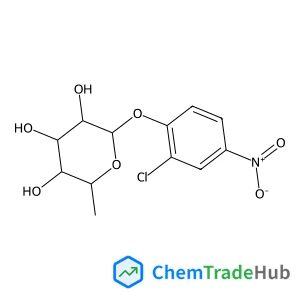
2-Chloro-4-nitrophenyl 6-deoxy-alpha-L-galactopyranoside
CAS Number:
157843-41-9
Molecular Formula:
C12H14ClNO7
![(1R)-3-Bromo-1,7,7-trimethylbicyclo[2.2.1]heptan-2-one structure](https://static.chemtradehub.com/structs/102/10293-06-8-dd8a.webp "(1R)-3-Bromo-1,7,7-trimethylbicyclo[2.2.1]heptan-2-one structure")
(1R)-3-Bromo-1,7,7-trimethylbicyclo[2.2.1]heptan-2-one
CAS Number:
10293-06-8
Molecular Formula:
C10H15BrO
Recommended Suppliers




Disclaimer
This page provides academic journal information for reference and research purposes only. We are not affiliated with any journal publishers and do not handle publication submissions. For publication-related inquiries, please contact the respective journal publishers directly.
If you notice any inaccuracies in the information displayed, please contact us at support@chemtradehub.com. We will promptly review and address your concerns.