


Isomer-specific detection in the UV photodissociation of the propargyl radical by chirped-pulse mm-wave spectroscopy in a pulsed quasi-uniform flow
Literature Information
Publication Date
2017-11-13
DOI
10.1039/C7CP06211G
Impact Factor
3.676
Authors
Bernadette M. Broderick, Nicolas Suas-David, Nureshan Dias, Arthur G. Suits
View Original
Abstract
Isomer-specific detection and product branching fractions in the UV photodissociation of the propargyl radical is achieved through the use of chirped-pulse Fourier-transform mm-wave spectroscopy in a pulsed quasi-uniform flow (CPUF). Propargyl radicals are produced in the 193 nm photodissociation of 1,2-butadiene. Absorption of a second photon leads to H atom elimination giving three possible C3H2 isomers: singlets cyclopropenylidene (c-C3H2) and propadienylidene (l-C3H2), and triplet propargylene (3HCCCH). The singlet products and their appearance kinetics in the flow are directly determined by rotational spectroscopy, but due to the negligible dipole moment of propargylene, it is not directly monitored. However, we exploit the time-dependent kinetics of H-atom catalyzed isomerization to infer the branching to propargylene as well. We obtain the overall branching among H loss channels to be 2.9% (+1.1/−0.5) l-C3H2 + H, 16.8% (+3.2/−1.3) c-C3H2 + H, and 80.2 (+1.8/−4.2) 3HCCCH + H. Our findings are qualitatively consistent with earlier RRKM calculations in that the major channel in the photodissociation of the propargyl radical at 193 nm is to 3HCCCH + H; however, a greater contribution to the energetically most favorable isomer, c-C3H2 + H is observed in this work. We do not detect the predicted HCCC + H2 channel, but place an upper bound on its yield of 1%.
Recommended Journals

Accounts of Chemical Research

Journal of the Chinese Chemical Society

Ferroelectrics

Journal of the American Chemical Society

Chemistry of Natural Compounds

Chemistry of Heterocyclic Compounds

Cement and Concrete Research

Biopolymers

Anti-Corrosion Methods and Materials

Advances in Colloid and Interface Science
Related Literature
Silver quasi-nanoparticles: bridging the gap between molecule-like clusters and plasmonic nanoparticles
Fatima Douma, Louwanda Lakiss, Oleg I. Lebedev, Julien Cardin, Krassimir L. Kostov, Jaafar El Fallah, Valentin Valtchev, Mohamad El-Roz
2021-06-30
Paper
DOI: 10.1039/D1MA00382H
Unveiling the physiochemical aspects of the matrix in improving sulfur-loading for room-temperature sodium–sulfur batteries
Sungjemmenla, Chhail Bihari Soni, S. K. Vineeth, Vipin Kumar
2021-06-14
Review Article
DOI: 10.1039/D1MA00247C
The development of poly(ethylene oxide) reinforced with a nanocellulose-based nanocomposite polymer electrolyte in dye-sensitized solar cells
Mohd Saiful Asmal Rani, Nur Athirah Abdullah, Muhammad Hanif Sainorudin, Masita Mohammad, Salmiah Ibrahim
2021-07-27
Paper
DOI: 10.1039/D1MA00206F
Azobenzene isomerization in condensed matter: lessons for the design of efficient light-responsive soft-matter systems
Luke W. Giles, Charl F. J. Faul, Rico F. Tabor
2021-06-03
Review Article
DOI: 10.1039/D1MA00340B
Anaerobic biodegradability of ionic liquid cations under denitrifying conditions
Jennifer Neumann, Olav Grundmann, Jorg Thöming, Michael Schulte, Stefan Stolte
2010-02-08
Paper
DOI: 10.1039/B918453H
A synergistic approach to achieving the high thermoelectric performance of La-doped SnTe using resonance state and partial band convergence
Srikanth Mandava, Ranita Basu, B. Khasimsaheb, Sai Muthukumar V., Ajay Singh, S. Neeleshwar
2021-05-12
Paper
DOI: 10.1039/D1MA00155H
You might also like
Compound Q&A
What precautions should be taken when handling 4-Methyl-6-(trifluoromethyl)quinoline (CAS: 40716-16-3)?
When handling 4-Methyl-6-(trifluoromethyl)quinoline (CAS: 40716-16-3), safety go...
40716-16-34-Methyl-6-(trifluor...
Compound Q&A
What is 4-(3,5-Difluorophenyl)aniline (CAS: 405058-00-6)?
4-(3,5-Difluorophenyl)aniline is an aromatic organic compound with the CAS numbe...
405058-00-64-(3,5-Difluoropheny...
Compound Q&A
How is 5-{[4-(Trifluoromethyl)phenyl]sulfanyl}-1,2,3-thiadiazole-4-carboxylic acid (CAS: 338982-07-3) typically synthesized?
5-{[4-(Trifluoromethyl)phenyl]sulfanyl}-1,2,3-thiadiazole-4-carboxylic acid can ...
338982-07-35-{[4-(Trifluorometh...
Compound Q&A
What is the market or research trend for 4-Benzylaniline hydrochloride (CAS: 6317-57-3)?
The market for 4-Benzylaniline hydrochloride (CAS: 6317-57-3) is steadily growin...
6317-57-34-Benzylaniline hydr...
Compound Q&A
Is [3-(Diethylsulfamoyl)phenyl]boronic acid (CAS: 871329-58-7) safe?
[3-(Diethylsulfamoyl)phenyl]boronic acid is generally considered safe when handl...
871329-58-7[3-(Diethylsulfamoyl...
Compound Q&A
What are the main uses of 3-Bromo-2,5-dimethoxyaniline (CAS: 115929-62-9)?
3-Bromo-2,5-dimethoxyaniline is mainly used in the pharmaceutical and chemical i...
115929-62-93-Bromo-2,5-dimethox...
Compound Q&A
What regulatory guidelines apply to N-Methyl-1-(5-methyl-1H-indol-3-yl)methanamine (CAS: 915922-67-7)?
N-Methyl-1-(5-methyl-1H-indol-3-yl)methanamine (CAS: 915922-67-7) is subject to ...
915922-67-7N-Methyl-1-(5-methyl...
Compound Q&A
What industries use Carbamic acid, N-[(5S)-5,6-diamino-6-oxohexyl]-, 1,1-dimethylethyl ester (CAS: 24828-96-4)?
This compound is primarily used in the pharmaceutical industry for the synthesis...
24828-96-4Carbamic acid, N-[(5...
Compound Q&A
How should 2-Methyl-2-propanyl [(1S,3R)-3-aminocyclohexyl]carbamate (CAS: 1298101-47-9) be stored?
2-Methyl-2-propanyl [(1S,3R)-3-aminocyclohexyl]carbamate (CAS: 1298101-47-9) sho...
1298101-47-92-Methyl-2-propanyl ...
Compound Q&A
What industries use Ethyl 2-bromo-4,4,4-trifluorobutanoate (CAS: 367-33-9)?
Ethyl 2-bromo-4,4,4-trifluorobutanoate (CAS: 367-33-9) is utilized in the pharma...
367-33-9Ethyl 2-bromo-4,4,4-...
Source Journal
Physical Chemistry Chemical Physics

CiteScore:
5.5
Self-citation Rate:
10.3%
Articles per Year:
3036
Physical Chemistry Chemical Physics (PCCP) is an international journal co-owned by 19 physical chemistry and physics societies from around the world. This journal publishes original, cutting-edge research in physical chemistry, chemical physics and biophysical chemistry. To be suitable for publication in PCCP, articles must include significant innovation and/or insight into physical chemistry; this is the most important criterion that reviewers and Editors will judge against when evaluating submissions. The journal has a broad scope and welcomes contributions spanning experiment, theory, computation and data science. Topical coverage includes spectroscopy, dynamics, kinetics, statistical mechanics, thermodynamics, electrochemistry, catalysis, surface science, quantum mechanics, quantum computing and machine learning. Interdisciplinary research areas such as polymers and soft matter, materials, nanoscience, energy, surfaces/interfaces, and biophysical chemistry are welcomed if they demonstrate significant innovation and/or insight into physical chemistry. Joined experimental/theoretical studies are particularly appreciated when complementary and based on up-to-date approaches.
Recommended Compounds
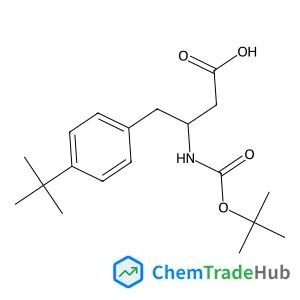
(S)-3-((tert-Butoxycarbonyl)amino)-4-(4-(tert-butyl)phenyl)butanoic acid
CAS Number:
403661-85-8
Molecular Formula:
C19H29NO4
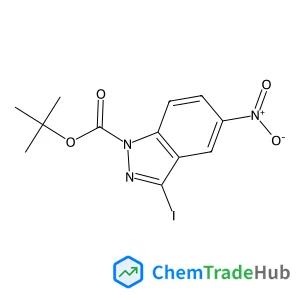
Tert-butyl 3-iodo-5-nitro-1H-indazole-1-carboxylate
CAS Number:
459133-69-8
Molecular Formula:
C12H12IN3O4
Recommended Suppliers





Disclaimer
This page provides academic journal information for reference and research purposes only. We are not affiliated with any journal publishers and do not handle publication submissions. For publication-related inquiries, please contact the respective journal publishers directly.
If you notice any inaccuracies in the information displayed, please contact us at support@chemtradehub.com. We will promptly review and address your concerns.