












Inter versus intra-molecular photoinduced charge separation in solid films of donor–acceptor molecules
Literature Information
Publication Date
2008-09-09
DOI
10.1039/B808704K
Impact Factor
6.222
Authors
Safa Shoaee, Mattias P. Eng, Zesheng An, Xuan Zhang, Stephen Barlow, Seth R. Marder, James R. Durrant
View Original
Abstract
We report on photoinduced charge separation in solid films of two perylene diimides; intramolecular charge separation and recombination is correlated with a reduction in the yield of long-lived, intermolecular charge-separated species.
Recommended Journals
Related Literature
Outer-sphere electron transfer does not underpin B12-dependent olefinic reductive dehalogenation in anaerobes
2021-12-01
Paper
DOI: 10.1039/D1CP04632B
Raman spectroscopy and DFT calculations of PEDOT:PSS in a dipolar field
Stanislav Nešpůrek, Petr Kuberský, Radek Polanský, Miroslava Trchová, Jakub Šebera, Vladimír Sychrovský
2021-12-14
Paper
DOI: 10.1039/D1CP03899K
The glass-like structure of iron–nickel nanochains produced by the magnetic-field-induced reduction reaction with sodium borohydride
Marcin Krajewski, Sz-Chian Liou, Karolina Jurkiewicz, Katarzyna Brzózka, Wen-An Chiou, Jerzy Kubacki, Andrzej Burian
2021-11-26
Paper
DOI: 10.1039/D1CP04411G
Thermoelectric performance of ZrNX (X = Cl, Br and I) monolayers
Nina Ge, Xinzhong Wang
2021-11-29
Paper
DOI: 10.1039/D1CP01928G
Elucidating the promotion of Na2CO3 in CO2 capture by Li4SiO4
Zhen Wang, Qian Xu, Kun Peng, Zirui Wang, Xingli Zou, Hongwei Cheng, Xionggang Lu
2021-11-16
Paper
DOI: 10.1039/D1CP04507E
Raman tensor of zinc-phosphide (Zn3P2): from polarization measurements to simulation of Raman spectra
Mischa Flór, Elias Z. Stutz, Santhanu P. Ramanandan, Mahdi Zamani, Rajrupa Paul, Jean-Baptiste Leran, Alexander P. Litvinchuk, Mirjana Dimitrievska
2021-11-24
Paper
DOI: 10.1039/D1CP04322F
Formation and properties of iodine- and acetonitrile-functionalized two-dimensional Si materials: a Density Functional Theory study
Dimitrios Kaltsas, Panagiotis Pappas, Leonidas Tsetseris
2021-12-07
Paper
DOI: 10.1039/D1CP03442A
How does excess phenylalanine affect the packing density and fluidity of a lipid membrane?
Shakkira Erimban, Snehasis Daschakraborty
2021-11-16
Paper
DOI: 10.1039/D1CP05004D
Terahertz pump–probe of liquid water at 12.3 THz
Fabio Novelli, Claudius Hoberg, Ellen M. Adams, J. Michael Klopf, Martina Havenith
2021-09-17
Paper
DOI: 10.1039/D1CP03207K
You might also like
Compound Q&A
What are the main uses of 1-(3-Aminophenyl)-3-[(3R)-1-(3,3-dimethyl-2-oxobutyl)-2-oxo-5-(2-pyridinyl)-2,3-dihydro-1H-1,4-benzodiazepin-3-yl]urea (CAS: 155412-88-7)?
This compound is mainly used as an intermediate in the synthesis of antipsychoti...
155412-88-71-(3-Aminophenyl)-3-...
Compound Q&A
How should waste containing 1-(D-Ribofuranosyl)-1,4-dihydro-3-pyridinecarboxamide (CAS: 19132-12-8) be handled?
Waste containing 1-(D-Ribofuranosyl)-1,4-dihydro-3-pyridinecarboxamide (CAS: 191...
19132-12-81-(D-Ribofuranosyl)-...
Compound Q&A
What regulatory guidelines apply to 2-Methyl-2-propanyl 3-bromo-3-(hydroxymethyl)-1-azetidinecarboxylate (CAS: 2007919-81-3)?
2-Methyl-2-propanyl 3-bromo-3-(hydroxymethyl)-1-azetidinecarboxylate (CAS: 20079...
2007919-81-32-Methyl-2-propanyl ...
Compound Q&A
What is N-(4-Chloro-2-pyridinyl)acetamide (CAS: 245056-66-0)?
N-(4-Chloro-2-pyridinyl)acetamide (CAS: 245056-66-0) is a chemical compound with...
245056-66-0N-(4-Chloro-2-pyridi...
Compound Q&A
What is 5-Chloro-2-hydroxybenzoic acid (CAS: 321-14-2)?
5-Chloro-2-hydroxybenzoic acid, also known as 5-chlorosalicylic acid, is an arom...
321-14-25-Chloro-2-hydroxybe...
Compound Q&A
What precautions should be taken when handling 1,1-Dichloro-1-fluoroethane (CAS: 1717-00-6)?
When handling 1,1-Dichloro-1-fluoroethane (CAS: 1717-00-6), it is important to u...
1717-00-61,1-Dichloro-1-fluor...
Compound Q&A
What are the physical and chemical properties of Fmoc-(2S,3R)-3-phenylpyrrolidine-2-carboxylic acid (CAS: 281655-32-1)?
Fmoc-(2S,3R)-3-phenylpyrrolidine-2-carboxylic acid is a white crystalline solid ...
281655-32-1Fmoc-(2S,3R)-3-pheny...
Compound Q&A
What are the main uses of 4-Amino-5-bromo-2-pyridinecarboxylic acid (CAS: 1363381-01-4)?
4-Amino-5-bromo-2-pyridinecarboxylic acid is primarily used as a precursor in th...
1363381-01-44-Amino-5-bromo-2-py...
Compound Q&A
What precautions should be taken when handling (S)-tert-butyl 2-((2-(4-bromophenyl)-2-oxoethyl)carbamoyl)pyrrolidine-1-carboxylate (CAS: 1007881-98-2)?
Handling this compound should be done with personal protective equipment (PPE) i...
1007881-98-2(S)-tert-butyl 2-((2...
Compound Q&A
What precautions should be taken when handling 8-bromo-2,2-dimethyl-3,4-dihydro-2H-1,4-benzoxazin-3-one (CAS: 688363-73-7)?
When handling 8-bromo-2,2-dimethyl-3,4-dihydro-2H-1,4-benzoxazin-3-one, use prop...
688363-73-78-bromo-2,2-dimethyl...
Source Journal
Chemical Communications

CiteScore:
8.6
Self-citation Rate:
4.7%
Articles per Year:
2458
ChemComm publishes urgent research which is of outstanding significance and interest to experts in the field, while also appealing to the journal’s broad chemistry readership. Our communication format is ideally suited to short, urgent studies that are of such importance that they require accelerated publication. Our scope covers all topics in chemistry, and research at the interface of chemistry and other disciplines (such as materials science, nanoscience, physics, engineering and biology) where there is a significant novelty in the chemistry aspects. Major topic areas covered include: Analytical Chemistry Catalysis Chemical Biology and medicinal chemistry Computational Chemistry and Machine Learning Energy and sustainable chemistry Environmental Chemistry Green Chemistry Inorganic Chemistry Materials Chemistry Nanoscience Organic Chemistry Physical Chemistry Polymer Chemistry Supramolecular Chemistry
Recommended Compounds
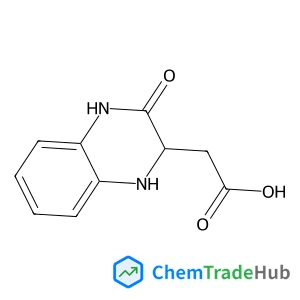
(3-Oxo-1,2,3,4-tetrahydro-2-quinoxalinyl)acetic acid
CAS Number:
136584-14-0
Molecular Formula:
C10H10N2O3
Recommended Suppliers




Disclaimer
This page provides academic journal information for reference and research purposes only. We are not affiliated with any journal publishers and do not handle publication submissions. For publication-related inquiries, please contact the respective journal publishers directly.
If you notice any inaccuracies in the information displayed, please contact us at support@chemtradehub.com. We will promptly review and address your concerns.