



The influence of trace water concentration on iron oxide nanoparticle size
Literature Information
Publication Date
2008-06-19
DOI
10.1039/B805715J
Impact Factor
6.222
Authors
Janet E. Macdonald, Christopher J. Brooks, Jonathan G. C. Veinot
View Original
Abstract
The size of iron oxide nanoparticles, prepared from the thermal decomposition of Fe(CO)5 in a high boiling solvent in the presence of oleic acid, is affected by water concentration, giving particles from sizes of 5.6 nm to as low as 2.2 nm.
Recommended Journals

Lab on a Chip

Journal of Enzyme inhibition and Medicinal Chemistry

Advanced Engineering Materials

Current Pharmaceutical Biotechnology

Photochemical & Photobiological Sciences

European Journal of Organic Chemistry

Physical Chemistry Chemical Physics

Molecular Diversity

Journal of Medical Biochemistry

Coloration Technology
Related Literature
Exploring the applicability of classical mechanics in H2 scattering and reaction at metal surfaces
2000-01-07
Paper
DOI: 10.1039/A908386C
Reactivity of the charge transfer excited state of sodium decatungstate at the nanosecond time scale
J. A. Delaire, C. Giannotti
2000-03-01
Paper
DOI: 10.1039/A908588B
Performances of proton exchange membrane fuel cells with alternate membranes
Xuezhong Du, Jingrong Yu, Baolian Yi, Ming Han, Kewan Bi
2001-06-28
Paper
DOI: 10.1039/B100481F
Antimony and bismuth oxide cluster ions
Jörg Opitz-Coutureau, André Fielicke, Bernhard Kaiser, Klaus Rademann
2001-07-02
Paper
DOI: 10.1039/B103009B
Charge transfer induced quenching of triplet sensitizers by ground state oxygen and of singlet oxygen by ground state sensitizers: A common deactivation channel
Claude Schweitzer, Zahra Mehrdad, Farokh Shafii, Reinhard Schmidt
2001-07-11
Paper
DOI: 10.1039/B102621F
129Xe NMR shielding and self-diffusion in the mixture of two thermotropic nematogens with opposite diamagnetic anisotropy
Jyrki Ruohonen, Jukka Jokisaari
2001-07-04
Paper
DOI: 10.1039/B102828F
Analytical global potential energy surfaces of the two lowest 2A′ states of NO2
D. Reignier, T. Stoecklin, P. Halvick, A. Voronin, J. C. Rayez
2001-06-25
Paper
DOI: 10.1039/B101507I
Clinoptilolite–heulandite polymorphism: structural features from computer simulation
A. Rabdel Ruiz-Salvador, Ariel Gómez, Dewi W. Lewis, C. Richard A. Catlow, L. Marleny Rodríguez-Albelo, Luis Montero, Gerardo Rodríguez-Fuentes
2000-03-31
Paper
DOI: 10.1039/A909671J
Coupled electron/proton transfer of galvinol attached to SAMs on gold electrodes
Harry O. Finklea, Robert M. Haddox
2001-05-15
Paper
DOI: 10.1039/B101325O
You might also like
Compound Q&A
Are there alternatives to 1-(4-Chlorophenyl)-N-hydroxymethanimine (CAS: 3848-36-0) in synthesis?
When considering alternatives to 1-(4-Chlorophenyl)-N-hydroxymethanimine (CAS: 3...
3848-36-01-(4-Chlorophenyl)-N...
Compound Q&A
How should (1R,9S,10S,12S,14E,16S,19R,20R,21S,22R)-3,9,21-Trihydroxy-5,10,12,14,16,20,22-heptamethyl-23,24-dioxatetracyclo[17.3.1.1~6,9~.0~2,7~]tetracosa-2,5,7,14-tetraen-4-one (CAS: 183202-73-5) be stored?
This compound should be stored in a cool, dry place away from direct sunlight. I...
183202-73-5(1R,9S,10S,12S,14E,1...
Compound Q&A
How is 3-(4-Bromophenyl)-5-(2-fluorophenyl)-1,2,4-oxadiazole (CAS: 419553-16-5) typically synthesized?
3-(4-Bromophenyl)-5-(2-fluorophenyl)-1,2,4-oxadiazole is synthesized through a m...
419553-16-53-(4-Bromophenyl)-5-...
Compound Q&A
How is 5-Chloro-2-(4-chlorophenyl)-4-methyl-6-[3-(1-piperidinyl)propoxy]pyrimidine (CAS: 1639220-19-1) typically synthesized?
5-Chloro-2-(4-chlorophenyl)-4-methyl-6-[3-(1-piperidinyl)propoxy]pyrimidine (CAS...
1639220-19-15-Chloro-2-(4-chloro...
Compound Q&A
What industries use 2-Chloro-4-(difluoromethoxy)pyridine (CAS: 1206978-15-5)?
2-Chloro-4-(difluoromethoxy)pyridine is used in the pharmaceutical industry for ...
1206978-15-52-Chloro-4-(difluoro...
Compound Q&A
What regulatory guidelines apply to 3-Chloro-6-methylpyridazine (CAS: 1121-79-5)?
3-Chloro-6-methylpyridazine (CAS: 1121-79-5) is classified under the Globally Ha...
1121-79-53-Chloro-6-methylpyr...
Compound Q&A
Are there alternatives to Methyl 4,5-dimethyl-2-nitrobenzoate in synthesis?
Several alternatives can be used in the synthesis of Methyl 4,5-dimethyl-2-nitro...
90922-74-0Methyl 4,5-dimethyl-...
Compound Q&A
Are there alternatives to (2E,2'E)-3,3'-(1,4-Phenylene)bisacrylaldehyde in synthesis?
Alternatives to (2E,2'E)-3,3'-(1,4-Phenylene)bisacrylaldehyde include other acry...
63405-68-5(2E,2'E)-3,3'-(1,4-P...
Compound Q&A
What is 3-Amino-5-chloropyridin-2-ol hydrochloride (CAS: 1261906-29-9)?
3-Amino-5-chloropyridin-2-ol hydrochloride is an organic compound with the CAS n...
1261906-29-93-Amino-5-chloropyri...
Compound Q&A
What precautions should be taken when handling 6,7-Difluoro-2,3-dihydro-4H-chromen-4-one (CAS: 1092349-93-3)?
When handling 6,7-Difluoro-2,3-dihydro-4H-chromen-4-one, it is essential to wear...
1092349-93-36,7-Difluoro-2,3-dih...
Source Journal
Chemical Communications

CiteScore:
8.6
Self-citation Rate:
4.7%
Articles per Year:
2458
ChemComm publishes urgent research which is of outstanding significance and interest to experts in the field, while also appealing to the journal’s broad chemistry readership. Our communication format is ideally suited to short, urgent studies that are of such importance that they require accelerated publication. Our scope covers all topics in chemistry, and research at the interface of chemistry and other disciplines (such as materials science, nanoscience, physics, engineering and biology) where there is a significant novelty in the chemistry aspects. Major topic areas covered include: Analytical Chemistry Catalysis Chemical Biology and medicinal chemistry Computational Chemistry and Machine Learning Energy and sustainable chemistry Environmental Chemistry Green Chemistry Inorganic Chemistry Materials Chemistry Nanoscience Organic Chemistry Physical Chemistry Polymer Chemistry Supramolecular Chemistry
Recommended Compounds
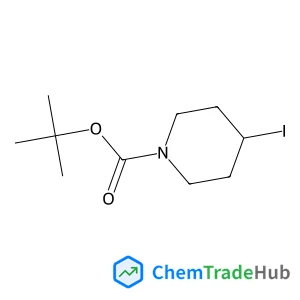
2-Methyl-2-propanyl 4-iodo-1-piperidinecarboxylate
CAS Number:
301673-14-3
Molecular Formula:
C10H18INO2

Recommended Suppliers





Disclaimer
This page provides academic journal information for reference and research purposes only. We are not affiliated with any journal publishers and do not handle publication submissions. For publication-related inquiries, please contact the respective journal publishers directly.
If you notice any inaccuracies in the information displayed, please contact us at support@chemtradehub.com. We will promptly review and address your concerns.