













Determination of diuretics in human urine by hollow fiber-based liquid–liquid–liquid microextraction coupled to high performance liquid chromatography
Literature Information
Publication Date
2008-07-21
DOI
10.1039/B802679C
Impact Factor
4.616
Authors
View Original
Abstract
In competition sports, a diuretic is a substance widely prohibited by the World Anti-Doping Agency (WADA). In this paper, a sensitive, rapid and convenient analytical method for the determination of acidic [furosemide (FUROS) and bumetanide (BUMET)] and basic [triamterene (TRIAM)] diuretics in human urine was developed by hollow fiber-based liquid–liquid–liquid microextraction (LLLME) coupled with HPLC-UV. The LLLME conditions, such as the organic extraction solvent, the acidity and basicity of the donor- and acceptor-phases, stirring speed, extraction time and ionic strength, were studied in detail. Under the optimum conditions, the linear ranges of furosemide, bumetanide and triamterene were 1.2–250, 5.0–250 and 5.0–500 ng mL−1, respectively. The detection limits were 0.5 ng mL−1 for furosemide, 1.2 ng mL−1 for bumetanide and 2.0 ng mL−1 for triamterene. The LLLME obtained a great improvement of the detection limits for all the analytes considered here, to the ng mL−1 level, which almost reaches the level of the LC–MS method. This new LLLME method provided very high enrichments: 117-fold for furosemide, 175-fold for bumetanide and 68-fold for triamterene. Since the hollow fiber membrane was sealed, it could be used for extracting the diuretics directly from ‘dirty’ human urine samples without any clean-up procedures. With LLLME–HPLC, the corresponding recoveries ranged from 79.2 to 109% with the RSDs not exceeding 5.5% for the three diuretics in the spiked urine samples. The method was successfully applied to analyse the amounts of the three diuretics in real urine samples of volunteers after oral drug-taking. This new method proves to be sensitive and reliable and thus renders a very suitable means for the determination of trace diuretics in human urine based on the common HPLC instrument.
Related Literature
Influence of the hydrogen-bond interactions on the excited-state dynamics of a push–pull azobenzene dye: the case of Methyl Orange
Christoph Nançoz, Giuseppe Licari, Joseph S. Beckwith, Magnus Soederberg, Bogdan Dereka, Arnulf Rosspeintner, Oleksandr Yushchenko, Romain Letrun, Sabine Richert, Bernhard Lang, Eric Vauthey
2018-02-15
Paper
DOI: 10.1039/C7CP08390D
Singlet–triplet energy gaps and the degree of diradical character in binuclear copper molecular magnets characterized by spin-flip density functional theory
Natalie Orms, Anna I. Krylov
2018-01-22
Paper
DOI: 10.1039/C7CP07356A
Phenyl radical + propene: a prototypical reaction surface for aromatic-catalyzed 1,2-hydrogen-migration and subsequent resonance-stabilized radical formation
Zachary J. Buras, Te-Chun Chu, Adeel Jamal, Nathan W. Yee, Joshua E. Middaugh, William H. Green
2018-04-13
Paper
DOI: 10.1039/C8CP01159A
Imperfect mixing as a dominant factor leading to stochastic behavior: a new system exhibiting crazy clock behavior
László Valkai, Attila K. Horváth
2018-05-11
Paper
DOI: 10.1039/C8CP01156G
Direct observation of the oxidation of DNA bases by phosphate radicals formed under radiation: a model of the backbone-to-base hole transfer
Jun Ma, Jean-Louis Marignier, Pascal Pernot, Chantal Houée-Levin, Anil Kumar, Michael D. Sevilla, Amitava Adhikary, Mehran Mostafavi
2018-04-25
Paper
DOI: 10.1039/C8CP00352A
Magnetism of NaFePO4 and related polyanionic compounds
Oier Arcelus, Sergey Nikolaev, Javier Carrasco
2018-04-27
Paper
DOI: 10.1039/C8CP01961D
Newly synthesized quercetin derivatives as corrosion inhibitors for mild steel in 1 M HCl: combined experimental and theoretical investigation
Dipankar Sukul, Aparesh Pal, Sanjoy Satpati, Utpal Adhikari
2018-02-02
Paper
DOI: 10.1039/C7CP06848D
Solvation-controlled lithium-ion complexes in a nonflammable solvent containing ethylene carbonate: structural and electrochemical aspects
Michiru Sogawa, Hikaru Kawanoue, Yanko Marinov Todorov, Daisuke Hirayama, Hideyuki Mimura, Nobuko Yoshimoto, Masayuki Morita, Kenta Fujii
2018-02-09
Paper
DOI: 10.1039/C7CP08511G
Unexpected protonation state of Glu197 discovered from simulations of tacrine in butyrylcholinesterase
Xiao Wan, Yuan Yao, Lei Fang, Junjun Liu
2018-05-08
Paper
DOI: 10.1039/C8CP01566J
Novel two-dimensional ferromagnetic semiconductors: Ga-based transition-metal trichalcogenide monolayers
Maolin Yu, Xiaofei Liu, Wanlin Guo
2018-01-30
Paper
DOI: 10.1039/C7CP07912E
You might also like
Compound Q&A
What precautions should be taken when handling 2-Chloro-1,2-bis(4-methylphenyl)ethanone (CAS: 71193-32-3)?
When handling 2-Chloro-1,2-bis(4-methylphenyl)ethanone (CAS: 71193-32-3), it is ...
71193-32-32-Chloro-1,2-bis(4-m...
Compound Q&A
What industries use 4-Ethoxy-3-(5-methyl-4-oxo-7-propyl-1,4-dihydroimidazo[5,1-f][1,2,4]triazin-2-yl)benzenesulfonyl chloride (CAS: 224789-26-8)?
4-Ethoxy-3-(5-methyl-4-oxo-7-propyl-1,4-dihydroimidazo[5,1-f][1,2,4]triazin-2-yl...
224789-26-84-Ethoxy-3-(5-methyl...
Compound Q&A
How should Methyl 3-Oxo-4-Androsten-17-Carboxylate (CAS: 2681-55-2) be stored?
Methyl 3-Oxo-4-Androsten-17-Carboxylate (CAS: 2681-55-2) should be stored in a c...
2681-55-2Methyl 3-Oxo-4-Andro...
Compound Q&A
What are the main uses of (R)-3-Amino-4-(3-hexylphenylamino)-4-oxobutylphosphonic acid (CAS: 909725-61-7)?
(R)-3-Amino-4-(3-hexylphenylamino)-4-oxobutylphosphonic acid is primarily used i...
909725-61-7(R)-3-Amino-4-(3-hex...
Compound Q&A
What regulatory guidelines apply to 2-Methyl-2-propanyl 3-amino-3-carbamoyl-1-azetidinecarboxylate (CAS: 1254120-14-3)?
2-Methyl-2-propanyl 3-amino-3-carbamoyl-1-azetidinecarboxylate (CAS: 1254120-14-...
1254120-14-32-Methyl-2-propanyl ...
Compound Q&A
Are there alternatives to (E)-4-(tert-Butoxy)-4-oxobut-2-enoic acid (CAS: 135355-96-3) in synthesis?
There are alternative reagents that can be used in synthesis instead of (E)-4-(t...
135355-96-3(E)-4-(tert-Butoxy)-...
Compound Q&A
What are the physical and chemical properties of [2-(3-Chlorophenyl)-1,3-thiazol-4-yl]methanol (CAS: 121202-20-8)?
[2-(3-Chlorophenyl)-1,3-thiazol-4-yl]methanol (CAS: 121202-20-8) is a crystallin...
121202-20-8[2-(3-Chlorophenyl)-...
Compound Q&A
What is the market or research trend for Methyl (2S)-[(4S)-2,2-dimethyl-1,3-dioxolan-4-yl]{[(4-methylphenyl)sulfonyl]oxy}acetate (CAS: 166249-17-8)?
The market and research trends for Methyl (2S)-[(4S)-2,2-dimethyl-1,3-dioxolan-4...
166249-17-8Methyl (2S)-[(4S)-2,...
Compound Q&A
What is the market or research trend for 1-Bromo-2-isocyanatoethane (CAS: 42865-19-0)?
The market for 1-Bromo-2-isocyanatoethane (CAS: 42865-19-0) is driven by its use...
42865-19-01-Bromo-2-isocyanato...
Compound Q&A
What are the main uses of 4-Nitro-D-phenylalanine hydrochloride (CAS: 147065-06-3)?
4-Nitro-D-phenylalanine hydrochloride (CAS: 147065-06-3) is primarily used in re...
147065-06-34-Nitro-D-phenylalan...
Source Journal
Analyst

CiteScore:
7.8
Self-citation Rate:
5.6%
Articles per Year:
653
Analyst publishes analytical and bioanalytical research that reports premier fundamental discoveries and inventions, and the applications of those discoveries, unconfined by traditional discipline barriers.
Recommended Compounds
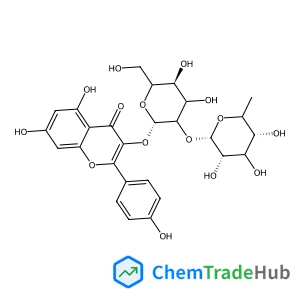
5,7-Dihydroxy-2-(4-hydroxyphenyl)-4-oxo-4H-chromen-3-yl 2-O-(6-deoxy-alpha-L-mannopyranosyl)-beta-D-glucopyranoside
CAS Number:
32602-81-6
Molecular Formula:
C27H30O15
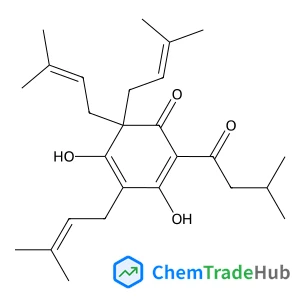
3,5-Dihydroxy-4-(3-methylbutanoyl)-2,6,6-tris(3-methyl-2-buten-1-yl)-2,4-cyclohexadien-1-one
CAS Number:
468-28-0
Molecular Formula:
C26H38O4
Recommended Suppliers




Disclaimer
This page provides academic journal information for reference and research purposes only. We are not affiliated with any journal publishers and do not handle publication submissions. For publication-related inquiries, please contact the respective journal publishers directly.
If you notice any inaccuracies in the information displayed, please contact us at support@chemtradehub.com. We will promptly review and address your concerns.