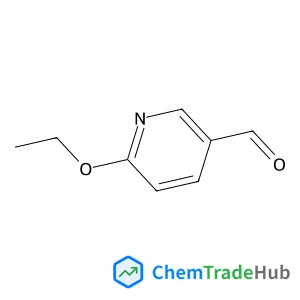
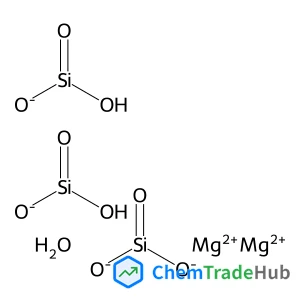
![Benzeneacetic acid, 2-[(2,6-dichlorophenyl)amino]-, compd. with 1-pyrrolidineethanol (1:1) structure](https://static.chemtradehub.com/structs/119/119623-66-4-5301.webp "Benzeneacetic acid, 2-[(2,6-dichlorophenyl)amino]-, compd. with 1-pyrrolidineethanol (1:1) structure")
Benzeneacetic acid, 2-[(2,6-dichlorophenyl)amino]-, compd. with 1-pyrrolidineethanol (1:1)
CAS Number:
119623-66-4
Molecular Formula:
C20H24Cl2N2O3
Chaudhery Mustansar Hussain, Chutarat Saridara, Somenath Mitra
In this paper we present the application of carbon nanotubes as unique sorbents for the fabrication of microtraps for the nanoscale adsorption/desorption of relatively large semivolatile organic molecules. The microtrap application requires high adsorption capacity as well as easy desorbability; the latter being critical for semivolatile compounds. The sorbent characteristics of single and multiwalled carbon nanotubes for gas phase adsorption/desorption of several compounds has been studied. The nonporous nature of carbon nanotubes (CNTs) eliminates the mass transfer resistance related to diffusion into pore structures, thus allowing easy desorbability. At the same time, their high aspects ratios lead to large breakthrough volumes. As compared to a commercial sorbent Carbopack™, the breakthrough volume was as much as an order of magnitude higher in the CNTs, while the rate of desorption measured as the peak width at half height of the desorption band was eight times lower. The trapping and desorption characteristics of single and multi walled nanotubes were found to be comparable. We also found that the presence of disordered carbon impurities, which could be removed by controlled oxidative annealing could greatly degrade the performance of CNTs.

European Journal of Organic Chemistry

Mini-Reviews in Medicinal Chemistry

Contact Lens & Anterior Eye

Physical Chemistry Chemical Physics

Coloration Technology

Photochemical & Photobiological Sciences

Journal of Enzyme inhibition and Medicinal Chemistry

Environmental Toxicology and Pharmacology

Foundations of Chemistry

Angewandte Chemie International Edition
R. Mukhopadhyay, L. L. Wong, K. K. Lo, T. Pochapsky, H. A. O. Hill
DOI: 10.1039/B108107A
Kristóf Iván, Norbert Kirschner, Mária Wittmann, Viktor Jakab, Zoltán Noszticzius, John H. Merkin, Stephen K. Scott
DOI: 10.1039/B109016J
Luís E. S. de Souza, Sylvio Canuto
DOI: 10.1039/B109010K
Gui-xia Liu, Yi-hong Ding, Ze-sheng Li, Qiang Fu, Xu-ri Huang, Chia-chung Sun, Au-chin Tang
DOI: 10.1039/B109758J
DOI: 10.1039/B109349E
Guohua Zhao, Barara Groß, Herbert Dilger, Emil Roduner
DOI: 10.1039/B110158G
T. Griese, S. Kakorin, E. Neumann
DOI: 10.1039/B108193B
María T. Baumgartner, Raúl A. Taccone, Mariano A. Teruel, Silvia I. Lane
DOI: 10.1039/B108856B
James A. J. Fitzpatrick, Oleg V. Chekhlov, David R. Morgan, Robert W. Burrows, Colin M. Western
DOI: 10.1039/B111198C
Nikolas Kaltsoyannis
DOI: 10.1039/B104735N
6-Bromo-2-methylimidazo[1,2-a]pyrimidine (CAS: 1111638-05-1) falls under various...
While there are no direct alternatives, similar compounds like 1-Pyrrolidineetha...
4-Methyl-2,6-bis(2-methyl-2-propanyl)phenyl methylcarbamate (CAS: 1918-11-2) is ...
2-(3-Bromo-4-fluorophenyl)-1,3-dioxolane (CAS: 77771-04-1) should be stored in a...
4,5,6,7-Tetrahydro-1H-indazole hydrochloride is a white crystalline solid with a...
(2R)-1-Methoxy-3-phenyl-2-propanamine is a chiral organic compound with the CAS ...
Ethyl 1-(1-phenylethyl)-1H-imidazole-5-carboxylate is used in various industries...
4-[(1E,3S)-1-(4-Hydroxyphenyl)-1,4-pentadien-3-yl]phenol (CAS: 17676-24-3) falls...
(S)-3-Amino-5-phenylpentanoic acid hydrochloride is primarily used in the pharma...
7-Methoxy-1-benzothiophene-2-carboxylic acid is typically synthesized by reactin...

Analyst publishes analytical and bioanalytical research that reports premier fundamental discoveries and inventions, and the applications of those discoveries, unconfined by traditional discipline barriers.