













Theoretical study on mechanisms of the high-temperature reactions C2H3 + H2O and C2H4 + OH
Literature Information
Publication Date
2002-02-15
DOI
10.1039/B109758J
Impact Factor
3.676
Authors
Gui-xia Liu, Yi-hong Ding, Ze-sheng Li, Qiang Fu, Xu-ri Huang, Chia-chung Sun, Au-chin Tang
View Original
Abstract
The potential energy surface of the radical-molecule reaction C2H3 + H2O in the gas phase is explored at the 6-31G(d,p) and 6-311G(d,p) B3LYP and single-point QCISD(T)/6-311G(2df,p) levels. The most favorable channel is the direct H-abstraction from H2O to C2H3 leading to product P1 C2H4 + OH, whereas the other channels leading to the products P2 CH3 + CH2O, P3 CH3CHO + H, P4cis-CH2CHOH + H and P4′ trans-CH2CHOH + H are kinetically much less competitive. For the direct H-abstraction channel, high-level energetic calculations at the QCISD(T)/6-311G(2df,p), QCISD(T)/6-311+G(2df,2p) and G2 levels using the B3LYP/6-31G(d,p) and QCISD/6-31G(d,p) optimized geometries are further performed to estimate the thermal rate constants over a wide temperature range 200–5000 K for comparison with future laboratory measurements. The calculated barrier heights at the QCISD(T)/6-311+G(2df,2p) and G2 levels based on the QCISD/6-31G(d,p) geometries with zero-point vibrational energy (ZPVE) correction are 12.6 and 13.0 kcal mol−1, respectively. The results indicate that the C2H3 + H2O reaction might play an important role at high temperatures (T > 1800 K) in the presence of gaseous water and should be incorporated in the C2H3-modeling of hydrocarbon-fuel combustion processes. Discussions are also made in comparison with the analogous reactions C2H3 + H2 and C2H + H2O. While the addition-elimination mechanism of another important radical-molecule reaction C2H4 + OH has been the subject of extensive theoretical and experimental studies, its H-abstraction process leading to C2H3 + H2O has received little attention. For the C2H4 + OH → C2H3 + H2O channel, our calculations predict ZPVE-corrected barriers, 5.6 and 5.4 kcal mol−1, respectively, at the QCISD(T)/6-311+G(2df,2p)//QCISD/6-31G(d,p) and G2//QCISD/6-31G(d,p) levels, and reveal its importance at high temperatures (T > 560 K). In the range 720–1173 K, the calculated high-level rate constants are quantitatively in good agreement with the measured values. However, our calculated activation energy, 9.5 and 9.3 kcal mol−1 at the QCISD(T)/6-311+G(2df,2p)//QCISD/6-31G(d,p) and G2//QCISD/6-31G(d,p) levels with ZPVE correction, respectively, suggests that the experimentally determined value 4–5 kcal mol−1 may be underestimated and future rate constant measurements over a wide temperature range including T > 1200 K may be desirable.
Related Literature
Chemoselective photocatalytic oxidation of alcohols to aldehydes and ketones by nitromethane on titanium dioxide under violet 400 nm LED light irradiation
Azam Rahimi Niaraki, Mohammad Reza Saraee, Babak Kaboudin
2020-03-07
Paper
DOI: 10.1039/C9OB02183C
Asymmetric total syntheses of naturally occurring α,β-enone-containing RALs, L-783290 and L-783277 through intramolecular base-mediated macrolactonization reaction
Joy Chakraborty, Samik Nanda
2020-03-09
Paper
DOI: 10.1039/D0OB00237B
Modular synthesis of oligoacetylacetones via site-selective silylation of acetylacetone derivatives
Parantap Sarkar, Yuya Inaba, Hayato Shirakura, Tomoki Yoneda
2020-04-08
Paper
DOI: 10.1039/D0OB00501K
The effect of spermidine on guanine decomposition via photoinduced electron transfer in DNA
Mayu Esumi, Shunsuke Sakurai, Makiko Tanaka
2019-11-27
Communication
DOI: 10.1039/C9OB01860C
Functionalised thermally induced phase separation (TIPS) microparticles enabled for “click” chemistry
João C. F. Nogueira, Ketevan Paliashvili, Alexandra Bradford, Francesco Di Maggio, Daniel A. Richards, Vijay Chudasama
2020-03-02
Communication
DOI: 10.1039/D0OB00106F
Synthesis of β-lactams via diastereoselective, intramolecular Kinugasa reactions
Oskar Popik, Barbara Grzeszczyk, Olga Staszewska-Krajewska, Bartłomiej Furman, Marek Chmielewski
2020-03-16
Paper
DOI: 10.1039/D0OB00228C
You might also like
Compound Q&A
What regulatory guidelines apply to 6-Bromo-2-methylimidazo[1,2-a]pyrimidine (CAS: 1111638-05-1)?
6-Bromo-2-methylimidazo[1,2-a]pyrimidine (CAS: 1111638-05-1) falls under various...
1111638-05-16-Bromo-2-methylimid...
Compound Q&A
Are there alternatives to 1-Pyrrolidineethanol, β-methyl-α-phenyl-, (αS,βR) (CAS: 123620-80-4) in synthesis?
While there are no direct alternatives, similar compounds like 1-Pyrrolidineetha...
123620-80-41-Pyrrolidineethanol...
Compound Q&A
Is 4-Methyl-2,6-bis(2-methyl-2-propanyl)phenyl methylcarbamate (CAS: 1918-11-2) safe?
4-Methyl-2,6-bis(2-methyl-2-propanyl)phenyl methylcarbamate (CAS: 1918-11-2) is ...
1918-11-24-Methyl-2,6-bis(2-m...
Compound Q&A
How should 2-(3-Bromo-4-fluorophenyl)-1,3-dioxolane (CAS: 77771-04-1) be stored?
2-(3-Bromo-4-fluorophenyl)-1,3-dioxolane (CAS: 77771-04-1) should be stored in a...
77771-04-12-(3-Bromo-4-fluorop...
Compound Q&A
What are the physical and chemical properties of 4,5,6,7-Tetrahydro-1H-indazole hydrochloride (CAS: 18161-11-0)?
4,5,6,7-Tetrahydro-1H-indazole hydrochloride is a white crystalline solid with a...
18161-11-04,5,6,7-Tetrahydro-1...
Compound Q&A
What is (2R)-1-Methoxy-3-phenyl-2-propanamine (CAS: 59919-07-2)?
(2R)-1-Methoxy-3-phenyl-2-propanamine is a chiral organic compound with the CAS ...
59919-07-2(2R)-1-Methoxy-3-phe...
Compound Q&A
What industries use Ethyl 1-(1-phenylethyl)-1H-imidazole-5-carboxylate (CAS: 56649-47-9)?
Ethyl 1-(1-phenylethyl)-1H-imidazole-5-carboxylate is used in various industries...
56649-47-9Ethyl 1-(1-phenyleth...
Compound Q&A
What regulatory guidelines apply to 4-[(1E,3S)-1-(4-Hydroxyphenyl)-1,4-pentadien-3-yl]phenol (CAS: 17676-24-3)?
4-[(1E,3S)-1-(4-Hydroxyphenyl)-1,4-pentadien-3-yl]phenol (CAS: 17676-24-3) falls...
17676-24-34-[(1E,3S)-1-(4-Hydr...
Compound Q&A
What industries use (S)-3-Amino-5-phenylpentanoic acid hydrochloride (CAS: 331846-97-0)?
(S)-3-Amino-5-phenylpentanoic acid hydrochloride is primarily used in the pharma...
331846-97-0(S)-3-Amino-5-phenyl...
Compound Q&A
How is 7-methoxy-1-benzothiophene-2-carboxylic acid (CAS: 88791-07-5) typically synthesized?
7-Methoxy-1-benzothiophene-2-carboxylic acid is typically synthesized by reactin...
88791-07-57-methoxy-1-benzothi...
Source Journal
Physical Chemistry Chemical Physics

CiteScore:
5.5
Self-citation Rate:
10.3%
Articles per Year:
3036
Physical Chemistry Chemical Physics (PCCP) is an international journal co-owned by 19 physical chemistry and physics societies from around the world. This journal publishes original, cutting-edge research in physical chemistry, chemical physics and biophysical chemistry. To be suitable for publication in PCCP, articles must include significant innovation and/or insight into physical chemistry; this is the most important criterion that reviewers and Editors will judge against when evaluating submissions. The journal has a broad scope and welcomes contributions spanning experiment, theory, computation and data science. Topical coverage includes spectroscopy, dynamics, kinetics, statistical mechanics, thermodynamics, electrochemistry, catalysis, surface science, quantum mechanics, quantum computing and machine learning. Interdisciplinary research areas such as polymers and soft matter, materials, nanoscience, energy, surfaces/interfaces, and biophysical chemistry are welcomed if they demonstrate significant innovation and/or insight into physical chemistry. Joined experimental/theoretical studies are particularly appreciated when complementary and based on up-to-date approaches.
Recommended Compounds

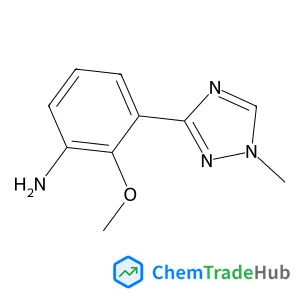
2-Methoxy-3-(1-methyl-1H-1,2,4-triazol-3-yl)aniline
CAS Number:
1609394-10-6
Molecular Formula:
C10H12N4O
![2-Methyl-2-propanyl 4-{2-fluoro-5-[(4-oxo-3,4-dihydro-1-phthalazinyl)methyl]benzoyl}-1-piperazinecarboxylate structure](https://static.chemtradehub.com/structs/763/763114-04-1-65a9.webp "2-Methyl-2-propanyl 4-{2-fluoro-5-[(4-oxo-3,4-dihydro-1-phthalazinyl)methyl]benzoyl}-1-piperazinecarboxylate structure")
2-Methyl-2-propanyl 4-{2-fluoro-5-[(4-oxo-3,4-dihydro-1-phthalazinyl)methyl]benzoyl}-1-piperazinecarboxylate
CAS Number:
763114-04-1
Molecular Formula:
C25H27FN4O4

Recommended Suppliers






Disclaimer
This page provides academic journal information for reference and research purposes only. We are not affiliated with any journal publishers and do not handle publication submissions. For publication-related inquiries, please contact the respective journal publishers directly.
If you notice any inaccuracies in the information displayed, please contact us at support@chemtradehub.com. We will promptly review and address your concerns.