












Front cover
Literature Information
Publication Date
DOI
10.1039/B717122F
Impact Factor
6.222
Authors
View Original
Abstract
The first page of this article is displayed as the abstract.
Related Literature
Oxadiazolyl-pyridines and perfluoroalkyl-carboxylic acids as building blocks for protic ionic liquids: crossing the thin line between ionic and hydrogen bonded materials
I. Pibiri, S. Buscemi, V. Causin, F. Rastrelli, G. Saielli
2012-08-30
Paper
DOI: 10.1039/C2CP42467C
Many M©Bn boron wheels are local, but not global minima
Yunlong Liao, Clara Leticia Cruz, Paul von Ragué Schleyer, Zhongfang Chen
2012-08-20
Paper
DOI: 10.1039/C2CP41521F
How are small endohedral silicon clusters stabilized?
Fabrice Avaltroni, Stephan N. Steinmann, Clémence Corminboeuf
2012-08-24
Paper
DOI: 10.1039/C2CP42097J
Experimental and DFT study of thiol-stabilized Pt/CNTs catalysts‡
L. Li, S. G. Chen, Z. D. Wei, X. Q. Qi, M. R. Xia, Y. Q. Wang
2012-07-17
Paper
DOI: 10.1039/C2CP41346A
Ultrafast exciton dynamics in InAs/ZnSe nanocrystal quantum dots‡
Musa Cadirci, Samantha J. O. Hardman, Ombretta Masala, Guy Allan, Christophe Delerue, Nigel Pickett, David J. Binks
2012-08-30
Paper
DOI: 10.1039/C2CP42125A
A theoretical simulation on the catalytic oxidation of CO on Pt/graphene
Yanan Tang
2012-06-25
Paper
DOI: 10.1039/C2CP41441D
Structure and speciation of chromium ions in chromium doped Fe2O3catalysts
Ross Anderson, Martin Fowles, Tim Hyde, Richard Smith, Sergey Nikitenko, Wim Bras
2012-11-01
Paper
DOI: 10.1039/C2CP43307A
Electronic structures and optical properties of the IPR-violating C60X8 (X = H, F, and Cl) fullerene compounds: a computational study
Shu-Wei Tang, Feng-Di Wang, Nan-Nan Zhang, Ying-Fei Chang, Hao Sun, Jing-Ping Zhang, Hai-Ming Xie, Yong-Qing Qiu, Rong-Shun Wang
2012-10-16
Paper
DOI: 10.1039/C2CP42134H
The invalidity of the photo-induced electron transfer mechanism for fluorescein derivatives
Panwang Zhou, Jianyong Liu, Songqiu Yang, Junsheng Chen, Keli Han, Guozhong He
2012-09-10
Paper
DOI: 10.1039/C2CP42167D
You might also like
Compound Q&A
What precautions should be taken when handling 4-Methyl-6-(trifluoromethyl)quinoline (CAS: 40716-16-3)?
When handling 4-Methyl-6-(trifluoromethyl)quinoline (CAS: 40716-16-3), safety go...
40716-16-34-Methyl-6-(trifluor...
Compound Q&A
What is 4-(3,5-Difluorophenyl)aniline (CAS: 405058-00-6)?
4-(3,5-Difluorophenyl)aniline is an aromatic organic compound with the CAS numbe...
405058-00-64-(3,5-Difluoropheny...
Compound Q&A
How is 5-{[4-(Trifluoromethyl)phenyl]sulfanyl}-1,2,3-thiadiazole-4-carboxylic acid (CAS: 338982-07-3) typically synthesized?
5-{[4-(Trifluoromethyl)phenyl]sulfanyl}-1,2,3-thiadiazole-4-carboxylic acid can ...
338982-07-35-{[4-(Trifluorometh...
Compound Q&A
What is the market or research trend for 4-Benzylaniline hydrochloride (CAS: 6317-57-3)?
The market for 4-Benzylaniline hydrochloride (CAS: 6317-57-3) is steadily growin...
6317-57-34-Benzylaniline hydr...
Compound Q&A
Is [3-(Diethylsulfamoyl)phenyl]boronic acid (CAS: 871329-58-7) safe?
[3-(Diethylsulfamoyl)phenyl]boronic acid is generally considered safe when handl...
871329-58-7[3-(Diethylsulfamoyl...
Compound Q&A
What are the main uses of 3-Bromo-2,5-dimethoxyaniline (CAS: 115929-62-9)?
3-Bromo-2,5-dimethoxyaniline is mainly used in the pharmaceutical and chemical i...
115929-62-93-Bromo-2,5-dimethox...
Compound Q&A
What regulatory guidelines apply to N-Methyl-1-(5-methyl-1H-indol-3-yl)methanamine (CAS: 915922-67-7)?
N-Methyl-1-(5-methyl-1H-indol-3-yl)methanamine (CAS: 915922-67-7) is subject to ...
915922-67-7N-Methyl-1-(5-methyl...
Compound Q&A
What industries use Carbamic acid, N-[(5S)-5,6-diamino-6-oxohexyl]-, 1,1-dimethylethyl ester (CAS: 24828-96-4)?
This compound is primarily used in the pharmaceutical industry for the synthesis...
24828-96-4Carbamic acid, N-[(5...
Compound Q&A
How should 2-Methyl-2-propanyl [(1S,3R)-3-aminocyclohexyl]carbamate (CAS: 1298101-47-9) be stored?
2-Methyl-2-propanyl [(1S,3R)-3-aminocyclohexyl]carbamate (CAS: 1298101-47-9) sho...
1298101-47-92-Methyl-2-propanyl ...
Compound Q&A
What industries use Ethyl 2-bromo-4,4,4-trifluorobutanoate (CAS: 367-33-9)?
Ethyl 2-bromo-4,4,4-trifluorobutanoate (CAS: 367-33-9) is utilized in the pharma...
367-33-9Ethyl 2-bromo-4,4,4-...
Source Journal
Chemical Communications

CiteScore:
8.6
Self-citation Rate:
4.7%
Articles per Year:
2458
ChemComm publishes urgent research which is of outstanding significance and interest to experts in the field, while also appealing to the journal’s broad chemistry readership. Our communication format is ideally suited to short, urgent studies that are of such importance that they require accelerated publication. Our scope covers all topics in chemistry, and research at the interface of chemistry and other disciplines (such as materials science, nanoscience, physics, engineering and biology) where there is a significant novelty in the chemistry aspects. Major topic areas covered include: Analytical Chemistry Catalysis Chemical Biology and medicinal chemistry Computational Chemistry and Machine Learning Energy and sustainable chemistry Environmental Chemistry Green Chemistry Inorganic Chemistry Materials Chemistry Nanoscience Organic Chemistry Physical Chemistry Polymer Chemistry Supramolecular Chemistry
Recommended Compounds
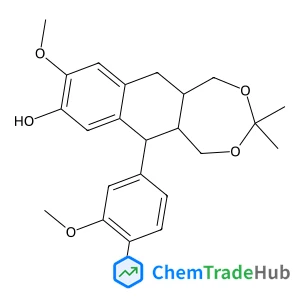
![2-[(5Z,8Z,11Z,14Z)-5,8,11,14-Icosatetraen-1-yloxy]-1,3-propanediol structure](https://static.chemtradehub.com/structs/222/222723-55-9-0348.webp "2-[(5Z,8Z,11Z,14Z)-5,8,11,14-Icosatetraen-1-yloxy]-1,3-propanediol structure")
2-[(5Z,8Z,11Z,14Z)-5,8,11,14-Icosatetraen-1-yloxy]-1,3-propanediol
CAS Number:
222723-55-9
Molecular Formula:
C23H40O3
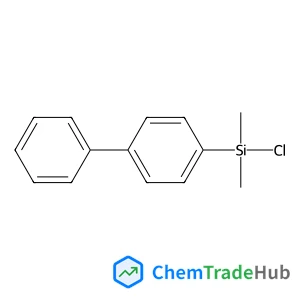
![Imidazo[1,2-c]pyrimidine structure](https://static.chemtradehub.com/structs/274/274-78-2-8b4c.webp "Imidazo[1,2-c]pyrimidine structure")
Recommended Suppliers




Disclaimer
This page provides academic journal information for reference and research purposes only. We are not affiliated with any journal publishers and do not handle publication submissions. For publication-related inquiries, please contact the respective journal publishers directly.
If you notice any inaccuracies in the information displayed, please contact us at support@chemtradehub.com. We will promptly review and address your concerns.