












Facile synthesis of a mesoporous silica-supported catalyst for Ru-catalyzed transfer hydrogenation of ketones
Literature Information
Publication Date
2007-10-29
DOI
10.1039/B714575F
Impact Factor
6.222
Authors
Guohua Liu, Mei Yao, Fang Zhang, Yan Gao, Hexing Li
View Original
Abstract
A convenient method for preparation of a mesoporous silica-supported chiral catalyst by postgrafting a homogeneous catalyst on SBA-15 was developed and its application in the asymmetric transfer hydrogenation of aromatic ketones was investigated.
Related Literature
Does the real ReN2 have the MoS2 structure?
Yachun Wang, Tiankai Yao, Jin-Lei Yao, Jingwu Zhang, Huiyang Gou
2012-10-23
Paper
DOI: 10.1039/C2CP43010J
Cooperativity between hydrogen bonds and beryllium bonds in (H2O)nBeX2 (n = 1–3, X = H, F) complexes. A new perspective
Laura Albrecht, Russell J. Boyd, Otilia Mó, Manuel Yáñez
2012-08-30
Paper
DOI: 10.1039/C2CP42534C
Sequential energy and charge transfer processes in mixed host–guest complexes of subphthalocyanine, porphyrin and phthalocyanine chromophores
Roel Menting, Dennis K. P. Ng, Beate Röder
2012-09-06
Paper
DOI: 10.1039/C2CP42416A
Water structure and charge transfer phenomena at the liquid–graphene interface
Luisa D'Urso, Cristina Satriano, Giuseppe Forte, Giuseppe Compagnini, Orazio Puglisi
2012-08-17
Paper
DOI: 10.1039/C2CP42249B
Comment on “Mono- and multi-layer adsorption of an ionic liquid on Au(110)” by R. Foulston, S. Gangopadhyay, C. Chiutu, P. Moriarty and R. G. Jones, Phys. Chem. Chem. Phys., 2012, 14, 6054–6066
A. David Baker
2012-09-06
Comment
DOI: 10.1039/C2CP41837A
Computer simulation study of nanoparticle interaction with a lipid membrane under mechanical stress
Kan Lai, Biao Wang, Yong Zhang, Yue Zheng
2012-10-23
Paper
DOI: 10.1039/C2CP42027A
Quantum dynamics study of the Cl + CH4 → HCl + CH3 reaction: reactive resonance, vibrational excitation reactivity, and rate constants
Fanbin Meng, Wei Yan, Dunyou Wang
2012-08-17
Paper
DOI: 10.1039/C2CP41917C
Oxadiazolyl-pyridines and perfluoroalkyl-carboxylic acids as building blocks for protic ionic liquids: crossing the thin line between ionic and hydrogen bonded materials
I. Pibiri, S. Buscemi, V. Causin, F. Rastrelli, G. Saielli
2012-08-30
Paper
DOI: 10.1039/C2CP42467C
The invalidity of the photo-induced electron transfer mechanism for fluorescein derivatives
Panwang Zhou, Jianyong Liu, Songqiu Yang, Junsheng Chen, Keli Han, Guozhong He
2012-09-10
Paper
DOI: 10.1039/C2CP42167D
Vibrationally assisted electron transfer mechanism of olfaction: myth or reality?
Ilia A. Solov'yov, Po-Yao Chang
2012-07-17
Paper
DOI: 10.1039/C2CP41436H
You might also like
Compound Q&A
What precautions should be taken when handling 4-Methyl-6-(trifluoromethyl)quinoline (CAS: 40716-16-3)?
When handling 4-Methyl-6-(trifluoromethyl)quinoline (CAS: 40716-16-3), safety go...
40716-16-34-Methyl-6-(trifluor...
Compound Q&A
What is 4-(3,5-Difluorophenyl)aniline (CAS: 405058-00-6)?
4-(3,5-Difluorophenyl)aniline is an aromatic organic compound with the CAS numbe...
405058-00-64-(3,5-Difluoropheny...
Compound Q&A
How is 5-{[4-(Trifluoromethyl)phenyl]sulfanyl}-1,2,3-thiadiazole-4-carboxylic acid (CAS: 338982-07-3) typically synthesized?
5-{[4-(Trifluoromethyl)phenyl]sulfanyl}-1,2,3-thiadiazole-4-carboxylic acid can ...
338982-07-35-{[4-(Trifluorometh...
Compound Q&A
What is the market or research trend for 4-Benzylaniline hydrochloride (CAS: 6317-57-3)?
The market for 4-Benzylaniline hydrochloride (CAS: 6317-57-3) is steadily growin...
6317-57-34-Benzylaniline hydr...
Compound Q&A
Is [3-(Diethylsulfamoyl)phenyl]boronic acid (CAS: 871329-58-7) safe?
[3-(Diethylsulfamoyl)phenyl]boronic acid is generally considered safe when handl...
871329-58-7[3-(Diethylsulfamoyl...
Compound Q&A
What are the main uses of 3-Bromo-2,5-dimethoxyaniline (CAS: 115929-62-9)?
3-Bromo-2,5-dimethoxyaniline is mainly used in the pharmaceutical and chemical i...
115929-62-93-Bromo-2,5-dimethox...
Compound Q&A
What regulatory guidelines apply to N-Methyl-1-(5-methyl-1H-indol-3-yl)methanamine (CAS: 915922-67-7)?
N-Methyl-1-(5-methyl-1H-indol-3-yl)methanamine (CAS: 915922-67-7) is subject to ...
915922-67-7N-Methyl-1-(5-methyl...
Compound Q&A
What industries use Carbamic acid, N-[(5S)-5,6-diamino-6-oxohexyl]-, 1,1-dimethylethyl ester (CAS: 24828-96-4)?
This compound is primarily used in the pharmaceutical industry for the synthesis...
24828-96-4Carbamic acid, N-[(5...
Compound Q&A
How should 2-Methyl-2-propanyl [(1S,3R)-3-aminocyclohexyl]carbamate (CAS: 1298101-47-9) be stored?
2-Methyl-2-propanyl [(1S,3R)-3-aminocyclohexyl]carbamate (CAS: 1298101-47-9) sho...
1298101-47-92-Methyl-2-propanyl ...
Compound Q&A
What industries use Ethyl 2-bromo-4,4,4-trifluorobutanoate (CAS: 367-33-9)?
Ethyl 2-bromo-4,4,4-trifluorobutanoate (CAS: 367-33-9) is utilized in the pharma...
367-33-9Ethyl 2-bromo-4,4,4-...
Source Journal
Chemical Communications

CiteScore:
8.6
Self-citation Rate:
4.7%
Articles per Year:
2458
ChemComm publishes urgent research which is of outstanding significance and interest to experts in the field, while also appealing to the journal’s broad chemistry readership. Our communication format is ideally suited to short, urgent studies that are of such importance that they require accelerated publication. Our scope covers all topics in chemistry, and research at the interface of chemistry and other disciplines (such as materials science, nanoscience, physics, engineering and biology) where there is a significant novelty in the chemistry aspects. Major topic areas covered include: Analytical Chemistry Catalysis Chemical Biology and medicinal chemistry Computational Chemistry and Machine Learning Energy and sustainable chemistry Environmental Chemistry Green Chemistry Inorganic Chemistry Materials Chemistry Nanoscience Organic Chemistry Physical Chemistry Polymer Chemistry Supramolecular Chemistry
Recommended Compounds
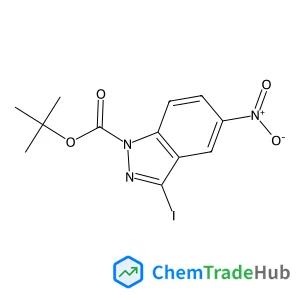
Tert-butyl 3-iodo-5-nitro-1H-indazole-1-carboxylate
CAS Number:
459133-69-8
Molecular Formula:
C12H12IN3O4
Recommended Suppliers





Disclaimer
This page provides academic journal information for reference and research purposes only. We are not affiliated with any journal publishers and do not handle publication submissions. For publication-related inquiries, please contact the respective journal publishers directly.
If you notice any inaccuracies in the information displayed, please contact us at support@chemtradehub.com. We will promptly review and address your concerns.