













Atmospheric fates of Criegee intermediates in the ozonolysis of isoprene
Literature Information
Publication Date
2016-03-16
DOI
10.1039/C6CP00053C
Impact Factor
3.676
Authors
Tran B. Nguyen, Geoffrey S. Tyndall, John D. Crounse, Alexander P. Teng, Kelvin H. Bates, Rebecca H. Schwantes, Matthew M. Coggon, Li Zhang, Philip Feiner, David O. Milller, Kate M. Skog, Jean C. Rivera-Rios, Matthew Dorris, Abigail Koss, Steven S. Brown, Joost A. de Gouw, William H. Brune, Frank N. Keutsch
View Original
Abstract
We use a large laboratory, modeling, and field dataset to investigate the isoprene + O3 reaction, with the goal of better understanding the fates of the C1 and C4 Criegee intermediates in the atmosphere. Although ozonolysis can produce several distinct Criegee intermediates, the C1 stabilized Criegee (CH2OO, 61 ± 9%) is the only one observed to react bimolecularly. We suggest that the C4 Criegees have a low stabilization fraction and propose pathways for their decomposition. Both prompt and non-prompt reactions are important in the production of OH (28% ± 5%) and formaldehyde (81% ± 16%). The yields of unimolecular products (OH, formaldehyde, methacrolein (42 ± 6%) and methyl vinyl ketone (18 ± 6%)) are fairly insensitive to water, i.e., changes in yields in response to water vapor (≤4% absolute) are within the error of the analysis. We propose a comprehensive reaction mechanism that can be incorporated into atmospheric models, which reproduces laboratory data over a wide range of relative humidities. The mechanism proposes that CH2OO + H2O (k(H2O) ∼ 1 × 10⁻¹⁵ cm3 molec−1 s−1) yields 73% hydroxymethyl hydroperoxide (HMHP), 6% formaldehyde + H2O2, and 21% formic acid + H2O; and CH2OO + (H2O)2 (k(H2O)2 ∼ 1 × 10⁻¹² cm3 molec−1 s−1) yields 40% HMHP, 6% formaldehyde + H2O2, and 54% formic acid + H2O. Competitive rate determinations (kSO2/k(H2O)n=1,2 ∼ 2.2 (±0.3) × 104) and field observations suggest that water vapor is a sink for greater than 98% of CH2OO in a Southeastern US forest, even during pollution episodes ([SO2] ∼ 10 ppb). The importance of the CH2OO + (H2O)n reaction is demonstrated by high HMHP mixing ratios observed over the forest canopy. We find that CH2OO does not substantially affect the lifetime of SO2 or HCOOH in the Southeast US, e.g., CH2OO + SO2 reaction is a minor contribution (<6%) to sulfate formation. Extrapolating, these results imply that sulfate production by stabilized Criegees is likely unimportant in regions dominated by the reactivity of ozone with isoprene. In contrast, hydroperoxide, organic acid, and formaldehyde formation from isoprene ozonolysis in those areas may be significant.
Related Literature
Sugar–salt and sugar–salt–water complexes: structure and dynamics of glucose–KNO3–(H2O)n
Brina Brauer, Victoria Buch
2010-02-22
Paper
DOI: 10.1039/B925797G
Construction and photophysics study of supramolecular complexes composed of three-point binding fullerene-trispyridylporphyrin dyads and zinc porphyrin
Lai Feng, Yishi Wu, Junfeng Xiang, Li Jiang, Chunying Shu, Chunru Wang
2010-11-19
Communication
DOI: 10.1039/C0CP01076F
Modelling the influence of hydrogen bond network on chemical shielding tensors description. GIAO-DFT study of WALP23 transmembrane α-helix as a test case
2010-05-12
Paper
DOI: 10.1039/B923883B
Enhanced field emission property of a novel Al2O3nanoparticle-decorated tubular SiC emitter with low turn-on and threshold field
H. Cui, L. Gong, G. Z. Yang, Y. Sun, J. Chen, C. X. Wang
2010-11-09
Paper
DOI: 10.1039/C0CP01313G
A natural missing link between activated and downhill protein folding scenarios
Feng Liu, Caroline Maynard, Gregory Scott, Artem Melnykov, Kathleen B. Hall
2010-02-11
Paper
DOI: 10.1039/B925033F
Self-organized distribution of periodicity and chaos in an electrochemical oscillator
Melke A. Nascimento, Hamilton Varela
2010-10-13
Paper
DOI: 10.1039/C0CP01038C
Spectroscopic and computational study of β-ethynylphenylene substituted zinc and free-base porphyrins
John C. Earles, Keith C. Gordon, Adam W. I. Stephenson, Ashton C. Partridge, David L. Officer
2010-12-02
Paper
DOI: 10.1039/C0CP01113D
Controlling the directionality of charge transfer in phthalocyaninato zinc sensitizer for a dye-sensitized solar cell: density functional theory studies
Liang Wan, Dongdong Qi, Yuexing Zhang, Jianzhuang Jiang
2010-11-22
Paper
DOI: 10.1039/C0CP01572E
You might also like
Compound Q&A
What is 1-(2,4,6-Trifluorophenyl)ethanol (CAS: 1250113-83-7)?
1-(2,4,6-Trifluorophenyl)ethanol is an organic compound with the CAS number 1250...
1250113-83-71-(2,4,6-Trifluoroph...
Compound Q&A
Is 1-(2,4-Dimethoxybenzyl)-4-(hydroxymethyl)-2-pyrrolidinone (CAS: 919111-34-5) safe?
1-(2,4-Dimethoxybenzyl)-4-(hydroxymethyl)-2-pyrrolidinone (CAS: 919111-34-5) is ...
919111-34-51-(2,4-Dimethoxybenz...
Compound Q&A
What are the physical and chemical properties of (7S,15R)-6β,15-Diacetoxy-7α,20-epoxy-7-hydroxykaura-2,16-dien-1-one (CAS: 51419-51-3)?
(7S,15R)-6β,15-Diacetoxy-7α,20-epoxy-7-hydroxykaura-2,16-dien-1-one is a crystal...
51419-51-3(7S,15R)-6β,15-Diace...
Compound Q&A
What regulatory guidelines apply to rac-ethyl (1r,4r)-4-hydroxycyclohexane-1-carboxylate, trans (CAS: 3618-04-0)?
The compound rac-ethyl (1r,4r)-4-hydroxycyclohexane-1-carboxylate, trans (CAS: 3...
3618-04-0rac-ethyl (1r,4r)-4-...
Compound Q&A
What is the market or research trend for 2-(2,4-Difluorophenoxy)-3-nitropyridine (CAS: 175135-62-3)?
The market for 2-(2,4-Difluorophenoxy)-3-nitropyridine (CAS: 175135-62-3) is cur...
175135-62-32-(2,4-Difluoropheno...
Compound Q&A
What are the main uses of 6-Diazo-5-oxo-L-norleucine (CAS: 157-03-9)?
The main uses of 6-Diazo-5-oxo-L-norleucine (CAS: 157-03-9) include research in ...
157-03-96-Diazo-5-oxo-L-norl...
Compound Q&A
What precautions should be taken when handling 2-Aminoethyl-mono-amide-DOTA-tris(tBu ester) (CAS: 173308-19-5)?
When handling 2-Aminoethyl-mono-amide-DOTA-tris(tBu ester) (CAS: 173308-19-5), i...
173308-19-52-Aminoethyl-mono-am...
Compound Q&A
How is 5-Methylimidazo[1,2-a]pyridine-3-carbaldehyde (CAS: 178488-37-4) typically synthesized?
5-Methylimidazo[1,2-a]pyridine-3-carbaldehyde (CAS: 178488-37-4) can be synthesi...
178488-37-45-Methylimidazo[1,2-...
Compound Q&A
Are there alternatives to 2,4,6-Trihydroxyisophthalaldehyde (CAS: 4396-13-8) in synthesis?
There are alternative reagents that can be used in the synthesis of 2,4,6-Trihyd...
4396-13-82,4,6-Trihydroxyisop...
Compound Q&A
What is (2Z)-3-(5-Fluoro-1H-indol-3-yl)-2-sulfanylacrylic acid (CAS: 179461-52-0)?
(2Z)-3-(5-Fluoro-1H-indol-3-yl)-2-sulfanylacrylic acid is a chemical compound wi...
179461-52-0(2Z)-3-(5-Fluoro-1H-...
Source Journal
Physical Chemistry Chemical Physics

CiteScore:
5.5
Self-citation Rate:
10.3%
Articles per Year:
3036
Physical Chemistry Chemical Physics (PCCP) is an international journal co-owned by 19 physical chemistry and physics societies from around the world. This journal publishes original, cutting-edge research in physical chemistry, chemical physics and biophysical chemistry. To be suitable for publication in PCCP, articles must include significant innovation and/or insight into physical chemistry; this is the most important criterion that reviewers and Editors will judge against when evaluating submissions. The journal has a broad scope and welcomes contributions spanning experiment, theory, computation and data science. Topical coverage includes spectroscopy, dynamics, kinetics, statistical mechanics, thermodynamics, electrochemistry, catalysis, surface science, quantum mechanics, quantum computing and machine learning. Interdisciplinary research areas such as polymers and soft matter, materials, nanoscience, energy, surfaces/interfaces, and biophysical chemistry are welcomed if they demonstrate significant innovation and/or insight into physical chemistry. Joined experimental/theoretical studies are particularly appreciated when complementary and based on up-to-date approaches.
Recommended Compounds

5-Amino-1-(2,4-difluorophenyl)-3-methyl-1H-pyrazole-4-carbonitrile
CAS Number:
1020057-92-4
Molecular Formula:
C11H8F2N4
![4-[(1-Methyl-1H-pyrrol-2-yl)methylene]-1,3(2H,4H)-isoquinolinedione structure](https://static.chemtradehub.com/structs/110/1104546-89-5-a600.webp "4-[(1-Methyl-1H-pyrrol-2-yl)methylene]-1,3(2H,4H)-isoquinolinedione structure")
4-[(1-Methyl-1H-pyrrol-2-yl)methylene]-1,3(2H,4H)-isoquinolinedione
CAS Number:
1104546-89-5
Molecular Formula:
C15H12N2O2
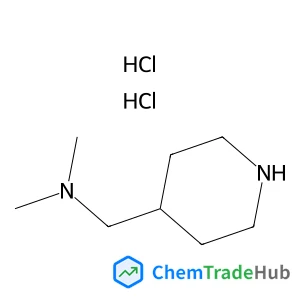
N,N-dimethyl(piperidin-4-yl)methanamine hydrochloride
CAS Number:
172281-72-0
Molecular Formula:
C8H20Cl2N2
Recommended Suppliers




Disclaimer
This page provides academic journal information for reference and research purposes only. We are not affiliated with any journal publishers and do not handle publication submissions. For publication-related inquiries, please contact the respective journal publishers directly.
If you notice any inaccuracies in the information displayed, please contact us at support@chemtradehub.com. We will promptly review and address your concerns.