












A ‘turn-on’ FRET peptide sensor based on the mercury bindingprotein MerP
Literature Information
Publication Date
2007-11-12
DOI
10.1039/B711777A
Impact Factor
4.616
Authors
Brianna R. White, Howard M. Liljestrand, James A. Holcombe
View Original
Abstract
A new fluorescent peptidyl chemosensor based on the mercury binding MerP protein with fluorescence resonance energy transfer (FRET) capabilities has been synthesized via Fmoc solid-phase peptide synthesis. The metal chelating unit, which is flanked by the fluorophores tryptophan (donor) and dansyl (acceptor), contains amino acids from MerP's metal binding loop (sequence: dansyl-Gly-Gly-Thr-Leu-Ala-Val-Pro-Gly-Met-Thr-Cys-Ala-Ala-Cys-Pro-Ile-Thr-Val-Lys-Lys-Gly-Gly-Trp-CONH2). A FRET enhancement or ‘turn-on’ response was observed for Hg2+ as well as for Zn2+, Cd2+ and Ag+ in a pure aqueous solution at pH 7.0. The emission intensity of the acceptor was used to monitor the concentration of these metals ions with detection limits of 280, 6, 103 and 496 µg L−1, respectively. No response was observed for the other transition, alkali and alkaline earth metals tested. The fluorescent enhancement observed is unique for Hg2+ since this metal generally quenchesfluorescence. The acceptorfluorescence increase resulting from metal binding-induced FRET suggests a sensor that is inherently more sensitive than one based on quenching by the binding event.
Related Literature
Unusual doping induced phase transitions in NiS via solventless synthesis enabling superior bifunctional electrocatalytic activity
Ginena Bildard Shombe, Malik Dilshad Khan, Asma M. Alenad, Jonghyun Choi, Tenzin Ingsel, Ram K. Gupta, Neerish Revaprasadu
2020-07-21
Paper
DOI: 10.1039/D0SE00855A
Reductive catalytic fractionation of lignocellulose: when should the catalyst meet depolymerized lignin fragments?
Shi Qiu, Meng Wang, Yunming Fang, Tianwei Tan
2020-08-28
Paper
DOI: 10.1039/D0SE01118E
Cost estimates of production scale semitransparent organic photovoltaic modules for building integrated photovoltaics
Byungjun Lee, Lucas Lahann, Yongxi Li
2020-09-23
Paper
DOI: 10.1039/D0SE00910E
Increasing dimethyl ether production from biomass-derived syngas via sorption enhanced dimethyl ether synthesis
Dalia Liuzzi, Cristina Peinado, Miguel A. Peña, Jasper van Kampen, Jurriaan Boon, Sergio Rojas
2020-09-21
Paper
DOI: 10.1039/D0SE01172J
Chlorination of dithienobenzodithiophene (DTBDT) based polymers to simultaneously improve the VOC, JSC and FF of non-fullerene organic solar cells
Qingdao Zeng, Qiang Guo
2020-09-01
Paper
DOI: 10.1039/D0SE01176B
Novel homogeneous selective electrocatalysts for CO2 reduction: an electrochemical and computational study of cyclopentadienyl-phenylendiamino-cobalt complexes
Nicola Melis, Francesca Mocci, Annalisa Vacca, Luca Pilia
2020-08-31
Paper
DOI: 10.1039/D0SE00790K
Solvent induced surface modifications on hydrogen storage performance of ZnO nanoparticle decorated MWCNTs
Madhavi Konni, Anima S. Dadhich, Saratchandra Babu Mukkamala
2017-12-04
Paper
DOI: 10.1039/C7SE00511C
Core–shell structural PANI-derived carbon@Co–Ni LDH electrode for high-performance asymmetric supercapacitors
Junming Cao, La Li, Yunlong Xi, Junzhi Li, Xuexue Pan, Duo Chen
2018-04-14
Paper
DOI: 10.1039/C8SE00123E
High-performance flexible redox supercapacitors induced by methylene blue with a wide voltage window
Chunmei Xu, Haiyan Wang, Jiang Deng, Yong Wang
2017-11-09
Communication
DOI: 10.1039/C7SE00492C
You might also like
Compound Q&A
How should waste containing (6-Bromo-2-naphthyl)oxy](dimethyl)(2-methyl-2-propanyl)silane be handled?
Waste containing (6-Bromo-2-naphthyl)oxy](dimethyl)(2-methyl-2-propanyl)silane (...
100751-65-3[(6-Bromo-2-naphthyl...
Compound Q&A
How is 7-Fluoro-4-isoquinolinecarboxylic acid (CAS: 1841081-40-0) typically synthesized?
7-Fluoro-4-isoquinolinecarboxylic acid can be synthesized via a multi-step proce...
1841081-40-07-Fluoro-4-isoquinol...
Compound Q&A
What are the physical and chemical properties of 2,3,5,6-Tetrabromothieno[3,2-b]thiophene (CAS: 124638-53-5)?
2,3,5,6-Tetrabromothieno[3,2-b]thiophene is a crystalline compound with a high m...
124638-53-52,3,5,6-Tetrabromoth...
Compound Q&A
Is 1-[4-(Benzylamino)-7,8-dihydro-5H-pyrano[4,3-d]pyrimidin-2-yl]-2-methyl-1H-indole-4-carboxamide (CAS: 1542705-92-9) safe?
1-[4-(Benzylamino)-7,8-dihydro-5H-pyrano[4,3-d]pyrimidin-2-yl]-2-methyl-1H-indol...
1542705-92-91-[4-(Benzylamino)-7...
Compound Q&A
What is the market or research trend for imidazo[5,1-d]-1,2,3,5-tetrazine-8-carboxylic acid, 3,4-dihydro-3-methyl-4-oxo- (CAS: 113942-30-6)?
The market for imidazo[5,1-d]-1,2,3,5-tetrazine-8-carboxylic acid, 3,4-dihydro-3...
113942-30-6Imidazo[5,1-d]-1,2,3...
Compound Q&A
What is 3-(Triisopropylsilyl)propiolaldehyde (CAS: 163271-80-5)?
3-(Triisopropylsilyl)propiolaldehyde is a synthetic organic compound with the CA...
163271-80-53-(Triisopropylsilyl...
Compound Q&A
What regulatory guidelines apply to 6-Nitro-2H-1,4-benzoxazin-3(4H)-one (CAS: 81721-87-1)?
6-Nitro-2H-1,4-benzoxazin-3(4H)-one (CAS: 81721-87-1) is subject to various regu...
81721-87-16-Nitro-2H-1,4-benzo...
Compound Q&A
How should waste containing (3-Fluorophenyl)(4-{[(2-methyl-2-propanyl)oxy]carbonyl}-1-piperazinyl)acetic acid (CAS: 885272-91-3) be handled?
Waste containing (3-Fluorophenyl)(4-{[(2-methyl-2-propanyl)oxy]carbonyl}-1-piper...
885272-91-3(3-Fluorophenyl)(4-{...
Compound Q&A
What are the physical and chemical properties of N,N'-4,4'-Biphenyldiyldiisonicotinamide (CAS: 55119-40-9)?
N,N'-4,4'-Biphenyldiyldiisonicotinamide is a white crystalline solid with a mole...
55119-40-9N,N'-4,4'-Biphenyldi...
Compound Q&A
What industries use 6-Bromo-8-fluoro-2-quinazolinol (CAS: 1036756-15-6)?
6-Bromo-8-fluoro-2-quinazolinol is primarily used in the pharmaceutical industry...
1036756-15-66-Bromo-8-fluoro-2-q...
Source Journal
Analyst

CiteScore:
7.8
Self-citation Rate:
5.6%
Articles per Year:
653
Analyst publishes analytical and bioanalytical research that reports premier fundamental discoveries and inventions, and the applications of those discoveries, unconfined by traditional discipline barriers.
Recommended Compounds
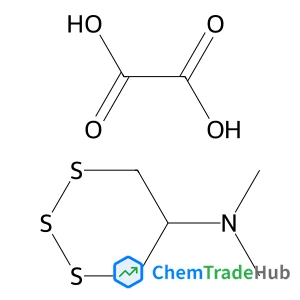
Oxalic acid compound with cyclohexylsulfamothioic O-acid (11)
CAS Number:
31895-22-4
Molecular Formula:
C7H13NO4S3
Recommended Suppliers






Disclaimer
This page provides academic journal information for reference and research purposes only. We are not affiliated with any journal publishers and do not handle publication submissions. For publication-related inquiries, please contact the respective journal publishers directly.
If you notice any inaccuracies in the information displayed, please contact us at support@chemtradehub.com. We will promptly review and address your concerns.