












Numerical methods for comparing fresh and weathered oils by their FTIR spectra
Literature Information
Publication Date
2007-06-22
DOI
10.1039/B703785F
Impact Factor
4.616
Authors
Jianfeng Li, D. Brynn Hibbert, Stephen Fuller
View Original
Abstract
Four comparison statistics (‘similarity indices’) for the identification of the source of a petroleum oil spill based on the ASTM standard test method D3414 were investigated. Namely, (1) first difference correlation coefficient squared and (2) correlation coefficient squared, (3) first difference Euclidean cosine squared and (4) Euclidean cosine squared. For numerical comparison, an FTIR spectrum is divided into three regions, described as: fingerprint (900–700 cm−1), generic (1350–900 cm−1) and supplementary (1770–1685 cm−1), which are the same as the three major regions recommended by the ASTM standard. For fresh oil samples, each similarity index was able to distinguish between replicate independent spectra of the same sample and between different samples. In general, the two first difference-based indices worked better than their parent indices. To provide samples to reveal relationships between weathered and fresh oils, a simple artificial weathering procedure was carried out. Euclidean cosine and correlation coefficients both worked well to maintain identification of a match in the fingerprint region and the two first difference indices were better in the generic region. Receiver operating characteristic curves (true positive rate versus false positive rate) for decisions on matching using the fingerprint region showed two samples could be matched when the difference in weathering time was up to 7 days. Beyond this time the true positive rate falls and samples cannot be reliably matched. However, artificial weathering of a fresh source sample can aid the matching of a weathered sample to its real source from a pool of very similar candidates.
Recommended Journals
Related Literature
Oxidization states of metal atoms in linear bimetallic multi-sandwich molecules Vn(FeCp2)(n+1) and magnetic moment enhancement mechanism of its 1D wire
Hongmei Jin, Valeri Ligatchev, Shuo-Wang Yang, Michael B. Sullivan, Yuanping Feng
2010-03-15
Communication
DOI: 10.1039/B927272K
Density functional study of aurophilic interaction in [X(AuPH3)2+]2 (X = F, Cl, Br, I)
Hua Fang, Xiao-Gang Zhang, Shu-Guang Wang
2009-05-08
Paper
DOI: 10.1039/B821546D
Electrochemical impedance study of the polymerization of pyrrole on high surface area carbon electrodes
Reza B. Moghaddam, Peter G. Pickup
2010-03-17
Paper
DOI: 10.1039/B925381E
Theoretical study of the gas-phase ozonolysis of β-pinene (C10H16)
T. L. Nguyen, J. Peeters, L. Vereecken
2009-05-07
Paper
DOI: 10.1039/B822984H
High-resolution cavity ringdown spectroscopy of the jet-cooled propyl peroxy radical C3H7O2
Gabriel M. P. Just, Patrick Rupper, Terry A. Miller, W. Leo Meerts
2010-03-18
Paper
DOI: 10.1039/B924323B
Single-stranded DNA adsorption on chiral molecule coated Au surface: a molecular dynamics study
Haiqing Liang, Zhenyu Li, Jinlong Yang
2010-02-24
Paper
DOI: 10.1039/B923012B
SERS observation of soft C–H vibrational mode of bifunctional alkanethiol molecules adsorbed at Au and Agelectrodes
Inga Razmute-Razmė, Zenonas Kuodis, Olegas Eicher-Lorka, Gediminas Niaura
2010-02-18
Communication
DOI: 10.1039/B921291D
Electrochemistry of poly(3,4-ethylenedioxythiophene)-polyaniline/Prussian blue electrochromic devices containing an ionic liquid based gel electrolyte film
Melepurath Deepa, Arvind Awadhia, Shweta Bhandari
2009-05-08
Paper
DOI: 10.1039/B900091G
Evidences in favour of a single electron transfer (SET) mechanism in the TiO2 sensitized photo-oxidation of α-hydroxy- and α,β-dihydroxybenzyl derivatives in water
Marta Bettoni, Cesare Rol, Giovanni V. Sebastiani
2010-04-06
Paper
DOI: 10.1039/B920785F
You might also like
Compound Q&A
What precautions should be taken when handling 2-Chloro-1,2-bis(4-methylphenyl)ethanone (CAS: 71193-32-3)?
When handling 2-Chloro-1,2-bis(4-methylphenyl)ethanone (CAS: 71193-32-3), it is ...
71193-32-32-Chloro-1,2-bis(4-m...
Compound Q&A
What industries use 4-Ethoxy-3-(5-methyl-4-oxo-7-propyl-1,4-dihydroimidazo[5,1-f][1,2,4]triazin-2-yl)benzenesulfonyl chloride (CAS: 224789-26-8)?
4-Ethoxy-3-(5-methyl-4-oxo-7-propyl-1,4-dihydroimidazo[5,1-f][1,2,4]triazin-2-yl...
224789-26-84-Ethoxy-3-(5-methyl...
Compound Q&A
How should Methyl 3-Oxo-4-Androsten-17-Carboxylate (CAS: 2681-55-2) be stored?
Methyl 3-Oxo-4-Androsten-17-Carboxylate (CAS: 2681-55-2) should be stored in a c...
2681-55-2Methyl 3-Oxo-4-Andro...
Compound Q&A
What are the main uses of (R)-3-Amino-4-(3-hexylphenylamino)-4-oxobutylphosphonic acid (CAS: 909725-61-7)?
(R)-3-Amino-4-(3-hexylphenylamino)-4-oxobutylphosphonic acid is primarily used i...
909725-61-7(R)-3-Amino-4-(3-hex...
Compound Q&A
What regulatory guidelines apply to 2-Methyl-2-propanyl 3-amino-3-carbamoyl-1-azetidinecarboxylate (CAS: 1254120-14-3)?
2-Methyl-2-propanyl 3-amino-3-carbamoyl-1-azetidinecarboxylate (CAS: 1254120-14-...
1254120-14-32-Methyl-2-propanyl ...
Compound Q&A
Are there alternatives to (E)-4-(tert-Butoxy)-4-oxobut-2-enoic acid (CAS: 135355-96-3) in synthesis?
There are alternative reagents that can be used in synthesis instead of (E)-4-(t...
135355-96-3(E)-4-(tert-Butoxy)-...
Compound Q&A
What are the physical and chemical properties of [2-(3-Chlorophenyl)-1,3-thiazol-4-yl]methanol (CAS: 121202-20-8)?
[2-(3-Chlorophenyl)-1,3-thiazol-4-yl]methanol (CAS: 121202-20-8) is a crystallin...
121202-20-8[2-(3-Chlorophenyl)-...
Compound Q&A
What is the market or research trend for Methyl (2S)-[(4S)-2,2-dimethyl-1,3-dioxolan-4-yl]{[(4-methylphenyl)sulfonyl]oxy}acetate (CAS: 166249-17-8)?
The market and research trends for Methyl (2S)-[(4S)-2,2-dimethyl-1,3-dioxolan-4...
166249-17-8Methyl (2S)-[(4S)-2,...
Compound Q&A
What is the market or research trend for 1-Bromo-2-isocyanatoethane (CAS: 42865-19-0)?
The market for 1-Bromo-2-isocyanatoethane (CAS: 42865-19-0) is driven by its use...
42865-19-01-Bromo-2-isocyanato...
Compound Q&A
What are the main uses of 4-Nitro-D-phenylalanine hydrochloride (CAS: 147065-06-3)?
4-Nitro-D-phenylalanine hydrochloride (CAS: 147065-06-3) is primarily used in re...
147065-06-34-Nitro-D-phenylalan...
Source Journal
Analyst

CiteScore:
7.8
Self-citation Rate:
5.6%
Articles per Year:
653
Analyst publishes analytical and bioanalytical research that reports premier fundamental discoveries and inventions, and the applications of those discoveries, unconfined by traditional discipline barriers.
Recommended Compounds
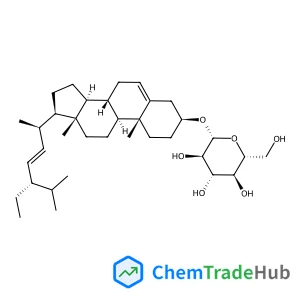
(3beta,22E)-Stigmasta-5,22-dien-3-yl beta-D-glucopyranoside
CAS Number:
19716-26-8
Molecular Formula:
C35H58O6

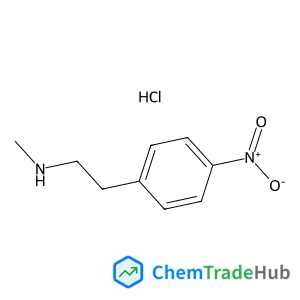
N-Methyl-2-(4-nitrophenyl)ethanamine hydrochloride (1:1)
CAS Number:
166943-39-1
Molecular Formula:
C9H13ClN2O2
Recommended Suppliers





Disclaimer
This page provides academic journal information for reference and research purposes only. We are not affiliated with any journal publishers and do not handle publication submissions. For publication-related inquiries, please contact the respective journal publishers directly.
If you notice any inaccuracies in the information displayed, please contact us at support@chemtradehub.com. We will promptly review and address your concerns.