












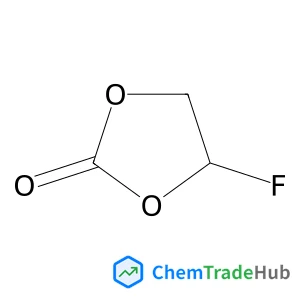
19F Magic angle spinning NMR reporter molecules: empirical measures of surface shielding, polarisability and H-bonding
Literature Information
Publication Date
2007-04-16
DOI
10.1039/B701023K
Impact Factor
3.676
Authors
Vitaliy L. Budarin, James H. Clark, Fabien E. I. Deswarte, Karl T. Mueller, Stewart J. Tavener
View Original
Abstract
Magic Angle Spinning (MAS) 19F NMR spectra have been obtained and chemical shifts measured for 37 molecules in the gas phase and adsorbed on the surfaces of six common materials: octadecyl- and octyl-functionalised chromatography silicas, Kieselgel 100 silica, Brockmann neutral alumina, Norit activated charcoal and 3-(1-piperidino)propyl functionalised silica. From these six surfaces, octadecyl-silica is selected as a non-polar reference to which the others are compared. The change in chemical shift of a fluorine nucleus within a molecule on adsorption to a surface from the gas phase, Δδsurfacegas, is described by the empirical relationship: , where δs and δr are constants that describe the chemical shift induced by the electromagnetic field of the surface under investigation and reference surface, αs and αr are the relative surface polarisability for the surface and reference, πs is an additional contribution to the surface polarisabilities due to its ability to interact with aromatic molecules, and δHBA and δHBD are measurements of the hydrogen acceptor and donor properties of the surface. These empirical parameters are measured for the surfaces under study. Silica and alumina are found to undergo specific interactions with aromatic reporter molecules and both accept and donate H-bonds. Activated charcoal was found to have an extreme effect on shielding but no specific interactions with the adsorbed molecules. 3-(1-Piperidino)propyl functionalised silica exhibits H-bond acceptor ability, but does not donate H-bonds.
Related Literature
Healable shape memory (thio)urethane thermosets
Le-Thu T. Nguyen, Thuy Thu Truong, Lam Le, Viet Quoc Nguyen, Anh Tuan Luu
2015-03-09
Paper
DOI: 10.1039/C5PY00126A
‘Blocky’ donor–acceptor polymers containing selenophene, benzodithiophene and thienothiophene for improved molecular ordering
Dong Gao, Gregory L. Gibson, Jon Hollinger, Pengfei Li, Dwight S. Seferos
2015-03-20
Paper
DOI: 10.1039/C5PY00276A
Selective degradation in aliphatic block copolyesters by controlling the heterogeneity of the amorphous phase
Veluska Arias, Peter Olsén, Karin Odelius, Anders Höglund, Ann-Christine Albertsson
2015-03-17
Paper
DOI: 10.1039/C5PY00136F
A squaramide and tertiary amine: an excellent hydrogen-bonding pair organocatalyst for living polymerization
Jingjing Liu, Cheng Chen, Zhenjiang Li, Wenzhuo Wu, Xu Zhi, Qiguo Zhang, Hao Wu, Xin Wang, Saide Cui, Kai Guo
2015-04-09
Communication
DOI: 10.1039/C5PY00508F
High molecular weight mechanochromic spiropyran main chain copolymers via reproducible microwave-assisted Suzuki polycondensation
Lukas Metzler, Thomas Reichenbach, Oliver Brügner, Hartmut Komber, Florian Lombeck, Stefan Müllers, Ralf Hanselmann, Harald Hillebrecht
2015-04-01
Paper
DOI: 10.1039/C5PY00141B
Modification of chitosan with polystyrene and poly(n-butyl acrylate) via nitroxide-mediated polymerization and grafting from approach in homogeneous media
R. Champagne-Hartley, E. Saldívar-Guerra, M. F. Cunningham
2015-02-13
Paper
DOI: 10.1039/C5PY00028A
Thiol-Michael addition miniemulsion polymerizations: functional nanoparticles and reactive latex films
Chen Wang, Shunsuke Chatani, Christopher N. Bowman
2015-04-13
Communication
DOI: 10.1039/C5PY00326A
You might also like
Compound Q&A
What is Ethyl 3-cyclohexylpropanoate (CAS: 10094-36-7)?
Ethyl 3-cyclohexylpropanoate is a clear, colorless to light yellow liquid with a...
10094-36-7Ethyl 3-cyclohexylpr...
Compound Q&A
How should waste containing 2-(Hydroxymethyl)-5-(methoxycarbonyl)-6-methyl-4-(2-nitrophenyl)nicotinic acid (CAS: 34783-31-8) be handled?
Waste containing 2-(Hydroxymethyl)-5-(methoxycarbonyl)-6-methyl-4-(2-nitrophenyl...
34783-31-82-(Hydroxymethyl)-5-...
Compound Q&A
How should waste containing 2,4,6-Tris(pentafluoroethyl)-1,3,5-triazine (CAS: 858-46-8) be handled?
Waste containing 2,4,6-Tris(pentafluoroethyl)-1,3,5-triazine (CAS: 858-46-8) sho...
858-46-82,4,6-Tris(pentafluo...
Compound Q&A
What precautions should be taken when handling Chloroac-nle-oh (CAS: 56787-36-1)?
When handling Chloroac-nle-oh (CAS: 56787-36-1), it is essential to wear appropr...
56787-36-1Chloroac-nle-oh
Compound Q&A
What industries use Ethyl 6-phenylimidazo[2,1-b][1,3]thiazole-3-carboxylate (CAS: 752244-05-6)?
Ethyl 6-phenylimidazo[2,1-b][1,3]thiazole-3-carboxylate is primarily used in the...
752244-05-6Ethyl 6-phenylimidaz...
Compound Q&A
Are there alternatives to alpha-(2-Bromophenyl)benzylamine (CAS: 55095-15-3) in synthesis?
Alternatives to alpha-(2-Bromophenyl)benzylamine (CAS: 55095-15-3) in synthesis ...
55095-15-3alpha-(2-Bromophenyl...
Compound Q&A
How should waste containing 2-Chloro-5-methoxypyridine (CAS: 139585-48-1) be handled?
Waste containing 2-Chloro-5-methoxypyridine (CAS: 139585-48-1) should be managed...
139585-48-12-Chloro-5-methoxypy...
Compound Q&A
What industries use 1-(4-Methoxyphenyl)-2,5-dimethyl-1H-pyrrole (CAS: 5044-27-9)?
1-(4-Methoxyphenyl)-2,5-dimethyl-1H-pyrrole (CAS: 5044-27-9) is used in various ...
5044-27-91-(4-Methoxyphenyl)-...
Compound Q&A
Are there alternatives to 3-Bromo-5-(N-Boc)aminomethylisoxazole (CAS: 903131-45-3) in synthesis?
There are alternative reagents and compounds that can be used in the synthesis o...
903131-45-33-Bromo-5-(N-Boc)ami...
Compound Q&A
What is Tungsten(IV) oxide (CAS: 12036-22-5)?
Tungsten(IV) oxide, also known as tungsten dioxide, is a chemical compound with ...
12036-22-5Tungsten(IV) oxide
Source Journal
Physical Chemistry Chemical Physics

CiteScore:
5.5
Self-citation Rate:
10.3%
Articles per Year:
3036
Physical Chemistry Chemical Physics (PCCP) is an international journal co-owned by 19 physical chemistry and physics societies from around the world. This journal publishes original, cutting-edge research in physical chemistry, chemical physics and biophysical chemistry. To be suitable for publication in PCCP, articles must include significant innovation and/or insight into physical chemistry; this is the most important criterion that reviewers and Editors will judge against when evaluating submissions. The journal has a broad scope and welcomes contributions spanning experiment, theory, computation and data science. Topical coverage includes spectroscopy, dynamics, kinetics, statistical mechanics, thermodynamics, electrochemistry, catalysis, surface science, quantum mechanics, quantum computing and machine learning. Interdisciplinary research areas such as polymers and soft matter, materials, nanoscience, energy, surfaces/interfaces, and biophysical chemistry are welcomed if they demonstrate significant innovation and/or insight into physical chemistry. Joined experimental/theoretical studies are particularly appreciated when complementary and based on up-to-date approaches.
Recommended Compounds


Recommended Suppliers






Disclaimer
This page provides academic journal information for reference and research purposes only. We are not affiliated with any journal publishers and do not handle publication submissions. For publication-related inquiries, please contact the respective journal publishers directly.
If you notice any inaccuracies in the information displayed, please contact us at support@chemtradehub.com. We will promptly review and address your concerns.