



Quantum chemistry-based NMR spin Hamiltonian parameters of GABA for quantitation in magnetic resonance spectroscopy
Literature Information
Publication Date
2007-04-17
DOI
10.1039/B700631D
Impact Factor
3.676
Authors
A. R. Allouche, M. Aubert-Frécon, D. Graveron-Demilly
View Original
Abstract
Chemical shifts δ and spin–spin coupling constants J have been calculated using quantum chemistry approaches for the γ-amino butyric acid GABA which is a brain metabolite. Two theoretical methods HF and DFT/B3LYP, two basis sets 6-31G* and 6-311+G(2d,p) and two gauge-invariant methods CSGT and GIAO have been used. From δ and J values, NMR spectra have been obtained from the strongly coupled spin system Hamiltonian using the NMR-SCOPE package. Solvent effects have been considered within the polarisable continuum model. Comparisons between calculated and experimental NMR spectra at 300 MHz show that our best results correspond to the B3LYP/6-311+G(2d,p)-GIAO calculations. They are seen to be in good agreement with experiment. This demonstrates the usefulness of quantum chemistry methods for estimating NMR spin Hamiltonian parameters involved in specific algorithms used for quantitation of metabolites such as GABA.
Recommended Journals

Australian Journal of Chemistry

Journal of the American Chemical Society

Anti-Corrosion Methods and Materials

Chemistry of Heterocyclic Compounds

Chemical & Pharmaceutical Bulletin

Chemical Reviews

Journal of the Chinese Chemical Society

Corrosion Science

Chemistry of Natural Compounds

Bulletin of the Chemical Society of Japan
Related Literature
Dynamics of a fluorophore attached to superhelical DNA: FCS experiments simulated by Brownian dynamics
Tomasz Wocjan, Jan Krieger, Oleg Krichevsky, Jörg Langowski
2009-09-16
Paper
DOI: 10.1039/B911857H
Effects of the biological backbone on DNA–protein stacking interactions
Cassandra D. M. Churchill, Lex Navarro-Whyte, Lesley R. Rutledge, Stacey D. Wetmore
2009-08-17
Paper
DOI: 10.1039/B910747A
A theoretical study of the rearrangement processes of energized CCCB and CCCAl
Tianfang Wang, John H. Bowie
2009-06-24
Paper
DOI: 10.1039/B906345E
Synthesis and characterization of FePd magnetic nanoparticles modified with chiral BINAP ligand as a recoverable catalyst vehicle for the asymmetric coupling reaction
Kohsuke Mori, Yuichi Kondo, Hiromi Yamashita
2009-07-30
Paper
DOI: 10.1039/B910069E
Theoretical study of carbon species on Pd(111): competition between migration of C atoms to the subsurface interlayer and formation of Cnclusters on the surface
Ilya V. Yudanov, Notker Rösch
2009-10-14
Paper
DOI: 10.1039/B916855A
A novel pulse isotopic exchange technique for rapid determination of the oxygen surface exchange rate of oxide ion conductors
Henny J. M. Bouwmeester, Chunlin Song, Jianjun Zhu, Jianxin Yi, Martin van Sint Annaland, Bernard A. Boukamp
2009-08-26
Communication
DOI: 10.1039/B912712G
Modeling molecular crystals formed by spin-active metal complexes by atom–atom potentials
Anton V. Sinitskiy, Andrei M. Tokmachev, Richard Dronskowski
2009-09-23
Paper
DOI: 10.1039/B908321A
You might also like
Compound Q&A
What is Ethyl 3-cyclohexylpropanoate (CAS: 10094-36-7)?
Ethyl 3-cyclohexylpropanoate is a clear, colorless to light yellow liquid with a...
10094-36-7Ethyl 3-cyclohexylpr...
Compound Q&A
How should waste containing 2-(Hydroxymethyl)-5-(methoxycarbonyl)-6-methyl-4-(2-nitrophenyl)nicotinic acid (CAS: 34783-31-8) be handled?
Waste containing 2-(Hydroxymethyl)-5-(methoxycarbonyl)-6-methyl-4-(2-nitrophenyl...
34783-31-82-(Hydroxymethyl)-5-...
Compound Q&A
How should waste containing 2,4,6-Tris(pentafluoroethyl)-1,3,5-triazine (CAS: 858-46-8) be handled?
Waste containing 2,4,6-Tris(pentafluoroethyl)-1,3,5-triazine (CAS: 858-46-8) sho...
858-46-82,4,6-Tris(pentafluo...
Compound Q&A
What precautions should be taken when handling Chloroac-nle-oh (CAS: 56787-36-1)?
When handling Chloroac-nle-oh (CAS: 56787-36-1), it is essential to wear appropr...
56787-36-1Chloroac-nle-oh
Compound Q&A
What industries use Ethyl 6-phenylimidazo[2,1-b][1,3]thiazole-3-carboxylate (CAS: 752244-05-6)?
Ethyl 6-phenylimidazo[2,1-b][1,3]thiazole-3-carboxylate is primarily used in the...
752244-05-6Ethyl 6-phenylimidaz...
Compound Q&A
Are there alternatives to alpha-(2-Bromophenyl)benzylamine (CAS: 55095-15-3) in synthesis?
Alternatives to alpha-(2-Bromophenyl)benzylamine (CAS: 55095-15-3) in synthesis ...
55095-15-3alpha-(2-Bromophenyl...
Compound Q&A
How should waste containing 2-Chloro-5-methoxypyridine (CAS: 139585-48-1) be handled?
Waste containing 2-Chloro-5-methoxypyridine (CAS: 139585-48-1) should be managed...
139585-48-12-Chloro-5-methoxypy...
Compound Q&A
What industries use 1-(4-Methoxyphenyl)-2,5-dimethyl-1H-pyrrole (CAS: 5044-27-9)?
1-(4-Methoxyphenyl)-2,5-dimethyl-1H-pyrrole (CAS: 5044-27-9) is used in various ...
5044-27-91-(4-Methoxyphenyl)-...
Compound Q&A
Are there alternatives to 3-Bromo-5-(N-Boc)aminomethylisoxazole (CAS: 903131-45-3) in synthesis?
There are alternative reagents and compounds that can be used in the synthesis o...
903131-45-33-Bromo-5-(N-Boc)ami...
Compound Q&A
What is Tungsten(IV) oxide (CAS: 12036-22-5)?
Tungsten(IV) oxide, also known as tungsten dioxide, is a chemical compound with ...
12036-22-5Tungsten(IV) oxide
Source Journal
Physical Chemistry Chemical Physics

CiteScore:
5.5
Self-citation Rate:
10.3%
Articles per Year:
3036
Physical Chemistry Chemical Physics (PCCP) is an international journal co-owned by 19 physical chemistry and physics societies from around the world. This journal publishes original, cutting-edge research in physical chemistry, chemical physics and biophysical chemistry. To be suitable for publication in PCCP, articles must include significant innovation and/or insight into physical chemistry; this is the most important criterion that reviewers and Editors will judge against when evaluating submissions. The journal has a broad scope and welcomes contributions spanning experiment, theory, computation and data science. Topical coverage includes spectroscopy, dynamics, kinetics, statistical mechanics, thermodynamics, electrochemistry, catalysis, surface science, quantum mechanics, quantum computing and machine learning. Interdisciplinary research areas such as polymers and soft matter, materials, nanoscience, energy, surfaces/interfaces, and biophysical chemistry are welcomed if they demonstrate significant innovation and/or insight into physical chemistry. Joined experimental/theoretical studies are particularly appreciated when complementary and based on up-to-date approaches.
Recommended Compounds
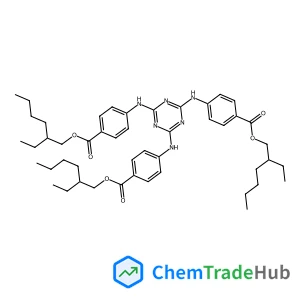
Tris(2-ethylhexyl) 4,4',4''-(1,3,5-triazine-2,4,6-triyltriimino)tribenzoate
CAS Number:
88122-99-0
Molecular Formula:
C48H66N6O6

![3-[(4-Nitrobenzyl)oxy]-3-oxopropanoic Acid structure](https://static.chemtradehub.com/structs/773/77359-11-6-0d04.webp "3-[(4-Nitrobenzyl)oxy]-3-oxopropanoic Acid structure")
Recommended Suppliers





Disclaimer
This page provides academic journal information for reference and research purposes only. We are not affiliated with any journal publishers and do not handle publication submissions. For publication-related inquiries, please contact the respective journal publishers directly.
If you notice any inaccuracies in the information displayed, please contact us at support@chemtradehub.com. We will promptly review and address your concerns.