












![[2',6'-bis(propan-2-yloxy)-[1,1'-biphenyl]-3-yl]dicyclohexylphosphane structure](https://static.chemtradehub.com/structs/787/787618-22-8-dda2.webp "[2',6'-bis(propan-2-yloxy)-[1,1'-biphenyl]-3-yl]dicyclohexylphosphane structure")
[2',6'-bis(propan-2-yloxy)-[1,1'-biphenyl]-3-yl]dicyclohexylphosphane
CAS Number:
787618-22-8
Molecular Formula:
C30H43O2P
Ilya V. Yudanov, Notker Rösch
Subsurface carbon species of Pd catalysts recently attracted considerable attention because they affect the selectivity of hydrogenation reactions. We calculated the migration of C atoms from the Pd(111) surface to interstitial subsurface sites to be energetically favorable. Yet, thermodynamically more stable is a graphene-like phase on the Pd surface. Applying a density functional method on periodic models, we explored the formation of Cn (n = 2–4) clusters on Pd(111). At low coverage, carbon monomers on the surface and at octahedral subsurface sites were calculated to be more stable than dimer species, C2, on the surface. However, at a C coverage of about half a monolayer, the formation of C2 and C3 species, precursors of a graphene phase, becomes competitive with migration of C monomers to octahedral subsurface sites. While discussing these findings, we also addressed the problem of C1 formation on Pd catalysts from simple organics.
Yilin Wang, Hanqing Zhao, Linxing Zhang, Jun Chen, Xianran Xing
DOI: 10.1039/C7CP01347G
Fernando Rodríguez-Díaz, Aly Castellanos-Suárez, Aileen Lozsán
DOI: 10.1039/C7CP02567J
T. S. Miller, A. Belen Jorge, T. M. Suter, A. Sella, F. Corà, P. F. McMillan
DOI: 10.1039/C7CP02711G
Hongwei Song, Anyang Li, Minghui Yang, Hua Guo
DOI: 10.1039/C7CP02889J
Mayanak Kumar Gupta, Mohamed Zbiri, Stephane Rols, Sadequa Jahedkhan Patwe, Helmut Schober
DOI: 10.1039/C7CP01490B
Da Young Hwang, Kyoung Hwan Choi, Jeong Eon Park, Dong Hack Suh
DOI: 10.1039/C7CP03495D
Pengfei Gao, Xi Chen, Lei Guo, Zhifeng Wu, Erhu Zhang, Baihua Gong, Yang Zhang, Shengli Zhang
DOI: 10.1039/C6CP06424H
Supriyo Ghosh, Arnab Mukherjee, T. A. Abinandanan, Suryasarathi Bose
DOI: 10.1039/C7CP01816A
Debdas Dhabal, Kjartan Thor Wikfeldt, Lawrie B. Skinner, Charusita Chakravarty, Hemant K. Kashyap
DOI: 10.1039/C6CP07599A
M. P. Szymański, H. Jędrzejewska, M. Wierzbicki, A. Szumna
DOI: 10.1039/C7CP02603J
Ethyl 3-cyclohexylpropanoate is a clear, colorless to light yellow liquid with a...
Waste containing 2-(Hydroxymethyl)-5-(methoxycarbonyl)-6-methyl-4-(2-nitrophenyl...
Waste containing 2,4,6-Tris(pentafluoroethyl)-1,3,5-triazine (CAS: 858-46-8) sho...
When handling Chloroac-nle-oh (CAS: 56787-36-1), it is essential to wear appropr...
Ethyl 6-phenylimidazo[2,1-b][1,3]thiazole-3-carboxylate is primarily used in the...
Alternatives to alpha-(2-Bromophenyl)benzylamine (CAS: 55095-15-3) in synthesis ...
Waste containing 2-Chloro-5-methoxypyridine (CAS: 139585-48-1) should be managed...
1-(4-Methoxyphenyl)-2,5-dimethyl-1H-pyrrole (CAS: 5044-27-9) is used in various ...
There are alternative reagents and compounds that can be used in the synthesis o...
Tungsten(IV) oxide, also known as tungsten dioxide, is a chemical compound with ...

Physical Chemistry Chemical Physics (PCCP) is an international journal co-owned by 19 physical chemistry and physics societies from around the world. This journal publishes original, cutting-edge research in physical chemistry, chemical physics and biophysical chemistry. To be suitable for publication in PCCP, articles must include significant innovation and/or insight into physical chemistry; this is the most important criterion that reviewers and Editors will judge against when evaluating submissions. The journal has a broad scope and welcomes contributions spanning experiment, theory, computation and data science. Topical coverage includes spectroscopy, dynamics, kinetics, statistical mechanics, thermodynamics, electrochemistry, catalysis, surface science, quantum mechanics, quantum computing and machine learning. Interdisciplinary research areas such as polymers and soft matter, materials, nanoscience, energy, surfaces/interfaces, and biophysical chemistry are welcomed if they demonstrate significant innovation and/or insight into physical chemistry. Joined experimental/theoretical studies are particularly appreciated when complementary and based on up-to-date approaches.
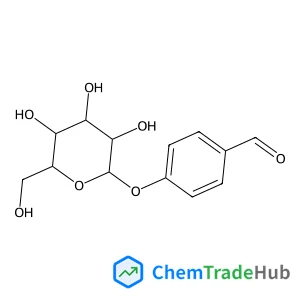


![1-(Hexopyranosyloxy)-4a,5-dihydroxy-7-methyl-1,4a,5,6,7,7a-hexahydrocyclopenta[c]pyran-7-yl 3-phenylacrylate structure](https://static.chemtradehub.com/structs/192/19210-12-9-ecae.webp "1-(Hexopyranosyloxy)-4a,5-dihydroxy-7-methyl-1,4a,5,6,7,7a-hexahydrocyclopenta[c]pyran-7-yl 3-phenylacrylate structure")




