













Detection of Fe3+ using a novel hyperbranched polymeric spectral sensor
Literature Information
Publication Date
2019-08-21
DOI
10.1039/C9AY01483G
Impact Factor
2.896
Authors
Wenbo Guo, Tengxuan Tang, Shenzhou Lu, Dongmei Xu
View Original
Abstract
Fe3+ was efficiently detected using a novel turn-on hyperbranched polymeric spectral sensor based on the linear relationship between the absorbance at 562 nm (or the fluorescence intensity at 578 nm) of the sensor–Fe3+ solution and the Fe3+ concentration, as well as the visible (from colorless to pink) and fluorescence (from dark to orange-red) color changes. The sensor showed great selectivity to Fe3+ and the competition ions had negligible influence. Further, the sensor could be applied in real water sample assays with a similar accuracy to that of AAS and it could be facilely recovered using Na2S.
Related Literature
Local electronic structure of the peptide bond probed by resonant inelastic soft X-ray scattering
F. Meyer, R. G. Wilks, W. Yang, M. Zharnikov, F. Reinert
2019-05-31
Paper
DOI: 10.1039/C9CP02481F
Cation diffusion patterns across the magneto-structural transition in Fe7S8
Peter G. Weidler, Michalis Charilaou, Jörg F. Löffler, Andreas U. Gehring
2019-05-30
Paper
DOI: 10.1039/C9CP01387C
Chemical equilibria of aqueous ammonium–carboxylate systems in aqueous bulk, close to and at the water–air interface
Yina Salamanca Blanco, Önder Topel, Éva G. Bajnóczi, Olle Björneholm, Ingmar Persson
2019-05-22
Paper
DOI: 10.1039/C9CP02449B
Pretransitional behavior of viscoelastic parameters at the nematic to twist-bend nematic phase transition in flexible n-mers
Zeinab Parsouzi, Mojtaba Rajabi, Rony Saha, Prabesh Gyawali, Alan R. Baldwin, Chris Welch, Georg H. Mehl, J. T. Gleeson, Samuel Sprunt
2019-05-20
Paper
DOI: 10.1039/C9CP00984A
A time-resolved photoelectron imaging study on isolated tolane: observation of the biradicalic 1Au state
Marco Flock, Lea Bosse, Dustin Kaiser, Bernd Engels, Ingo Fischer
2019-06-03
Paper
DOI: 10.1039/C9CP02222H
Enhanced photocatalytic activity of perovskite NaNbO3 by oxygen vacancy engineering
Bian Yang, Jihong Bian, Lei Wang, Jianwei Wang, Yaping Du, Zhiguang Wang, Chao Wu, Yaodong Yang
2019-05-10
Paper
DOI: 10.1039/C9CP01763A
Block copolymers as bile salt sequestrants: intriguing structures formed in a mixture of an oppositely charged amphiphilic block copolymer and bile salt
Karin Schillén, Luciano Galantini, Guanqun Du, Alessandra Del Giudice, Viveka Alfredsson, Anna M. Carnerup, Nicolae V. Pavel, Giancarlo Masci, Bo Nyström
2019-05-20
Paper
DOI: 10.1039/C9CP01744E
Explaining the optical spectrum of CrF2 and CuF2 model materials: role of the tetragonal to monoclinic instability
J. A. Aramburu, M. Moreno
2019-05-13
Paper
DOI: 10.1039/C9CP01822K
You might also like
Compound Q&A
What are the main uses of 1H-Indazole-6-carbonitrile (CAS: 141290-59-7)?
1H-Indazole-6-carbonitrile finds applications in pharmaceuticals, where it serve...
141290-59-71H-Indazole-6-carbon...
Compound Q&A
How should waste containing Dioctyl (2E)-2-butenedioate (CAS: 2997-85-5) be handled?
Waste containing Dioctyl (2E)-2-butenedioate (CAS: 2997-85-5) should be collecte...
2997-85-5Dioctyl (2E)-2-buten...
Compound Q&A
What industries use Sodium [(1,2-benzoxazol-3-ylmethyl)sulfonyl]azanide (CAS: 68291-98-5)?
Sodium [(1,2-benzoxazol-3-ylmethyl)sulfonyl]azanide is primarily used in pharmac...
68291-98-5Sodium [(1,2-benzoxa...
Compound Q&A
Are there alternatives to Dimethyl 4-(4,4,5,5-tetramethyl-1,3,2-dioxaborolan-2-yl)-2,6-pyridinedicarboxylate (CAS: 741709-66-0) in synthesis?
Dimethyl 4-(4,4,5,5-tetramethyl-1,3,2-dioxaborolan-2-yl)-2,6-pyridinedicarboxyla...
741709-66-0Dimethyl 4-(4,4,5,5-...
Compound Q&A
How should waste containing 2-Fluoro-6-hydrazinopyridine (CAS: 80714-39-2) be handled?
Waste containing 2-Fluoro-6-hydrazinopyridine (CAS: 80714-39-2) should be manage...
80714-39-22-Fluoro-6-hydrazino...
Compound Q&A
What is 6-Formyl-2-pyridinecarboxylic acid (CAS: 499214-11-8)?
6-Formyl-2-pyridinecarboxylic acid is an organic compound with the molecular for...
499214-11-86-Formyl-2-pyridinec...
Compound Q&A
What is the market or research trend for 3-(3,4-dimethoxyphenyl)-2,5-dimethyl-N-(2-morpholin-4-ylethyl)pyrazolo[1,5-a]pyrimidin-7-amine (CAS: 900874-91-1)?
Research trends for this compound indicate a focus on its potential applications...
900874-91-13-(3,4-dimethoxyphen...
Compound Q&A
How is 9H-Tribenzo[b,d,f]azepine (CAS: 29875-73-8) typically synthesized?
9H-Tribenzo[b,d,f]azepine is typically synthesized via a multi-step process invo...
29875-73-89H-Tribenzo[b,d,f]az...
Compound Q&A
How is 1-Cyclopropyl-7-ethoxy-6-fluoro-8-methoxy-4-oxo-1,4-dihydro-3-quinolinecarboxylic acid (CAS: 1797982-51-4) typically synthesized?
1-Cyclopropyl-7-ethoxy-6-fluoro-8-methoxy-4-oxo-1,4-dihydro-3-quinolinecarboxyli...
1797982-51-41-Cyclopropyl-7-etho...
Compound Q&A
How should waste containing Methyl 3-oxo-1,2,3,4-tetrahydro-6-quinoxalinecarboxylate (CAS: 671820-52-3) be handled?
Waste containing Methyl 3-oxo-1,2,3,4-tetrahydro-6-quinoxalinecarboxylate (CAS: ...
671820-52-3Methyl 3-oxo-1,2,3,4...
Source Journal
Analytical Methods

CiteScore:
5.1
Self-citation Rate:
3.7%
Articles per Year:
655
Analytical Methods welcomes early applications of new analytical and bioanalytical methods and technology demonstrating the potential for societal impact. We require that methods and technology reported in the journal are sufficiently innovative, robust, accurate, and compared to other available methods for the intended application. Developments with interdisciplinary approaches are particularly welcome. Systems should be proven with suitably complex and analytically challenging samples. We encourage developments within, but not limited to, the following technologies and applications: global health, point-of-care and molecular diagnostics biosensors and bioengineering drug development and pharmaceutical analysis applied microfluidics and nanotechnology omics studies, such as proteomics, metabolomics or glycomics environmental, agricultural and food science neuroscience biochemical and clinical analysis forensic analysis industrial process and method development
Recommended Compounds
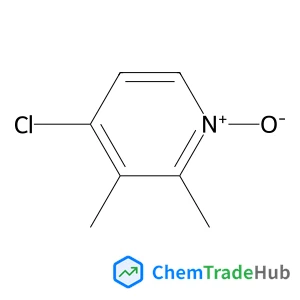
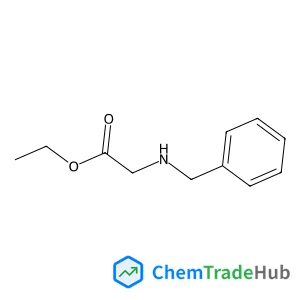
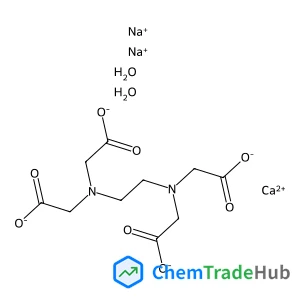
EthylenediaminetetraaceticacidcalciumDisodiumsalthydrate
CAS Number:
23411-34-9
Molecular Formula:
C10H16CaN2Na2O10
![(1S)-1,5-Anhydro-1-[3-(1-benzothiophen-2-ylmethyl)-4-fluorophenyl]-D-glucitol structure](https://static.chemtradehub.com/structs/761/761423-87-4-dbeb.webp "(1S)-1,5-Anhydro-1-[3-(1-benzothiophen-2-ylmethyl)-4-fluorophenyl]-D-glucitol structure")
(1S)-1,5-Anhydro-1-[3-(1-benzothiophen-2-ylmethyl)-4-fluorophenyl]-D-glucitol
CAS Number:
761423-87-4
Molecular Formula:
C21H21FO5S
Recommended Suppliers






Disclaimer
This page provides academic journal information for reference and research purposes only. We are not affiliated with any journal publishers and do not handle publication submissions. For publication-related inquiries, please contact the respective journal publishers directly.
If you notice any inaccuracies in the information displayed, please contact us at support@chemtradehub.com. We will promptly review and address your concerns.