


HPLC analysis of functionalized poly(amidoamine) dendrimers and the interaction between a folate-dendrimer conjugate and folate binding protein
Literature Information
Publication Date
2006-06-08
DOI
10.1039/B602546C
Impact Factor
4.616
Authors
Xiangyang Shi, Xiangdong Bi, T. Rose Ganser, Seungpyo Hong, Lukasz A. Myc, Ankur Desai, Mark M. Banaszak Holl, James R. Baker, Jr.
View Original
Abstract
Poly(amidoamine) (PAMAM) dendrimers of different generations with carboxyl, acetyl, and hydroxyl terminal groups and a folic acid (FA)-dendrimer conjugate were separated and analyzed using reverse-phase high performance liquid chromatography (HPLC). Analysis of both the individual PAMAM derivatives and the separation of mixed generations can be achieved using a linear gradient 0–50% acetonitrile (ACN) (balance water) within 40 min. We also show that PAMAMs with defined acetylation and carboxylation degrees can be analyzed using HPLC. Furthermore, a generation 5 dendrimer-FA conjugate (G5.75Ac-FA4; Ac denotes acetyl) was analyzed and its specific binding with a bovine folic acid binding protein (FBP) was monitored. The HPLC and sodium dodecyl sulfate-polyacrylamide gel electrophoresis (SDS-PAGE) results indicate the formation of three complexes after the binding of G5.75Ac-FA4 with FBP. Dendrimers with FA moieties show much higher specific binding capability with FBP than those without FA moieties. Findings from this study indicate that HPLC is an effective technique not only for characterization and separation of functionalized PAMAM dendrimers and conjugates but also for investigation of the interaction between dendrimers and biomolecules.
Recommended Journals

NDT & E International

Heteroatom Chemistry

Herald of the Russian Academy of Sciences

Critical Reviews in Solid State and Materials Sciences

Bioorganic & Medicinal Chemistry

Acta Metallurgica Sinica-English Letters

Journal of Chemical Sciences

Electroanalysis

Topics in Catalysis

Journal of Asian Natural Products Research
Related Literature
CH3NH3PbI3 films prepared by combining 1- and 2-step deposition: how crystal growth conditions affect properties
Muhamad Z. Mokhtar, Mu Chen, Eric Whittaker, Bruce Hamilton, Nicholas Aristidou, Ali Gholinia, Saif A. Haque, Brian R. Saunders
2017-02-17
Paper
DOI: 10.1039/C7CP00471K
Eu3+-Doped Y3−xNdxAl3O12 garnet: synthesis and structural investigation
L. Pavasaryte, A. Katelnikovas, V. Klimavicius, V. Balevicius, A. Krajnc, G. Mali, J. Plavec, A. Kareiva
2017-01-18
Paper
DOI: 10.1039/C6CP07723D
Interfacial defects induced electronic property transformation at perovskite SrVO3/SrTiO3 and LaCrO3/SrTiO3 heterointerfaces
Junjie Li, Deqiang Yin, Qiang Li, Rong Sun, Sumei Huang, Fanzhi Meng
2017-02-01
Communication
DOI: 10.1039/C6CP07691B
Vibronic spectra of protonated hydroxypyridines: contributions of prefulvenic and planar structures
R. Lozada Garcia, N. Nieuwjaer, C. Desfrançois, F. Lecomte, S. D. Leite, B. Manil
2017-03-01
Paper
DOI: 10.1039/C6CP08623C
Slip on a particle surface as the possible origin of shear thinning in non-Brownian suspensions
Martin Kroupa, Miroslav Soos, Juraj Kosek
2017-01-25
Paper
DOI: 10.1039/C6CP07666A
A DFT+U investigation of hydrogen adsorption on the LaFeO3(010) surface
Isaac W. Boateng, Richard Tia, Evans Adei, Nelson Y. Dzade
2017-02-17
Paper
DOI: 10.1039/C6CP08698E
Dangerous liaisons: anion-induced protonation in phosphate–polyamine interactions and their implications for the charge states of biologically relevant surfaces
Gregorio Laucirica, Waldemar A. Marmisollé, Omar Azzaroni
2017-03-03
Paper
DOI: 10.1039/C6CP08793K
Energy decomposition analysis in an adiabatic picture
Yuezhi Mao, Paul R. Horn
2017-02-01
Paper
DOI: 10.1039/C6CP08039A
In situ spectroscopic studies on vapor phase catalytic decomposition of dimethyl oxalate
Shweta Hegde, Kalsang Tharpa, Satyanarayana Reddy Akuri, Rakesh K., Ajay Kumar, Raj Deshpande, Sreejit A. Nair
2017-02-23
Paper
DOI: 10.1039/C6CP07769B
Synthesis of highly functionalised plasma polymer films from protonated precursor ions via the plasma α–γ transition
Solmaz Saboohi, Hans J. Griesser
2017-02-01
Paper
DOI: 10.1039/C6CP08630F
You might also like
Compound Q&A
What are the main uses of 1H-Indazole-6-carbonitrile (CAS: 141290-59-7)?
1H-Indazole-6-carbonitrile finds applications in pharmaceuticals, where it serve...
141290-59-71H-Indazole-6-carbon...
Compound Q&A
How should waste containing Dioctyl (2E)-2-butenedioate (CAS: 2997-85-5) be handled?
Waste containing Dioctyl (2E)-2-butenedioate (CAS: 2997-85-5) should be collecte...
2997-85-5Dioctyl (2E)-2-buten...
Compound Q&A
What industries use Sodium [(1,2-benzoxazol-3-ylmethyl)sulfonyl]azanide (CAS: 68291-98-5)?
Sodium [(1,2-benzoxazol-3-ylmethyl)sulfonyl]azanide is primarily used in pharmac...
68291-98-5Sodium [(1,2-benzoxa...
Compound Q&A
Are there alternatives to Dimethyl 4-(4,4,5,5-tetramethyl-1,3,2-dioxaborolan-2-yl)-2,6-pyridinedicarboxylate (CAS: 741709-66-0) in synthesis?
Dimethyl 4-(4,4,5,5-tetramethyl-1,3,2-dioxaborolan-2-yl)-2,6-pyridinedicarboxyla...
741709-66-0Dimethyl 4-(4,4,5,5-...
Compound Q&A
How should waste containing 2-Fluoro-6-hydrazinopyridine (CAS: 80714-39-2) be handled?
Waste containing 2-Fluoro-6-hydrazinopyridine (CAS: 80714-39-2) should be manage...
80714-39-22-Fluoro-6-hydrazino...
Compound Q&A
What is 6-Formyl-2-pyridinecarboxylic acid (CAS: 499214-11-8)?
6-Formyl-2-pyridinecarboxylic acid is an organic compound with the molecular for...
499214-11-86-Formyl-2-pyridinec...
Compound Q&A
What is the market or research trend for 3-(3,4-dimethoxyphenyl)-2,5-dimethyl-N-(2-morpholin-4-ylethyl)pyrazolo[1,5-a]pyrimidin-7-amine (CAS: 900874-91-1)?
Research trends for this compound indicate a focus on its potential applications...
900874-91-13-(3,4-dimethoxyphen...
Compound Q&A
How is 9H-Tribenzo[b,d,f]azepine (CAS: 29875-73-8) typically synthesized?
9H-Tribenzo[b,d,f]azepine is typically synthesized via a multi-step process invo...
29875-73-89H-Tribenzo[b,d,f]az...
Compound Q&A
How is 1-Cyclopropyl-7-ethoxy-6-fluoro-8-methoxy-4-oxo-1,4-dihydro-3-quinolinecarboxylic acid (CAS: 1797982-51-4) typically synthesized?
1-Cyclopropyl-7-ethoxy-6-fluoro-8-methoxy-4-oxo-1,4-dihydro-3-quinolinecarboxyli...
1797982-51-41-Cyclopropyl-7-etho...
Compound Q&A
How should waste containing Methyl 3-oxo-1,2,3,4-tetrahydro-6-quinoxalinecarboxylate (CAS: 671820-52-3) be handled?
Waste containing Methyl 3-oxo-1,2,3,4-tetrahydro-6-quinoxalinecarboxylate (CAS: ...
671820-52-3Methyl 3-oxo-1,2,3,4...
Source Journal
Analyst

CiteScore:
7.8
Self-citation Rate:
5.6%
Articles per Year:
653
Analyst publishes analytical and bioanalytical research that reports premier fundamental discoveries and inventions, and the applications of those discoveries, unconfined by traditional discipline barriers.
Recommended Compounds
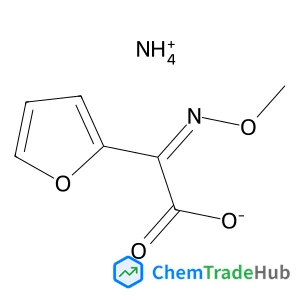
Ammonium (Z)-2-(furan-2-yl)-2-(methoxyimino)acetate
CAS Number:
97148-39-5
Molecular Formula:
C7H10N2O4
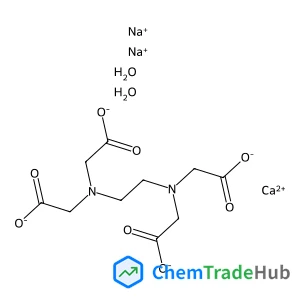
EthylenediaminetetraaceticacidcalciumDisodiumsalthydrate
CAS Number:
23411-34-9
Molecular Formula:
C10H16CaN2Na2O10
Recommended Suppliers






Disclaimer
This page provides academic journal information for reference and research purposes only. We are not affiliated with any journal publishers and do not handle publication submissions. For publication-related inquiries, please contact the respective journal publishers directly.
If you notice any inaccuracies in the information displayed, please contact us at support@chemtradehub.com. We will promptly review and address your concerns.