![[3-Formyl-5-(trifluoromethoxy)phenyl]boronic acid structure](https://static.chemtradehub.com/structs/145/1451393-39-7-aebb.webp "[3-Formyl-5-(trifluoromethoxy)phenyl]boronic acid structure")
[3-Formyl-5-(trifluoromethoxy)phenyl]boronic acid
CAS Number:
1451393-39-7
Molecular Formula:
C8H6BF3O4
M. Aeberhard, M. Hohl, L. Rohr, J. Michler
Pulsed radiofrequency glow discharges are studied in view of their possible advantages for optical emission spectroscopy (GD-OES). The excitation characteristics of a pulsed radiofrequency Grimm-type glow discharge are studied. The effects of a pulsed power supply on the sputtering are investigated and the effect on the emission yield for resonant and non-resonant emission lines is described. The enhancement of the emission yield through rf-power pulsing in the 10 μs range is attributed to a temporal reduction of the self-absorption. The possibility of analysing heat-sensitive non-conductive materials and layers through pulsed rf-GDOES is demonstrated. The work opens several subjects and questions for further research on understanding the plasma processes linked to analytical rf-GD-OES.
Eufrásia S. Pereira, Júlio C. S. Da Silva, Tiago A. S. Brandão, Willian R. Rocha
DOI: 10.1039/C6CP01536K
Xiaoli Zheng, Yang Bai, Zilong Wang
DOI: 10.1039/C5CP01534K
Matthew E. Potter, Sivan V. Aswegen, Emma K. Gibson, Robert Raja
DOI: 10.1039/C6CP01209D
M. Polak, L. Rubinovich
DOI: 10.1039/C6CP02444K
Suncheul Kim, Chang-Soo Lee, Seungtae Kim, R. B. V. Chalapathy, Essam A. Al-Ammar, Byung Tae Ahn
DOI: 10.1039/C5CP01758K
Somen Nandi, Rajdeep Chowdhury, Gaurav Das, Kankan Bhattacharyya
DOI: 10.1039/C6CP02748B
M. M. Mróz, S. Benedini, A. Forni, C. Botta, D. Pasini, E. Cariati, T. Virgili
DOI: 10.1039/C6CP02988D
Stewart F. Parker, Devashibhai Adroja, Mónica Jiménez-Ruiz, Markus Tischer, Konrad Möbus, Stefan D. Wieland, Peter Albers
DOI: 10.1039/C6CP01027J
Arseniy A. Otlyotov
DOI: 10.1039/C6CP02973F
Manjula Pandiri, Mohammad S. Hossain, Frank W. Foss, Jr., Krishnan Rajeshwar, Yaron Paz
DOI: 10.1039/C6CP02060G
4-Amino-3-bromophenol (CAS: 74440-80-5) falls under the classification of a haza...
(17beta)-3-Oxoestr-4-en-17-yl acetate should be stored in a cool, dry place away...
2-[(2,2-Diethoxyethyl)disulfanyl]-1,1-diethoxyethane (CAS: 76505-71-0) is a colo...
The market and research for 1-(β-D-ribofuranosyl)-1H-imidazo[4,5-c]pyridin-4-ami...
Waste containing Conjugated Estrogen (CAS: 12126-59-9) should be collected and d...
The market for Bis(2,2,2-trifluoroethyl) (methoxycarbonylmethyl)phosphonate (CAS...
There are several alternatives to 3,4'-Di-O-methylellagic acid (CAS: 57499-59-9)...
2-Chloro-N,N-dimethylpyridin-4-amine (CAS: 59047-70-0) is regulated under the Gl...
Cerium(3+);oxygen(2-);vanadium(5+) (CAS: 13597-19-8) is a complex inorganic comp...
7-Chloro-1-iodoisoquinoline (CAS: 1203579-27-4) is generally considered safe whe...

The Journal of Analytical Atomic Spectrometry (JAAS) is the central journal for publishing innovative research on fundamentals, instrumentation, and methods in the determination, speciation and isotopic analysis of (trace) elements within all fields of application. This includes, but is not restricted to, the most recent progress, developments and achievements in all forms of atomic and elemental detection, isotope ratio determination, molecular analysis, plasma-based analysis and X-ray techniques. The journal welcomes full papers, communications, technical notes, critical and tutorial review articles, editorials, and comments, in addition to the Atomic Spectrometry Updates (ASU) literature reviews that are prepared by an expert panel. Submissions are welcome in the following areas, but note this list reflects the current scope and authors are strongly encouraged to contact the Editorial team if they believe that their work offers potentially new and emerging research relevant to the journal remit: Fundamental studies in the following. New and existing sources for atomic emission, absorption, fluorescence and mass spectrometry and those that provide both atomic and molecular information Sample introduction techniques for solids, liquids, gases Improvements in sensitivity, selectivity, precision, accuracy and/or robustness Isotope ratio measurements, including techniques for improving precision and mass bias correction Single channel and multichannel simultaneous detection systems Chemometrics, statistics, calibration techniques and internal standardisation Theoretical and numerical modelling of fundamental processes related to all of the above methodologies Novel or improved methodologies in areas of application including, but not limited to the following. Biosciences, including elemental, speciation and isotopic analysis in biological systems, immunoassays based on metal-labeled antibodies, bio-imaging, and nanoparticle toxicology Geochemistry Environmental science Materials science, including engineered nanoparticles and quantum dots Metrology, including reference materials Forensic analysis Food and agricultural sciences Energy Archaeometry Molecular analysis. Molecular sources for elemental and isotopic analysis Atomic sources for molecular analysis Atomic and molecular techniques simultaneously used for complementary chemical information All contributions are judged on originality and quality of scientific content, and appropriateness of length to content of new science.
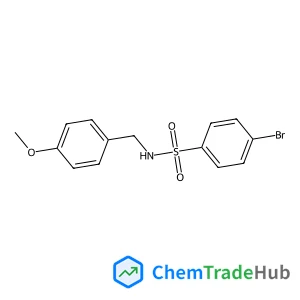
![5,10-Dihydro-11H-dibenzo[b,e][1,4]diazepin-11-one structure](https://static.chemtradehub.com/structs/581/5814-41-5-0b01.webp "5,10-Dihydro-11H-dibenzo[b,e][1,4]diazepin-11-one structure")