












Regioselective C–H activation of lanthanide-bound N-heterocyclic carbenes
Literature Information
Publication Date
2005-10-18
DOI
10.1039/B511265F
Impact Factor
6.222
Authors
Polly L. Arnold, Stephen T. Liddle
View Original
Abstract
The reaction of Ln(L)N″2 (Ln = Nd, Ce; L = t-BuNCH2CH2[C{NCHCHNt-Bu}], N″ = N(SiMe3)2) with trimethylsilyl iodide regiospecifically functionalises the carbene backbone at the C4-carbene ring position to afford the silylated complex Ln(L′)N″I; Ln(L′)N″2 is isolated after attempted reduction (L′ = t-BuNCH2CH2[C{NC(SiMe3)CHNt-Bu}]) which allows a comparison of the structurally characterised complexes Nd(L)N″2, [Nd(L′)N″I]2, and Nd(L′)N″2.
Related Literature
One-dimensional coordination polymers containing penta-supertetrahedral sulfide clusters linked by dipyridyl ligands
Jingli Xie, Xianhui Bu, Nanfeng Zheng, Pingyun Feng
2005-09-13
Communication
DOI: 10.1039/B508470A
Triazene formation via reaction of imidazol-2-ylidenes with azides
Dimitri M. Khramov, Christopher W. Bielawski
2005-09-08
Communication
DOI: 10.1039/B508679E
Preparation of helical nanostructures using chiral cationic surfactants
Yonggang Yang, Masahiro Suzuki, Sanae Owa, Hirofusa Shirai, Kenji Hanabusa
2005-08-05
Communication
DOI: 10.1039/B508106H
Complex gold nanostructures derived by templating from diatom frustules
James G. Mitchell, Nicolas H. Voelcker
2005-09-07
Communication
DOI: 10.1039/B508733C
New bidentate cationic and zwitterionic relatives of Crabtree's hydrogenation catalyst
Judy Cipot, Robert McDonald, Mark Stradiotto
2005-09-07
Communication
DOI: 10.1039/B510253G
Organocatalytic asymmetric α-bromination of aldehydes and ketones
Søren Bertelsen, Nis Halland, Stephan Bachmann, Mauro Marigo, Alan Braunton, Karl Anker Jørgensen
2005-08-30
Communication
DOI: 10.1039/B509366J
Divergent coordination mode of magnesium and zinc alkyls supported by the bifunctional pyrrolylaldiminato ligand
Janusz Lewiński, Maciej Dranka, Izabela Kraszewska, Witold Śliwiński, Iwona Justyniak
2005-09-07
Communication
DOI: 10.1039/B509669C
Half-rotation in a [2]catenanevia interconvertible Pd(ii) coordination modes
David A. Leigh, Paul J. Lusby, Alexandra M. Z. Slawin, D. Barney Walker
2005-09-13
Communication
DOI: 10.1039/B510663J
Exploiting C3-symmetry in the dynamic coordination of a chiral trisoxazoline to copper(ii): improved enantioselectivity, and catalyst stability in asymmetric lewis acid catalysis
Guido Marconi, Stéphane Bellemin-Laponnaz, Hubert Wadepohl
2005-09-16
Communication
DOI: 10.1039/B509571A
You might also like
Compound Q&A
Is 6-(3-Fluorophenyl)picolinic acid (CAS: 887982-40-3) safe?
6-(3-Fluorophenyl)picolinic acid is generally considered safe for laboratory use...
887982-40-36-(3-Fluorophenyl)pi...
Compound Q&A
What industries use (3R)-3-Pyrrolidinol (CAS: 2799-21-5)?
(3R)-3-Pyrrolidinol is used in the pharmaceutical industry as a precursor for dr...
2799-21-5(3R)-3-Pyrrolidinol
Compound Q&A
What precautions should be taken when handling (4R,5R)-4,5-Diethoxycarbonyl-2,2-dimethyldioxolane (CAS: 59779-75-8)?
When handling (4R,5R)-4,5-Diethoxycarbonyl-2,2-dimethyldioxolane (CAS: 59779-75-...
59779-75-8(4R,5R)-4,5-Diethoxy...
Compound Q&A
How is 1-(6-Chloroimidazo[1,2-b]pyridazin-3-yl)ethanone (CAS: 90734-71-7) typically synthesized?
1-(6-Chloroimidazo[1,2-b]pyridazin-3-yl)ethanone is often synthesized via a mult...
90734-71-71-(6-Chloroimidazo[1...
Compound Q&A
What is the market or research trend for N-Ethyl-3,4-dimethylbenzylamine (CAS: 39180-83-1)?
The market for N-Ethyl-3,4-dimethylbenzylamine (CAS: 39180-83-1) remains steady,...
39180-83-1N-Ethyl-3,4-dimethyl...
Compound Q&A
What is Tert-butyl 3-(pyrrolidin-1-yl)azetidine-1-carboxylate (CAS: 1019008-21-9)?
Tert-butyl 3-(pyrrolidin-1-yl)azetidine-1-carboxylate is a chemical compound wit...
1019008-21-9Tert-butyl 3-(pyrrol...
Compound Q&A
What regulatory guidelines apply to 1-Bromo-3-chloro-2,4-dimethoxybenzene (CAS: 1228956-93-1)?
1-Bromo-3-chloro-2,4-dimethoxybenzene (CAS: 1228956-93-1) falls under the classi...
1228956-93-11-Bromo-3-chloro-2,4...
Compound Q&A
Is 8-Bromo-2-methyl-3,4-dihydroisoquinolin-1(2H)-one (CAS: 1368622-07-4) safe?
The safety of 8-Bromo-2-methyl-3,4-dihydroisoquinolin-1(2H)-one (CAS: 1368622-07...
1368622-07-48-Bromo-2-methyl-3,4...
Compound Q&A
Is Benzyl [(3S)-2,6-dioxo-3-piperidinyl]carbamate (CAS: 22785-43-9) safe?
Benzyl [(3S)-2,6-dioxo-3-piperidinyl]carbamate is generally safe when handled wi...
22785-43-9Benzyl [(3S)-2,6-dio...
Compound Q&A
How should 1-{[4-(4,4,5,5-Tetramethyl-1,3,2-dioxaborolan-2-yl)phenyl]sulfonyl}pyrrolidine (CAS: 928657-21-0) be stored?
1-{[4-(4,4,5,5-Tetramethyl-1,3,2-dioxaborolan-2-yl)phenyl]sulfonyl}pyrrolidine s...
928657-21-01-{[4-(4,4,5,5-Tetra...
Source Journal
Chemical Communications

CiteScore:
8.6
Self-citation Rate:
4.7%
Articles per Year:
2458
ChemComm publishes urgent research which is of outstanding significance and interest to experts in the field, while also appealing to the journal’s broad chemistry readership. Our communication format is ideally suited to short, urgent studies that are of such importance that they require accelerated publication. Our scope covers all topics in chemistry, and research at the interface of chemistry and other disciplines (such as materials science, nanoscience, physics, engineering and biology) where there is a significant novelty in the chemistry aspects. Major topic areas covered include: Analytical Chemistry Catalysis Chemical Biology and medicinal chemistry Computational Chemistry and Machine Learning Energy and sustainable chemistry Environmental Chemistry Green Chemistry Inorganic Chemistry Materials Chemistry Nanoscience Organic Chemistry Physical Chemistry Polymer Chemistry Supramolecular Chemistry
Recommended Compounds
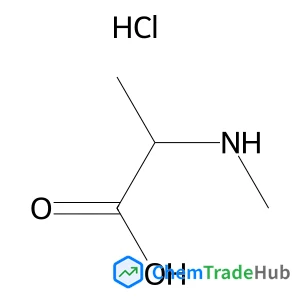
(R)-2-(Methylamino)propanoic acid hydrochloride
CAS Number:
1155878-14-0
Molecular Formula:
C4H10ClNO2
Recommended Suppliers





Disclaimer
This page provides academic journal information for reference and research purposes only. We are not affiliated with any journal publishers and do not handle publication submissions. For publication-related inquiries, please contact the respective journal publishers directly.
If you notice any inaccuracies in the information displayed, please contact us at support@chemtradehub.com. We will promptly review and address your concerns.