



Ketonization of the remarkably strongly acidic elongated enol generated by flash photolytic decarboxylation of p-benzoylphenylacetic acid in aqueous solution
Literature Information
Publication Date
2005-07-27
DOI
10.1039/B506706E
Impact Factor
6.222
Authors
Yvonne Chiang, A. Jerry Kresge, Ikenna Onyido, John P. Richard, Peter Wan, Musheng Xu
View Original
Abstract
Photodecarboxylation of p-benzoylphenylacetic acid in aqueous solution produces the elongated enol 5, whose strength as an oxygen acid (pQEa = 7.67) makes it more acidic than simple enol analogs by several orders of magnitude.
Recommended Journals

Environmental Toxicology and Pharmacology

Coloration Technology

Contact Lens & Anterior Eye

Journal of Enzyme inhibition and Medicinal Chemistry

Foundations of Chemistry

Molecules

Mini-Reviews in Medicinal Chemistry

Nature Reviews Drug Discovery

Angewandte Chemie International Edition

European Journal of Organic Chemistry
Related Literature
Highlights of biosynthetic enzymes and natural products from symbiotic cyanobacteria
2023-05-26
Highlight
DOI: 10.1039/D3NP00011G
Cu2ZnSnS4 monograin layer solar cells for flexible photovoltaic applications
Marit Kauk-Kuusik, Kristi Timmo, Maris Pilvet, Katri Muska, Mati Danilson, Jüri Krustok, Raavo Josepson, Valdek Mikli, Maarja Grossberg-Kuusk
2023-10-23
Review Article
DOI: 10.1039/D3TA04541B
The preparation and performance evaluation of flame-retardant antistatic composites based on polyurethane
Zhaoshun Zhan, Qixing Shi, Lei Wang, Jinfeng Shen, Tianyou Bao, Lixin Li, Fanna Meng
2024-01-02
Paper
DOI: 10.1039/D3NJ04981G
Mechanistic understanding of 3d-metal phthalocyanine catalysts: heterostructure regulation of dz2 orbitals for efficient CO2 reduction
Jiayong Xiao, Hao Dong, Hui Zhang, Haolan Yang, Ming Qiu, Ying Yu
2023-10-24
Paper
DOI: 10.1039/D3TA05834D
Electrochemical aminotrifluoromethylation of unactivated alkenes with Langlois’ reagent as the CF3 source
Tongshun An, Xiaowen Qin, Chenwei Liu, Weiheng Yuan, Tanyu Song, Zhiping Yin
2023-12-26
Paper
DOI: 10.1039/D3NJ04705A
One-pot construction of highly functionalized 4H-chromenes using K-10 montmorillonite in aqueous medium
Mohd Yeshab Ansari, Sumedha Swarnkar
2023-12-02
Paper
DOI: 10.1039/D3NJ04619B
You might also like
Compound Q&A
How should waste containing N-Methoxy-N-methyl-1,3-thiazole-5-carboxamide (CAS: 898825-89-3) be handled?
Waste containing N-Methoxy-N-methyl-1,3-thiazole-5-carboxamide (CAS: 898825-89-3...
898825-89-3N-Methoxy-N-methyl-1...
Compound Q&A
How should N-(4-Biphenylyl)dibenzo[b,d]furan-4-amine (CAS: 1318338-47-4) be stored?
N-(4-Biphenylyl)dibenzo[b,d]furan-4-amine should be stored in a tightly sealed c...
1318338-47-4N-(4-Biphenylyl)dibe...
Compound Q&A
What is the market or research trend for 3-Acetamido-5-amino-2,4,6-triiodobenzoic acid (CAS: 1713-07-1)?
The market for 3-Acetamido-5-amino-2,4,6-triiodobenzoic acid (CAS: 1713-07-1) is...
1713-07-13-Acetamido-5-amino-...
Compound Q&A
How should Benzyl 2-O-acetyl-3,4,6-tri-O-benzyl-beta-D-galactopyranoside (CAS: 61820-03-9) be stored?
Benzyl 2-O-acetyl-3,4,6-tri-O-benzyl-beta-D-galactopyranoside (CAS: 61820-03-9) ...
61820-03-9Benzyl 2-O-acetyl-3,...
Compound Q&A
What regulatory guidelines apply to 2-Ethylpiperazine dihydrochloride (CAS: 438050-52-3)?
2-Ethylpiperazine dihydrochloride (CAS: 438050-52-3) is regulated under the Glob...
438050-52-32-Ethylpiperazine di...
Compound Q&A
What regulatory guidelines apply to 1,1'-[1,3-Phenylenebis(methylene)]bis(3-methyl-1H-pyrrole-2,5-dione) (CAS: 119462-56-5)?
1,1'-[1,3-Phenylenebis(methylene)]bis(3-methyl-1H-pyrrole-2,5-dione) (CAS: 11946...
119462-56-51,1'-[1,3-Phenyleneb...
Compound Q&A
Are there alternatives to 5-Fluoro-2-(1-pyrrolidinyl)pyridine (CAS: 1287217-79-1) in synthesis?
Several alternatives can be used in the synthesis of 5-Fluoro-2-(1-pyrrolidinyl)...
1287217-79-15-Fluoro-2-(1-pyrrol...
Compound Q&A
What precautions should be taken when handling 1-((2R,3R,4R,5R)-5-((bis(4-methoxyphenyl)(phenyl)methoxy)methyl)-4-hydroxy-3-methoxytetrahydrofuran-2-yl)-5-methylpyrimidine-2,4(1H,3H)-dione (CAS: 153631-19-7)?
Proper personal protective equipment (PPE) must be worn when handling this compo...
153631-19-71-((2R,3R,4R,5R)-5-(...
Compound Q&A
What precautions should be taken when handling 6-Bromoimidazo[1,2-a]pyridin-8-amine (CAS: 676371-00-9)?
When handling 6-Bromoimidazo[1,2-a]pyridin-8-amine, it is important to wear appr...
676371-00-96-Bromoimidazo[1,2-a...
Compound Q&A
Are there alternatives to (2S,4R)-4-(4-Nitrobenzyl)pyrrolidine-2-carboxylic acid hydrochloride (CAS: 1049740-22-8) in synthesis?
Alternatives to (2S,4R)-4-(4-Nitrobenzyl)pyrrolidine-2-carboxylic acid hydrochlo...
1049740-22-8(2S,4R)-4-(4-Nitrobe...
Source Journal
Chemical Communications

CiteScore:
8.6
Self-citation Rate:
4.7%
Articles per Year:
2458
ChemComm publishes urgent research which is of outstanding significance and interest to experts in the field, while also appealing to the journal’s broad chemistry readership. Our communication format is ideally suited to short, urgent studies that are of such importance that they require accelerated publication. Our scope covers all topics in chemistry, and research at the interface of chemistry and other disciplines (such as materials science, nanoscience, physics, engineering and biology) where there is a significant novelty in the chemistry aspects. Major topic areas covered include: Analytical Chemistry Catalysis Chemical Biology and medicinal chemistry Computational Chemistry and Machine Learning Energy and sustainable chemistry Environmental Chemistry Green Chemistry Inorganic Chemistry Materials Chemistry Nanoscience Organic Chemistry Physical Chemistry Polymer Chemistry Supramolecular Chemistry
Recommended Compounds


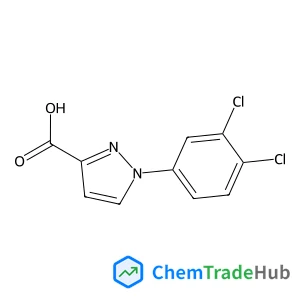
1-(3,4-Dichlorophenyl)-1H-pyrazole-3-carboxylic acid
CAS Number:
1152949-12-6
Molecular Formula:
C10H6Cl2N2O2

Recommended Suppliers




Disclaimer
This page provides academic journal information for reference and research purposes only. We are not affiliated with any journal publishers and do not handle publication submissions. For publication-related inquiries, please contact the respective journal publishers directly.
If you notice any inaccuracies in the information displayed, please contact us at support@chemtradehub.com. We will promptly review and address your concerns.