












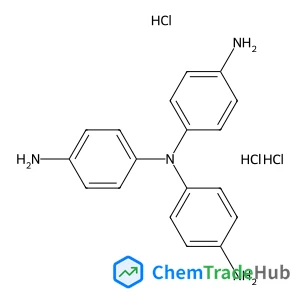
N1,N1-Bis(4-aminophenyl)benzene-1,4-diamine trihydrochloride
CAS Number:
114254-48-7
Molecular Formula:
C18H21Cl3N4
Jiayong Xiao, Hao Dong, Hui Zhang, Haolan Yang, Ming Qiu, Ying Yu
Heterostructure molecular catalysts have attracted significant attention for their distinctive catalytic activity in the electrocatalytic CO2 reduction reaction. To investigate the intrinsic reaction mechanisms, 3d-transition metal-phthalocyanine-based catalysts were systematically investigated. The results demonstrate that the heterostructure catalysts, composed of 3d-transition metal phthalocyanine and two-dimensional nitrogen-doped graphene, successfully modulate the electron configuration of the central metal atom and push its dz2 orbitals close to the Fermi level which can lower the energy barrier for the rate-limiting step in its electrocatalytic CO2 reduction reaction (CRR) and boost the overall reaction kinetics. In addition, the mechanism of dual-site synergistic hydrogenation was determined for the first time through molecular dynamics simulation. Meanwhile, the descriptors related to metal atoms' inherent characteristics and catalytic properties exhibit a volcano relationship with the overpotential. This study provides a theoretical comprehension of the CRR mechanisms over heterostructure molecular catalysts, as well as innovative concepts for new molecular catalyst design.
Martin Hager, Frédéric Laquai, Yingping Zou
DOI: 10.1039/D3SE00987D
Safieh Nazari, Fatemeh Mohammad Dezashibi, Nadia Babaei Bidmeshki
DOI: 10.1039/D3CP04558G
Shengzhuo Chen, Juntian Niu, Xianrong Zheng, Haiyu Liu, Yan Jin, Jingyu Ran
DOI: 10.1039/D3CP05435G
Jianglu Huang, Donggang Zhao, Yu Zhao
DOI: 10.1039/D3SE01403G
Chengyong Zhong, Shuo Li
DOI: 10.1039/D3CP05005J
Meixin Cheng
DOI: 10.1039/D3CP04975B
Sergey S. Nikitin, Alexander D. Koryakov, Elizaveta A. Antipinskaya, Mikhail V. Patrakeev
DOI: 10.1039/D3CP05421G
Xiao-Juan Wang, Yan Long, Chuan-Wan Wei, Shu-Qin Gao
DOI: 10.1039/D3CP05403A
Waste containing N-Methoxy-N-methyl-1,3-thiazole-5-carboxamide (CAS: 898825-89-3...
N-(4-Biphenylyl)dibenzo[b,d]furan-4-amine should be stored in a tightly sealed c...
The market for 3-Acetamido-5-amino-2,4,6-triiodobenzoic acid (CAS: 1713-07-1) is...
Benzyl 2-O-acetyl-3,4,6-tri-O-benzyl-beta-D-galactopyranoside (CAS: 61820-03-9) ...
2-Ethylpiperazine dihydrochloride (CAS: 438050-52-3) is regulated under the Glob...
1,1'-[1,3-Phenylenebis(methylene)]bis(3-methyl-1H-pyrrole-2,5-dione) (CAS: 11946...
Several alternatives can be used in the synthesis of 5-Fluoro-2-(1-pyrrolidinyl)...
Proper personal protective equipment (PPE) must be worn when handling this compo...
When handling 6-Bromoimidazo[1,2-a]pyridin-8-amine, it is important to wear appr...
Alternatives to (2S,4R)-4-(4-Nitrobenzyl)pyrrolidine-2-carboxylic acid hydrochlo...

Journal of Materials Chemistry A, B & C cover high quality studies across all fields of materials chemistry. The journals focus on those theoretical or experimental studies that report new understanding, applications, properties and synthesis of materials. The journals have a strong history of publishing quality reports of interest to interdisciplinary communities and providing an efficient and rigorous service through peer review and publication. The journals are led by an international team of Editors-in-Chief and Associate Editors who are all active researchers in their fields. Journal of Materials Chemistry A, B & C are separated by the intended application of the material studied. Broadly, applications in energy and sustainability are of interest to Journal of Materials Chemistry A, applications in biology and medicine are of interest to Journal of Materials Chemistry B, and applications in optical, magnetic and electronic devices are of interest to Journal of Materials Chemistry C. More than one Journal of Materials Chemistry journal may be suitable for certain fields and researchers are encouraged to submit their paper to the journal that they feel best fits for their particular article. Example topic areas within the scope of Journal of Materials Chemistry A are listed below. This list is neither exhaustive nor exclusive. Artificial photosynthesis Batteries Carbon dioxide conversion Catalysis Fuel cells Gas capture/separation/storage Green/sustainable materials Hydrogen generation Hydrogen storage Photocatalysis Photovoltaics Self-cleaning materials Self-healing materials Sensors Supercapacitors Thermoelectrics Water splitting Water treatment
![[(5-Methyl-1,3,4-thiadiazol-2-yl)sulfanyl]acetic acid structure](https://static.chemtradehub.com/structs/509/50918-26-8-4ce8.webp "[(5-Methyl-1,3,4-thiadiazol-2-yl)sulfanyl]acetic acid structure")



