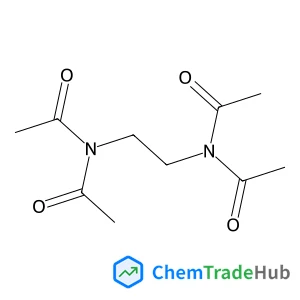
EthylenediaminetetraaceticacidcalciumDisodiumsalthydrate
CAS Number:
23411-34-9
Molecular Formula:
C10H16CaN2Na2O10
Yi-Yang Sun, Shengbai Zhang
Using density functional theory calculation we investigate the carbon doping of anatase TiO2, a technique widely studied for visible-light driven water splitting. By a detailed analysis of the thermodynamics of C defects in TiO2, we show that any significant concentration of C dopants in the TiO2 lattice must be a result of non-equilibrium doping, which emphasizes the importance of kinetics stabilized C defects. Based on the band gaps calculated using hybrid density functionals, we exclude the possibility of C occupying Ti lattice sites or interstitial sites to enhance visible-light absorption of TiO2, as extensively discussed in the literature. Also, the recently proposed defect with a CO species occupying two O sites yields a too small band gap for water splitting. Two defects that can effectively reduce the band gap for the water splitting application are identified to be: (1) the CO–VO complex, i.e., a C substituting for O (CO) paired with an O vacancy (VO) and (2) the (C2)2O complex with a C dimer (C2) occupying two neighboring O vacancies. Compared with the CO–VO complex, (C2)2O exhibits strong binding (greater than 2.5 eV) between the two C atoms, which could significantly enhance its kinetic stability to survive from high temperature annealing. With a reduced band gap of about 1.4 eV, carbon dimers could be ideal for kinetic doping of anatase TiO2 to enhance its visible-light activity in photocatalytic reactions. Molecular doping using C2H2 or C2H4 as C precursors has been proposed to introduce the carbon dimers into TiO2.
Ehud Tsivion, Markku Räsänen
DOI: 10.1039/C3CP50932J
Yezeng He, Hui Li, Yunfang Li, Kun Zhang, Yanyan Jiang, Xiufang Bian
DOI: 10.1039/C3CP50876E
Wei Guan, Yuhe Kan, Guochun Yang, Nana Ma, Likai Yan, Zhongmin Su, Guanhua Chen
DOI: 10.1039/C3CP51380G
Maxim P. Nikiforov, Joseph Strzalka, Zhang Jiang
DOI: 10.1039/C3CP52327F
Vipin Agarwal, Rasmus Linser, Uwe Fink
DOI: 10.1039/C3CP44653K
Viviana Scognamiglio, Pasquale Stano, Amina Antonacci, Maya Dimova Lambreva, Giorgio Pochetti, Maria Teresa Giardi, Giuseppina Rea
DOI: 10.1039/C3CP51955D
Ali Han, Haotian Wu, Zijun Sun, Hongxing Jia, Pingwu Du
DOI: 10.1039/C3CP52275J
Y. El Mendili, A. Abdelouas, J.-F. Bardeau
DOI: 10.1039/C3CP50853F
Yun Chen, Kenath Priyanka Prasad, Xuewan Wang, Hongchang Pang, Ruyu Yan, Aung Than, Mary B. Chan-Park, Peng Chen
DOI: 10.1039/C3CP51410B
1H-Indazole-6-carbonitrile finds applications in pharmaceuticals, where it serve...
Waste containing Dioctyl (2E)-2-butenedioate (CAS: 2997-85-5) should be collecte...
Sodium [(1,2-benzoxazol-3-ylmethyl)sulfonyl]azanide is primarily used in pharmac...
Dimethyl 4-(4,4,5,5-tetramethyl-1,3,2-dioxaborolan-2-yl)-2,6-pyridinedicarboxyla...
Waste containing 2-Fluoro-6-hydrazinopyridine (CAS: 80714-39-2) should be manage...
6-Formyl-2-pyridinecarboxylic acid is an organic compound with the molecular for...
Research trends for this compound indicate a focus on its potential applications...
9H-Tribenzo[b,d,f]azepine is typically synthesized via a multi-step process invo...
1-Cyclopropyl-7-ethoxy-6-fluoro-8-methoxy-4-oxo-1,4-dihydro-3-quinolinecarboxyli...
Waste containing Methyl 3-oxo-1,2,3,4-tetrahydro-6-quinoxalinecarboxylate (CAS: ...

Physical Chemistry Chemical Physics (PCCP) is an international journal co-owned by 19 physical chemistry and physics societies from around the world. This journal publishes original, cutting-edge research in physical chemistry, chemical physics and biophysical chemistry. To be suitable for publication in PCCP, articles must include significant innovation and/or insight into physical chemistry; this is the most important criterion that reviewers and Editors will judge against when evaluating submissions. The journal has a broad scope and welcomes contributions spanning experiment, theory, computation and data science. Topical coverage includes spectroscopy, dynamics, kinetics, statistical mechanics, thermodynamics, electrochemistry, catalysis, surface science, quantum mechanics, quantum computing and machine learning. Interdisciplinary research areas such as polymers and soft matter, materials, nanoscience, energy, surfaces/interfaces, and biophysical chemistry are welcomed if they demonstrate significant innovation and/or insight into physical chemistry. Joined experimental/theoretical studies are particularly appreciated when complementary and based on up-to-date approaches.
![N-[(9H-Fluoren-9-ylmethoxy)carbonyl]serine structure](https://static.chemtradehub.com/structs/737/73724-45-5-b0dc.webp "N-[(9H-Fluoren-9-ylmethoxy)carbonyl]serine structure")