












![5-Bromoimidazo[1,2-a]pyridine structure](https://static.chemtradehub.com/structs/692/69214-09-1-d8e2.webp "5-Bromoimidazo[1,2-a]pyridine structure")
Molecular shape transitions driven by an external force: the case of polymer chains with transient knotted loops
Literature Information
Publication Date
2004-06-03
DOI
10.1039/B402633K
Impact Factor
3.676
Authors
View Original
Abstract
We study the simulated relaxation behaviour of grafted polyethylene with transient topological constraints. We employ a “soft” steered molecular dynamics algorithm, whereby chain stress is introduced by a sequence of stretchings/compressions at the free (nongrafted) end of the chain. Each bond perturbation is allowed to dissipate within the chain using constrained molecular dynamics, before the next perturbation is applied. Using a knotted-loop as a model for transient entanglement, we show the occurrence of a range of shape transitions that are not visible in the mean molecular size. During the stretching phase, the formation of rigid and tight knotted loops can be recognized by the variation in entanglement complexity or the local compactness. We show that the stress due to stretching can be removed reversibly during the compression phase, eliciting the delocalization of even very tight knots. We also find that a tight knot is still marginally diffusive along the chain whenever the external stretching couples to chain torsions.
Recommended Journals
Related Literature
Real-time imaging of cancer cell chemotaxis in paper-based scaffolds
Rachael M. Kenney, Matthew W. Boyce, Andrew S. Truong, C. Robert Bagnell
2015-11-09
Paper
DOI: 10.1039/C5AN01787D
Synthesis of ion-imprinted polymer-decorated SBA-15 as a selective and efficient system for the removal and extraction of Cu(ii) with focus on optimization by response surface methodology
Shima Ghanavati Nasab, Abolfazl Semnani, Meghdad Karimi, Mehdi Javaheran Yazd, Setareh Cheshmekhezr
2019-06-10
Paper
DOI: 10.1039/C9AN00586B
Raman technologies in cancer diagnostics
Lauren A. Austin, Conor L. Evans
2015-10-22
Critical Review
DOI: 10.1039/C5AN01786F
Naked-eye nanobiosensor for therapeutic drug monitoring of methotrexate
H. Yockell-Lelièvre, N. Bukar, J. L. Toulouse
2015-07-29
Paper
DOI: 10.1039/C5AN00996K
Electrochemical sensing of cocaine in real samples based on electrodeposited biomimetic affinity ligands
Anca Florea, Todd Cowen, Sergey Piletsky, Karolien De Wael
2019-06-10
Paper
DOI: 10.1039/C9AN00618D
ATR-FTIR spectroscopy coupled with chemometric analysis discriminates normal, borderline and malignant ovarian tissue: classifying subtypes of human cancer
Helen F. Stringfellow, Francis L. Martin
2015-06-12
Paper
DOI: 10.1039/C5AN00939A
Microfluidic compartments with sensing microbeads for dynamic monitoring of cytokine and exosome release from single cells
Kyung Jin Son, Ali Rahimian, Christian Siltanen, Tushar Patel, Alexander Revzin
2015-10-05
Paper
DOI: 10.1039/C5AN01648G
Detection and isolation of circulating exosomes and microvesicles for cancer monitoring and diagnostics using micro-/nano-based devices
Jina Ko, Erica Carpenter
2015-09-08
Critical Review
DOI: 10.1039/C5AN01610J
You might also like
Compound Q&A
How should waste containing (6-Bromo-2-naphthyl)oxy](dimethyl)(2-methyl-2-propanyl)silane be handled?
Waste containing (6-Bromo-2-naphthyl)oxy](dimethyl)(2-methyl-2-propanyl)silane (...
100751-65-3[(6-Bromo-2-naphthyl...
Compound Q&A
How is 7-Fluoro-4-isoquinolinecarboxylic acid (CAS: 1841081-40-0) typically synthesized?
7-Fluoro-4-isoquinolinecarboxylic acid can be synthesized via a multi-step proce...
1841081-40-07-Fluoro-4-isoquinol...
Compound Q&A
What are the physical and chemical properties of 2,3,5,6-Tetrabromothieno[3,2-b]thiophene (CAS: 124638-53-5)?
2,3,5,6-Tetrabromothieno[3,2-b]thiophene is a crystalline compound with a high m...
124638-53-52,3,5,6-Tetrabromoth...
Compound Q&A
Is 1-[4-(Benzylamino)-7,8-dihydro-5H-pyrano[4,3-d]pyrimidin-2-yl]-2-methyl-1H-indole-4-carboxamide (CAS: 1542705-92-9) safe?
1-[4-(Benzylamino)-7,8-dihydro-5H-pyrano[4,3-d]pyrimidin-2-yl]-2-methyl-1H-indol...
1542705-92-91-[4-(Benzylamino)-7...
Compound Q&A
What is the market or research trend for imidazo[5,1-d]-1,2,3,5-tetrazine-8-carboxylic acid, 3,4-dihydro-3-methyl-4-oxo- (CAS: 113942-30-6)?
The market for imidazo[5,1-d]-1,2,3,5-tetrazine-8-carboxylic acid, 3,4-dihydro-3...
113942-30-6Imidazo[5,1-d]-1,2,3...
Compound Q&A
What is 3-(Triisopropylsilyl)propiolaldehyde (CAS: 163271-80-5)?
3-(Triisopropylsilyl)propiolaldehyde is a synthetic organic compound with the CA...
163271-80-53-(Triisopropylsilyl...
Compound Q&A
What regulatory guidelines apply to 6-Nitro-2H-1,4-benzoxazin-3(4H)-one (CAS: 81721-87-1)?
6-Nitro-2H-1,4-benzoxazin-3(4H)-one (CAS: 81721-87-1) is subject to various regu...
81721-87-16-Nitro-2H-1,4-benzo...
Compound Q&A
How should waste containing (3-Fluorophenyl)(4-{[(2-methyl-2-propanyl)oxy]carbonyl}-1-piperazinyl)acetic acid (CAS: 885272-91-3) be handled?
Waste containing (3-Fluorophenyl)(4-{[(2-methyl-2-propanyl)oxy]carbonyl}-1-piper...
885272-91-3(3-Fluorophenyl)(4-{...
Compound Q&A
What are the physical and chemical properties of N,N'-4,4'-Biphenyldiyldiisonicotinamide (CAS: 55119-40-9)?
N,N'-4,4'-Biphenyldiyldiisonicotinamide is a white crystalline solid with a mole...
55119-40-9N,N'-4,4'-Biphenyldi...
Compound Q&A
What industries use 6-Bromo-8-fluoro-2-quinazolinol (CAS: 1036756-15-6)?
6-Bromo-8-fluoro-2-quinazolinol is primarily used in the pharmaceutical industry...
1036756-15-66-Bromo-8-fluoro-2-q...
Source Journal
Physical Chemistry Chemical Physics

CiteScore:
5.5
Self-citation Rate:
10.3%
Articles per Year:
3036
Physical Chemistry Chemical Physics (PCCP) is an international journal co-owned by 19 physical chemistry and physics societies from around the world. This journal publishes original, cutting-edge research in physical chemistry, chemical physics and biophysical chemistry. To be suitable for publication in PCCP, articles must include significant innovation and/or insight into physical chemistry; this is the most important criterion that reviewers and Editors will judge against when evaluating submissions. The journal has a broad scope and welcomes contributions spanning experiment, theory, computation and data science. Topical coverage includes spectroscopy, dynamics, kinetics, statistical mechanics, thermodynamics, electrochemistry, catalysis, surface science, quantum mechanics, quantum computing and machine learning. Interdisciplinary research areas such as polymers and soft matter, materials, nanoscience, energy, surfaces/interfaces, and biophysical chemistry are welcomed if they demonstrate significant innovation and/or insight into physical chemistry. Joined experimental/theoretical studies are particularly appreciated when complementary and based on up-to-date approaches.
Recommended Compounds



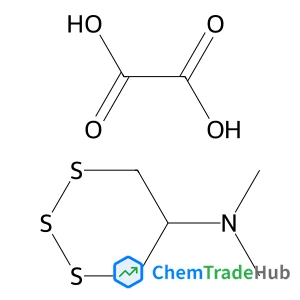
Oxalic acid compound with cyclohexylsulfamothioic O-acid (11)
CAS Number:
31895-22-4
Molecular Formula:
C7H13NO4S3
Recommended Suppliers






Disclaimer
This page provides academic journal information for reference and research purposes only. We are not affiliated with any journal publishers and do not handle publication submissions. For publication-related inquiries, please contact the respective journal publishers directly.
If you notice any inaccuracies in the information displayed, please contact us at support@chemtradehub.com. We will promptly review and address your concerns.