













An experimental and theoretical dissection of potassium cation/glycine interactions
Literature Information
Publication Date
2004-04-22
DOI
10.1039/B315642G
Impact Factor
3.676
Authors
R. M. Moision, P. B. Armentrout
View Original
Abstract
The binding of K+ to glycine is examined in detail by studying the interaction of the potassium cation with glycine and ligands that contain the functional components of glycine both singly and in pairs. Bond dissociation energies of M+–L where L = glycine, ethanol amine, propionic acid, methyl ethyl ketone, 1-propanol, and 1-propylamine are reported. Experimentally, the bond energies are determined using threshold collision-induced dissociation of the M+–L complexes with Xe using a guided ion beam tandem mass spectrometer. Analyses of the energy dependent cross sections provide 0 K bond energies for the M+–L complexes. All bond energy determinations include consideration of unimolecular decay rates, internal energy of reactant ions, and multiple ion–molecule collisions. Ab initio calculations, including those for a 1-amino-2-propanone ligand, using MP2, density functional, and compound methodologies show good agreement with the experimental bond energies and with the few previous experimental values available. The combination of this series of experiments and calculations allows the binding strength of individual functional groups and the influence of chelation to be thoroughly explored. This permits a detailed understanding of the driving forces for the interaction of K+ with glycine and of the differences between the theoretical structures of Na+(glycine) and K+(glycine).
Recommended Journals
Related Literature
A water-stable La-MOF with high fluorescence sensing and supercapacitive performances
Qian-Qian Liu, Shi-Hui Zhang, Jing Yang, Ke-Fen Yue
2019-06-18
Paper
DOI: 10.1039/C9AN00858F
Biosensors and nanobiosensors for therapeutic drug and response monitoring
Kristy S. McKeating, Alexandra Aubé
2015-11-11
Minireview
DOI: 10.1039/C5AN01861G
Lab-on-fiber technology: a new vision for chemical and biological sensing
Armando Ricciardi, Alessio Crescitelli, Patrizio Vaiano, Giuseppe Quero, Marco Consales, Marco Pisco, Emanuela Esposito, Andrea Cusano
2015-10-08
Critical Review
DOI: 10.1039/C5AN01241D
Facile multi-dimensional profiling of chemical gradients at the millimetre scale
Chih-Lin Chen, Kai-Ta Hsieh, Ching-Fong Hsu
2015-10-27
Paper
DOI: 10.1039/C5AN01807B
FI-ICP-TOFMS for quantification of biologically essential trace elements in cerebrospinal fluid – high-throughput at low sample volume
Sarah Theiner, Anna Schoeberl, Lisa Fischer, Sophie Neumayer, Stephan Hann, Gunda Koellensperger
2019-06-11
Paper
DOI: 10.1039/C9AN00039A
Synthesis of ion-imprinted polymer-decorated SBA-15 as a selective and efficient system for the removal and extraction of Cu(ii) with focus on optimization by response surface methodology
Shima Ghanavati Nasab, Abolfazl Semnani, Meghdad Karimi, Mehdi Javaheran Yazd, Setareh Cheshmekhezr
2019-06-10
Paper
DOI: 10.1039/C9AN00586B
Detection and isolation of circulating exosomes and microvesicles for cancer monitoring and diagnostics using micro-/nano-based devices
Jina Ko, Erica Carpenter
2015-09-08
Critical Review
DOI: 10.1039/C5AN01610J
Microfluidics and cancer analysis: cell separation, cell/tissue culture, cell mechanics, and integrated analysis systems
2015-11-11
Critical Review
DOI: 10.1039/C5AN01778E
Naked-eye nanobiosensor for therapeutic drug monitoring of methotrexate
H. Yockell-Lelièvre, N. Bukar, J. L. Toulouse
2015-07-29
Paper
DOI: 10.1039/C5AN00996K
You might also like
Compound Q&A
How should waste containing (6-Bromo-2-naphthyl)oxy](dimethyl)(2-methyl-2-propanyl)silane be handled?
Waste containing (6-Bromo-2-naphthyl)oxy](dimethyl)(2-methyl-2-propanyl)silane (...
100751-65-3[(6-Bromo-2-naphthyl...
Compound Q&A
How is 7-Fluoro-4-isoquinolinecarboxylic acid (CAS: 1841081-40-0) typically synthesized?
7-Fluoro-4-isoquinolinecarboxylic acid can be synthesized via a multi-step proce...
1841081-40-07-Fluoro-4-isoquinol...
Compound Q&A
What are the physical and chemical properties of 2,3,5,6-Tetrabromothieno[3,2-b]thiophene (CAS: 124638-53-5)?
2,3,5,6-Tetrabromothieno[3,2-b]thiophene is a crystalline compound with a high m...
124638-53-52,3,5,6-Tetrabromoth...
Compound Q&A
Is 1-[4-(Benzylamino)-7,8-dihydro-5H-pyrano[4,3-d]pyrimidin-2-yl]-2-methyl-1H-indole-4-carboxamide (CAS: 1542705-92-9) safe?
1-[4-(Benzylamino)-7,8-dihydro-5H-pyrano[4,3-d]pyrimidin-2-yl]-2-methyl-1H-indol...
1542705-92-91-[4-(Benzylamino)-7...
Compound Q&A
What is the market or research trend for imidazo[5,1-d]-1,2,3,5-tetrazine-8-carboxylic acid, 3,4-dihydro-3-methyl-4-oxo- (CAS: 113942-30-6)?
The market for imidazo[5,1-d]-1,2,3,5-tetrazine-8-carboxylic acid, 3,4-dihydro-3...
113942-30-6Imidazo[5,1-d]-1,2,3...
Compound Q&A
What is 3-(Triisopropylsilyl)propiolaldehyde (CAS: 163271-80-5)?
3-(Triisopropylsilyl)propiolaldehyde is a synthetic organic compound with the CA...
163271-80-53-(Triisopropylsilyl...
Compound Q&A
What regulatory guidelines apply to 6-Nitro-2H-1,4-benzoxazin-3(4H)-one (CAS: 81721-87-1)?
6-Nitro-2H-1,4-benzoxazin-3(4H)-one (CAS: 81721-87-1) is subject to various regu...
81721-87-16-Nitro-2H-1,4-benzo...
Compound Q&A
How should waste containing (3-Fluorophenyl)(4-{[(2-methyl-2-propanyl)oxy]carbonyl}-1-piperazinyl)acetic acid (CAS: 885272-91-3) be handled?
Waste containing (3-Fluorophenyl)(4-{[(2-methyl-2-propanyl)oxy]carbonyl}-1-piper...
885272-91-3(3-Fluorophenyl)(4-{...
Compound Q&A
What are the physical and chemical properties of N,N'-4,4'-Biphenyldiyldiisonicotinamide (CAS: 55119-40-9)?
N,N'-4,4'-Biphenyldiyldiisonicotinamide is a white crystalline solid with a mole...
55119-40-9N,N'-4,4'-Biphenyldi...
Compound Q&A
What industries use 6-Bromo-8-fluoro-2-quinazolinol (CAS: 1036756-15-6)?
6-Bromo-8-fluoro-2-quinazolinol is primarily used in the pharmaceutical industry...
1036756-15-66-Bromo-8-fluoro-2-q...
Source Journal
Physical Chemistry Chemical Physics

CiteScore:
5.5
Self-citation Rate:
10.3%
Articles per Year:
3036
Physical Chemistry Chemical Physics (PCCP) is an international journal co-owned by 19 physical chemistry and physics societies from around the world. This journal publishes original, cutting-edge research in physical chemistry, chemical physics and biophysical chemistry. To be suitable for publication in PCCP, articles must include significant innovation and/or insight into physical chemistry; this is the most important criterion that reviewers and Editors will judge against when evaluating submissions. The journal has a broad scope and welcomes contributions spanning experiment, theory, computation and data science. Topical coverage includes spectroscopy, dynamics, kinetics, statistical mechanics, thermodynamics, electrochemistry, catalysis, surface science, quantum mechanics, quantum computing and machine learning. Interdisciplinary research areas such as polymers and soft matter, materials, nanoscience, energy, surfaces/interfaces, and biophysical chemistry are welcomed if they demonstrate significant innovation and/or insight into physical chemistry. Joined experimental/theoretical studies are particularly appreciated when complementary and based on up-to-date approaches.
Recommended Compounds

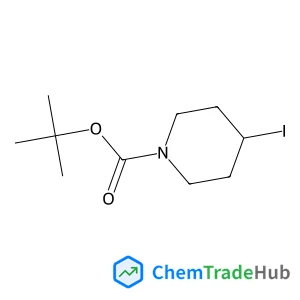
2-Methyl-2-propanyl 4-iodo-1-piperidinecarboxylate
CAS Number:
301673-14-3
Molecular Formula:
C10H18INO2
![2,9-Dichloro-5,12-dihydroquinolino[2,3-b]acridine-7,14-dione structure](https://static.chemtradehub.com/structs/308/3089-17-6-750b.webp "2,9-Dichloro-5,12-dihydroquinolino[2,3-b]acridine-7,14-dione structure")
2,9-Dichloro-5,12-dihydroquinolino[2,3-b]acridine-7,14-dione
CAS Number:
3089-17-6
Molecular Formula:
C20H10Cl2N2O2
Recommended Suppliers




Disclaimer
This page provides academic journal information for reference and research purposes only. We are not affiliated with any journal publishers and do not handle publication submissions. For publication-related inquiries, please contact the respective journal publishers directly.
If you notice any inaccuracies in the information displayed, please contact us at support@chemtradehub.com. We will promptly review and address your concerns.