












Approaching closed-shell accuracy for radicals using coupled cluster theory with perturbative triple substitutions
Literature Information
Publication Date
2003-05-09
DOI
10.1039/B304542K
Impact Factor
3.676
Authors
Gregory J. O. Beran, Steven R. Gwaltney, Martin Head-Gordon
View Original
Abstract
The erratic performance of CCSD(T) for radicals is analyzed using non-Hartree–Fock references as a starting point for correlations and by testing the (2) approach as an alternative to (T) for including higher-order correlation effects. Though CCSD(2) improves upon CCSD(T), correlating from a better-behaved reference makes both theories robust. Comparisons of calculated harmonic frequencies against experiment in a set of diatomic radicals from Brueckner-like orbitals demonstrate improvement approaching closed-shell accuracy. Additionally, we find that using BLYP Kohn–Sham orbitals yields similar improvements, and they are therefore a useful, inexpensive reference for high-level correlation methods in difficult systems. Root-mean-square errors of 1.0–1.2% are found in the cc-pVQZ basis for predicted harmonic frequencies in the test set using OD(T) and KS-CCSD(T), making these approaches quite competitive with CCSD(T) for closed-shell molecules. Finally, these improvements are correlated with spin contamination and the rate of change of the electron density with nuclear displacement.
Related Literature
Topological states modulation of Bi and Sb thin films by atomic adsorption
Hongmei Liu, Xiaoli Wang, Guangliang Cui, Pinhua Zhang, Dapeng Zhao, Shuaihua Ji
2014-12-10
Paper
DOI: 10.1039/C4CP04502E
Molecular dynamics simulation of planar elongational flow in a nematic liquid crystal based on the Gay–Berne potential
Sten Sarman, Aatto Laaksonen
2014-12-09
Paper
DOI: 10.1039/C4CP04891A
Interaction and charge transfer between isolated thylakoids and multi-walled carbon nanotubes
Herlina Arianita Dewi, Lianxi Zheng, Sierin Lim
2014-12-22
Paper
DOI: 10.1039/C4CP04575K
Electrochemical oxidation stability of anions for modern battery electrolytes: a CBS and DFT study
Erlendur Jónsson, Patrik Johansson
2015-01-05
Paper
DOI: 10.1039/C4CP04592K
Remarkable improvement in microwave absorption by cloaking a micro-scaled tetrapod hollow with helical carbon nanofibers
Xiangnan Chen, Zuowan Zhou, Gang Li, Man Jiang, Xiaoling Xu, Jun Lu, Qiming Li, Yong Wang, Jihua Gou, David Hui
2014-11-28
Paper
DOI: 10.1039/C4CP04849K
Nonidentical intracellular drug release rates in Raman and fluorescence spectroscopic determination
Erdene-Ochir Ganbold, Jinha Yoon, Doseok Kim, Sang-Woo Joo
2014-11-24
Paper
DOI: 10.1039/C4CP04235B
Magnetic γ-Fe2O3, Fe3O4, and Fe nanoparticles confined within ordered mesoporous carbons as efficient microwave absorbers
Jiacheng Wang, Jiandong Zhuang, Qian Liu
2014-12-11
Paper
DOI: 10.1039/C4CP04228J
Effect of the borax mass and pre-spray medium temperature on droplet size and velocity vector distributions of intermittently sprayed starchy solutions
Muhammad Yasin Naz, Shaharin Anwar Sulaiman, Bambang Ariwahjoedi
2014-12-18
Paper
DOI: 10.1039/C4CP04378B
Perfect light trapping in nanoscale thickness semiconductor films with a resonant back reflector and spectrum-splitting structures
Xin-Hua Deng, Wen Yang, Jun Li
2014-12-11
Paper
DOI: 10.1039/C4CP04717F
You might also like
Compound Q&A
What precautions should be taken when handling 4-(2-Furylmethyl)thiomorpholine 1,1-dioxide (CAS: 79206-94-3)?
When handling 4-(2-Furylmethyl)thiomorpholine 1,1-dioxide (CAS: 79206-94-3), it ...
79206-94-34-(2-Furylmethyl)thi...
Compound Q&A
What precautions should be taken when handling 4-Chloro-N-[2-(4-morpholinyl)ethyl]benzamide (CAS: 71320-77-9)?
When handling 4-Chloro-N-[2-(4-morpholinyl)ethyl]benzamide (CAS: 71320-77-9), it...
71320-77-94-Chloro-N-[2-(4-mor...
Compound Q&A
How should waste containing 2-[2-(2-Methoxyethoxy)ethoxy]ethyl 4-methylbenzenesulfonate (CAS: 62921-74-8) be handled?
Waste containing this compound (CAS: 62921-74-8) should be handled according to ...
62921-74-82-[2-(2-Methoxyethox...
Compound Q&A
How should waste containing (S)-Methyl 2-amino-3-cyclohexylpropanoate be handled?
Waste containing (S)-Methyl 2-amino-3-cyclohexylpropanoate should be collected i...
40056-18-6(S)-Methyl 2-amino-3...
Compound Q&A
How is 5-({4-[(2S,4R)-4-Hydroxy-2-methyltetrahydro-2H-pyran-4-yl]-2-thienyl}sulfanyl)-1-methyl-1,3-dihydro-2H-indol-2-one (CAS: 166882-70-8) typically synthesized?
This compound can be synthesized using a multi-step process involving the conjug...
166882-70-85-({4-[(2S,4R)-4-Hyd...
Compound Q&A
Are there alternatives to (2E)-3-(3,4-Dichlorophenyl)acrylic acid (CAS: 7312-27-8) in synthesis?
There are several alternatives to (2E)-3-(3,4-Dichlorophenyl)acrylic acid in syn...
7312-27-8(2E)-3-(3,4-Dichloro...
Compound Q&A
How should Ethyl 6-(2-nitrophenyl)imidazo[2,1-b][1,3]thiazole-3-carboxylate (CAS: 925437-84-9) be stored?
Ethyl 6-(2-nitrophenyl)imidazo[2,1-b][1,3]thiazole-3-carboxylate (CAS: 925437-84...
925437-84-9Ethyl 6-(2-nitrophen...
Compound Q&A
How should waste containing 2-(1,3-Thiazol-2-yl)ethanamine (CAS: 18453-07-1) be handled?
Waste containing 2-(1,3-Thiazol-2-yl)ethanamine (CAS: 18453-07-1) should be coll...
18453-07-12-(1,3-Thiazol-2-yl)...
Compound Q&A
How is Methyl 5-iodo-2-methylbenzoate (CAS: 103440-54-6) typically synthesized?
Methyl 5-iodo-2-methylbenzoate can be synthesized through the iodination of meth...
103440-54-6Methyl 5-iodo-2-meth...
Compound Q&A
How is 5-Chloro[1,2,4]triazolo[1,5-a]pyridine (CAS: 1427399-34-5) typically synthesized?
5-Chloro[1,2,4]triazolo[1,5-a]pyridine is commonly synthesized via the condensat...
1427399-34-55-Chloro[1,2,4]triaz...
Source Journal
Physical Chemistry Chemical Physics

CiteScore:
5.5
Self-citation Rate:
10.3%
Articles per Year:
3036
Physical Chemistry Chemical Physics (PCCP) is an international journal co-owned by 19 physical chemistry and physics societies from around the world. This journal publishes original, cutting-edge research in physical chemistry, chemical physics and biophysical chemistry. To be suitable for publication in PCCP, articles must include significant innovation and/or insight into physical chemistry; this is the most important criterion that reviewers and Editors will judge against when evaluating submissions. The journal has a broad scope and welcomes contributions spanning experiment, theory, computation and data science. Topical coverage includes spectroscopy, dynamics, kinetics, statistical mechanics, thermodynamics, electrochemistry, catalysis, surface science, quantum mechanics, quantum computing and machine learning. Interdisciplinary research areas such as polymers and soft matter, materials, nanoscience, energy, surfaces/interfaces, and biophysical chemistry are welcomed if they demonstrate significant innovation and/or insight into physical chemistry. Joined experimental/theoretical studies are particularly appreciated when complementary and based on up-to-date approaches.
Recommended Compounds
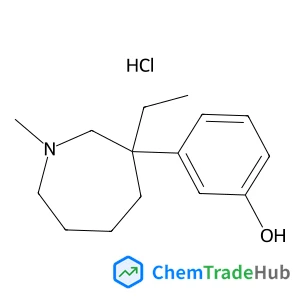
3-(3-Ethyl-1-methyl-3-azepanyl)phenol hydrochloride (1:1)
CAS Number:
59263-76-2
Molecular Formula:
C15H24ClNO

(3beta,7beta,12beta)-3,7,12-Trihydroxy-11,15,23-trioxolanost-8-en-26-oic acid
CAS Number:
98665-22-6
Molecular Formula:
C30H44O8
Recommended Suppliers





Disclaimer
This page provides academic journal information for reference and research purposes only. We are not affiliated with any journal publishers and do not handle publication submissions. For publication-related inquiries, please contact the respective journal publishers directly.
If you notice any inaccuracies in the information displayed, please contact us at support@chemtradehub.com. We will promptly review and address your concerns.