













Energetics, dynamics and infrared spectra of the DNA base-pair analogue 2-pyridone·2-hydroxypyridine
Literature Information
Publication Date
2003-05-22
DOI
10.1039/B212732F
Impact Factor
3.676
Authors
Markus Meuwly, Andreas Müller, Samuel Leutwyler
View Original
Abstract
The energetics and infrared (IR) spectrum of the double proton transfer (DPT) in the hydrogen bonded 2-pyridone·2-hydroxypyridine (2PY·2HP) dimer are studied using quantum chemical and classical molecular dynamics methods and compared with recent experimental work. The experimental spectrum shows IR absorption between 2500 and 3000 cm−1 (with peak absorption at 2700 cm−1). High resolution spectroscopy of the S1 ← S0 origin of 2PY·2HP have revealed a tunneling splitting which was attributed to DPT. MP2 and density functional calculations predict DPT barriers between 8 and 8.5 kcal mol−1 in the electronic ground state. Two-dimensional potential energy surfaces and the minimum-energy reaction path (MEP) for double proton transfer are calculated: Near the minima, the MEP is dominated by the 2PY·2HP intermolecular stretch, whereas close to the transition state the MEP corresponds to almost purely biprotonic exchange motion. Classical MD trajectories are calculated using the self consistent charges–density functional tight binding method at six different internal energies. Using activated dynamics, classical IR spectra are calculated from the time-dependence of the dipole moment function. The first ≈500 fs of the dynamics show broad spectral features in the mid-IR between 2000–2800 cm−1, as found in the experiment. These early phases of the activated dynamics are associated with large-amplitude vibrations of the N–H and O–H protons and may lead to double proton transfer. After 500 fs, the broad IR features disappear from the 2000–2800 cm−1 range.
Related Literature
Alternative alcohol-soluble conjugated small molecule electrolytes for high-efficiency inverted polymer solar cells
Yueqin Shi
2014-12-09
Paper
DOI: 10.1039/C4CP04295F
Fundamental frequency from classical molecular dynamics
Tomonori Yamada, Misako Aida
2014-12-03
Paper
DOI: 10.1039/C4CP04068F
Molecular dynamics simulation of planar elongational flow in a nematic liquid crystal based on the Gay–Berne potential
Sten Sarman, Aatto Laaksonen
2014-12-09
Paper
DOI: 10.1039/C4CP04891A
The origin of the absorption spectra of porphyrin N- and dithiaporphyrin S-oxides in their neutral and protonated states
Torsten Bruhn, Christian Brückner
2014-12-11
Paper
DOI: 10.1039/C4CP04675G
Ligand-modulated interactions between charged monolayer-protected Au144(SR)60 gold nanoparticles in physiological saline
Oscar D. Villarreal, Liao Y. Chen, Robert L. Whetten, Miguel J. Yacaman
2014-12-18
Paper
DOI: 10.1039/C4CP05137H
Magnetic γ-Fe2O3, Fe3O4, and Fe nanoparticles confined within ordered mesoporous carbons as efficient microwave absorbers
Jiacheng Wang, Jiandong Zhuang, Qian Liu
2014-12-11
Paper
DOI: 10.1039/C4CP04228J
Preparation of water-dispersible porous g-C3N4 with improved photocatalytic activity by chemical oxidation
Hui-Jun Li, Bo-Wen Sun, Li Sui, Dong-Jin Qian, Meng Chen
2014-12-11
Paper
DOI: 10.1039/C4CP05020G
Li/Ag ratio dependent structure and upconversion photoluminescence of LixAg1−xYb0.99(MoO4)2:0.01Er3+ phosphors
Fangrui Cheng, Xiping Jing, Ziyuan Wang
2014-12-18
Paper
DOI: 10.1039/C4CP03950E
You might also like
Compound Q&A
What precautions should be taken when handling 4-(2-Furylmethyl)thiomorpholine 1,1-dioxide (CAS: 79206-94-3)?
When handling 4-(2-Furylmethyl)thiomorpholine 1,1-dioxide (CAS: 79206-94-3), it ...
79206-94-34-(2-Furylmethyl)thi...
Compound Q&A
What precautions should be taken when handling 4-Chloro-N-[2-(4-morpholinyl)ethyl]benzamide (CAS: 71320-77-9)?
When handling 4-Chloro-N-[2-(4-morpholinyl)ethyl]benzamide (CAS: 71320-77-9), it...
71320-77-94-Chloro-N-[2-(4-mor...
Compound Q&A
How should waste containing 2-[2-(2-Methoxyethoxy)ethoxy]ethyl 4-methylbenzenesulfonate (CAS: 62921-74-8) be handled?
Waste containing this compound (CAS: 62921-74-8) should be handled according to ...
62921-74-82-[2-(2-Methoxyethox...
Compound Q&A
How should waste containing (S)-Methyl 2-amino-3-cyclohexylpropanoate be handled?
Waste containing (S)-Methyl 2-amino-3-cyclohexylpropanoate should be collected i...
40056-18-6(S)-Methyl 2-amino-3...
Compound Q&A
How is 5-({4-[(2S,4R)-4-Hydroxy-2-methyltetrahydro-2H-pyran-4-yl]-2-thienyl}sulfanyl)-1-methyl-1,3-dihydro-2H-indol-2-one (CAS: 166882-70-8) typically synthesized?
This compound can be synthesized using a multi-step process involving the conjug...
166882-70-85-({4-[(2S,4R)-4-Hyd...
Compound Q&A
Are there alternatives to (2E)-3-(3,4-Dichlorophenyl)acrylic acid (CAS: 7312-27-8) in synthesis?
There are several alternatives to (2E)-3-(3,4-Dichlorophenyl)acrylic acid in syn...
7312-27-8(2E)-3-(3,4-Dichloro...
Compound Q&A
How should Ethyl 6-(2-nitrophenyl)imidazo[2,1-b][1,3]thiazole-3-carboxylate (CAS: 925437-84-9) be stored?
Ethyl 6-(2-nitrophenyl)imidazo[2,1-b][1,3]thiazole-3-carboxylate (CAS: 925437-84...
925437-84-9Ethyl 6-(2-nitrophen...
Compound Q&A
How should waste containing 2-(1,3-Thiazol-2-yl)ethanamine (CAS: 18453-07-1) be handled?
Waste containing 2-(1,3-Thiazol-2-yl)ethanamine (CAS: 18453-07-1) should be coll...
18453-07-12-(1,3-Thiazol-2-yl)...
Compound Q&A
How is Methyl 5-iodo-2-methylbenzoate (CAS: 103440-54-6) typically synthesized?
Methyl 5-iodo-2-methylbenzoate can be synthesized through the iodination of meth...
103440-54-6Methyl 5-iodo-2-meth...
Compound Q&A
How is 5-Chloro[1,2,4]triazolo[1,5-a]pyridine (CAS: 1427399-34-5) typically synthesized?
5-Chloro[1,2,4]triazolo[1,5-a]pyridine is commonly synthesized via the condensat...
1427399-34-55-Chloro[1,2,4]triaz...
Source Journal
Physical Chemistry Chemical Physics

CiteScore:
5.5
Self-citation Rate:
10.3%
Articles per Year:
3036
Physical Chemistry Chemical Physics (PCCP) is an international journal co-owned by 19 physical chemistry and physics societies from around the world. This journal publishes original, cutting-edge research in physical chemistry, chemical physics and biophysical chemistry. To be suitable for publication in PCCP, articles must include significant innovation and/or insight into physical chemistry; this is the most important criterion that reviewers and Editors will judge against when evaluating submissions. The journal has a broad scope and welcomes contributions spanning experiment, theory, computation and data science. Topical coverage includes spectroscopy, dynamics, kinetics, statistical mechanics, thermodynamics, electrochemistry, catalysis, surface science, quantum mechanics, quantum computing and machine learning. Interdisciplinary research areas such as polymers and soft matter, materials, nanoscience, energy, surfaces/interfaces, and biophysical chemistry are welcomed if they demonstrate significant innovation and/or insight into physical chemistry. Joined experimental/theoretical studies are particularly appreciated when complementary and based on up-to-date approaches.
Recommended Compounds
![1-Naphthalenesulfonic acid, 2-[(2-hydroxy-1-naphthalenyl)azo]-, bariumsalt (2:1) structure](https://static.chemtradehub.com/structs/110/1103-38-4-0b33.webp "1-Naphthalenesulfonic acid, 2-[(2-hydroxy-1-naphthalenyl)azo]-, bariumsalt (2:1) structure")
1-Naphthalenesulfonic acid, 2-[(2-hydroxy-1-naphthalenyl)azo]-, bariumsalt (2:1)
CAS Number:
1103-38-4
Molecular Formula:
C20H14BaN2O4S
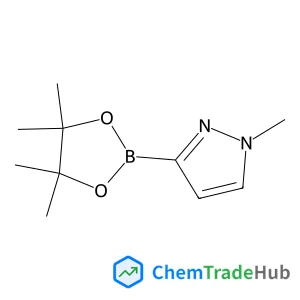
1-Methyl-3-(4,4,5,5-tetramethyl-1,3,2-dioxaborolan-2-yl)-1H-pyrazole
CAS Number:
1020174-04-2
Molecular Formula:
C10H17BN2O2
Recommended Suppliers





Disclaimer
This page provides academic journal information for reference and research purposes only. We are not affiliated with any journal publishers and do not handle publication submissions. For publication-related inquiries, please contact the respective journal publishers directly.
If you notice any inaccuracies in the information displayed, please contact us at support@chemtradehub.com. We will promptly review and address your concerns.