











Synthesis of 11C-amides using [11C]carbon monoxide and in situ activated amines by palladium-mediated carboxaminations
Literature Information
Publication Date
2002-12-23
DOI
10.1039/B209553J
Impact Factor
3.876
Authors
Farhad Karimi
View Original
Abstract
[11C]Carbon monoxide at low concentrations, aryl halides and amines were used in the palladium-mediated synthesis of twenty 11C-amides. In the study several approaches to improve the radiochemical yield were explored. Eight of the selected amides were prepared by in situ activation of the amines using lithium bis(trimethylsilyl)amide and the radiochemical yields of these reactions were improved compared to utilising a previous reported method. In the synthesis of 1-[carbonyl-11C]benzoyl-3-methyl-1H-indole (11) from 3-methyl-1H-indole (25), the corresponding organotin–amine was prepared prior to the acylation reaction. In a typical experiment, N-(4-hydroxyphenyl)[carbonyl-11C]acetamide (5) was prepared in 15% radiochemical yield using 4-aminophenol (20) but the yield increased to 63% when the amine was activated by lithium bis(trimethylsilyl)amide.
Related Literature
Tin-free catalysts for the production of aliphatic thermoplastic polyurethanes
Yves Schellekens, Bert Van Trimpont, Pieter-Jan Goelen, Koen Binnemans, Mario Smet, Marie-Anne Persoons, Dirk De Vos
2014-07-21
Paper
DOI: 10.1039/C4GC00873A
A solar light-driven, eco-friendly protocol for highly enantioselective synthesis of chiral alcohols via photocatalytic/biocatalytic cascades
Sumit Choudhury, Jin-Ook Baeg, No-Joong Park, Rajesh K. Yadav
2014-07-21
Paper
DOI: 10.1039/C4GC00885E
Additions and corrections published 20th December 2013 to 1st April 2014
Front/Back Matter
DOI: 10.1039/C4GC90034K
A convenient palladium-catalyzed carbonylative synthesis of 4(3H)-quinazolinones from 2-bromoformanilides and organo nitros with Mo(CO)6 as a multiple promoter
Lin He, Helfried Neumann, Matthias Beller
2014-06-26
Communication
DOI: 10.1039/C4GC00801D
Efficient fixation of CO2 into cyclic carbonates catalysed by silicon-based main chain poly-imidazolium salts
Jinquan Wang, Jiayu Leong, Yugen Zhang
2014-07-31
Communication
DOI: 10.1039/C4GC01060D
Highly active, water-compatible and easily separable magnetic mesoporous Lewis acid catalyst for the Mukaiyama–Aldol reaction in water
Fang Zhang, Xiaotao Wu, Chao Liang, Xiaoyan Li, Zhen Wang, Hexing Li
2014-03-27
Paper
DOI: 10.1039/C4GC00178H
General and selective reductive amination of carbonyl compounds using a core–shell structured Co3O4/NGr@C catalyst
Tobias Stemmler, Felix A. Westerhaus, Annette-Enrica Surkus, Marga-Martina Pohl, Kathrin Junge, Matthias Beller
2014-07-29
Communication
DOI: 10.1039/C4GC00536H
Solvent-free mechanochemical synthesis of alane, AlH3: effect of pressure on the reaction pathway
S. Gupta, T. Kobayashi
2014-07-22
Paper
DOI: 10.1039/C4GC00998C
Chitosan: an efficient recyclable catalyst for transamidation of carboxamides with amines under neat conditions
Sadu Nageswara Rao, Darapaneni Chandra Mohan, Subbarayappa Adimurthy
2014-07-28
Communication
DOI: 10.1039/C4GC01402B
You might also like
Compound Q&A
How should 2-Methylbenzene-1,4-diamine dihydrochloride (CAS: 615-45-2) be stored?
2-Methylbenzene-1,4-diamine dihydrochloride (CAS: 615-45-2) should be stored in ...
615-45-22-Methylbenzene-1,4-...
Compound Q&A
Is (1S,4S)-2,5-Diazabicyclo[2.2.1]heptane dihydrobromide (CAS: 132747-20-7) safe?
(1S,4S)-2,5-Diazabicyclo[2.2.1]heptane dihydrobromide is generally considered sa...
132747-20-7(1S,4S)-2,5-Diazabic...
Compound Q&A
What industries use (6-Chloropyridazin-3-YL)methanamine (CAS: 871826-15-2)?
(6-Chloropyridazin-3-YL)methanamine finds applications in the pharmaceutical ind...
871826-15-2(6-Chloropyridazin-3...
Compound Q&A
What are the main uses of 2-Fluoro-3-methylphenol (CAS: 77772-72-6)?
2-Fluoro-3-methylphenol is primarily used in the synthesis of pharmaceuticals, p...
77772-72-62-Fluoro-3-methylphe...
Compound Q&A
What precautions should be taken when handling 3-Methoxy-4-nitrobenzonitrile (CAS: 177476-75-4)?
When handling 3-Methoxy-4-nitrobenzonitrile, it is important to wear appropriate...
177476-75-43-Methoxy-4-nitroben...
Compound Q&A
What precautions should be taken when handling 1,3-Oxazolo[4,5-b]pyridine-2(3H)-thione (CAS: 211949-57-4)?
When handling 1,3-Oxazolo[4,5-b]pyridine-2(3H)-thione (CAS: 211949-57-4), it is ...
211949-57-4[1,3]Oxazolo[4,5-b]p...
Compound Q&A
What regulatory guidelines apply to 4-Ethynylbenzamide (CAS: 90347-86-7)?
4-Ethynylbenzamide (CAS: 90347-86-7) falls under various regulatory guidelines i...
90347-86-74-Ethynylbenzamide
Compound Q&A
What are the main uses of 3-(2-Ethylphenyl)-2-thioxo-4-imidazolidinone (CAS: 186822-57-1)?
3-(2-Ethylphenyl)-2-thioxo-4-imidazolidinone is primarily used as an intermediat...
186822-57-13-(2-Ethylphenyl)-2-...
Compound Q&A
What is (2-Fluoro-6-methoxyphenyl)acetic acid (CAS: 500912-19-6)?
(2-Fluoro-6-methoxyphenyl)acetic acid, also known as 4-fluoro-3-methoxybenzoic a...
500912-19-6(2-Fluoro-6-methoxyp...
Compound Q&A
What is the market or research trend for 2-[4-(Hydroxymethyl)phenoxy]ethanol (CAS: 102196-18-9)?
Market trends for 2-[4-(Hydroxymethyl)phenoxy]ethanol (CAS: 102196-18-9) indicat...
102196-18-92-[4-(Hydroxymethyl)...
Source Journal
Organic & Biomolecular Chemistry

CiteScore:
3.4
Self-citation Rate:
10.3%
Articles per Year:
1041
Organic & Biomolecular Chemistry (OBC) publishes original and high impact research and reviews in organic chemistry. We welcome research that shows new or significantly improved protocols or methodologies in total synthesis, synthetic methodology or physical and theoretical organic chemistry as well as research that shows a significant advance in the organic chemistry or molecular design aspects of chemical biology, catalysis, supramolecular and macromolecular chemistry, theoretical chemistry, mechanism-oriented physical organic chemistry, medicinal chemistry or natural products. Articles published in the journal should report new work which makes a highly-significant impact in the field. Routine and incremental work is generally not suitable for publication in the journal. More details about key areas of our scope are below. In all cases authors should include in their article clear rationale for why their research has been carried out.
Recommended Compounds
![(1R,6R)-6-({[(2-Methyl-2-propanyl)oxy]carbonyl}amino)-3-cyclohexene-1-carboxylic acid structure](https://static.chemtradehub.com/structs/865/865689-24-3-5fef.webp "(1R,6R)-6-({[(2-Methyl-2-propanyl)oxy]carbonyl}amino)-3-cyclohexene-1-carboxylic acid structure")
(1R,6R)-6-({[(2-Methyl-2-propanyl)oxy]carbonyl}amino)-3-cyclohexene-1-carboxylic acid
CAS Number:
865689-24-3
Molecular Formula:
C12H19NO4
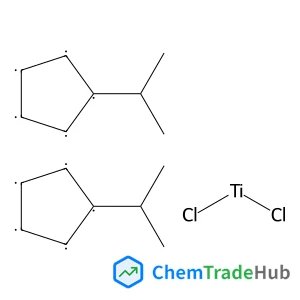
BIS(I-PROPYLCYCLOPENTADIENYL)TITANIUM DICHLORIDE
CAS Number:
12130-65-3
Molecular Formula:
C16H22Cl2Ti
Recommended Suppliers






Disclaimer
This page provides academic journal information for reference and research purposes only. We are not affiliated with any journal publishers and do not handle publication submissions. For publication-related inquiries, please contact the respective journal publishers directly.
If you notice any inaccuracies in the information displayed, please contact us at support@chemtradehub.com. We will promptly review and address your concerns.