












Catalytic asymmetric dihydroxylation of olefins using a recoverable and reusable OsO42− in ionic liquid [bmim][PF6]
Literature Information
Publication Date
2002-11-15
DOI
10.1039/B208631J
Impact Factor
6.222
Authors
Luís C. Branco, Carlos A. M. Afonso
View Original
Abstract
The use of the solvent systems water/ionic liquid or water/ionic liquid/tert-butanol provides a recoverable, reusable, robust and simple system for the asymmetric dihydroxylation of olefins, based on the immobilization of the osmium-ligand catalyst in the ionic liquid phase
Related Literature
Interfacial photoinduced carrier dynamics tuned by polymerization of coronene molecules encapsulated in carbon nanotubes: bridging type-I and type-II heterojunctions
Xiao-Ying Xie, Jia-Jia Yang, Xiang-Yang Liu, Qiu Fang, Wei-Hai Fang, Ganglong Cui
2021-05-24
Paper
DOI: 10.1039/D1CP01008E
Simple lattice model of self-assembling metal–organic layers of pyridyl-substituted porphyrins and copper on Au(111) surface
Anastasiia I. Fadeeva, Vitaly A. Gorbunov, Alexander V. Myshlyavtsev
2021-08-20
Paper
DOI: 10.1039/D1CP03111B
Novel organic semiconductors based on 2-amino-anthracene: Synthesis, charge transport and photo-conductive properties
K. Kondratenko, I. Carlescu, P.-E. Danjou, Y. Boussoualem, A. Simion, B. Duponchel, J. F. Blach, C. Legrand, N. Hurduc, A. Daoudi
2021-05-25
Paper
DOI: 10.1039/D1CP01427G
Molecular properties affecting the hydration of acid–base clusters
Deanna Myers, Sabrina Chee, James N. Smith
2021-05-25
Paper
DOI: 10.1039/D1CP01704G
Mechanistic implications of Li–S cell function through modification of organo-sulfur cathode architectures
Lisa Djuandhi, Neeraj Sharma, Bruce C. C. Cowie, Thanh V. Nguyen, Aditya Rawal
2021-06-14
Paper
DOI: 10.1039/D1CP01838H
Triangular boron carbon nitrides: an unexplored family of chromophores with unique properties for photocatalysis and optoelectronics
Sebastian Pios, Xiang Huang, Andrzej L. Sobolewski, Wolfgang Domcke
2021-05-26
Paper
DOI: 10.1039/D1CP02026A
The structure of isolated thalidomide as reference for its chirality-dependent biological activity: a laser-ablation rotational study
Susana Blanco, Alberto Macario, Juan Carlos López
2021-06-07
Paper
DOI: 10.1039/D1CP01691A
Raman and ROA analyses of twisted anthracenes: connecting vibrational and electronic/photonic structures
Luis Palomo, Fernando Gordillo Gámez, Ori Gidron, Juan Casado, Francisco J. Ramírez
2021-05-31
Paper
DOI: 10.1039/D1CP01505B
A theoretical study on the electronic, structural and optical properties of armchair, zigzag and chiral silicon–germanium nanotubes
Alejandro Herrera-Carbajal, Ventura Rodríguez-Lugo, Juan Hernández-Ávila, Ariadna Sánchez-Castillo
2021-05-09
Paper
DOI: 10.1039/D1CP00519G
You might also like
Compound Q&A
What is the market or research trend for N-(4-Methoxybenzyl)-2-pyridinamine (CAS: 52818-63-0)?
N-(4-Methoxybenzyl)-2-pyridinamine (CAS: 52818-63-0) is increasingly being used ...
52818-63-0N-(4-Methoxybenzyl)-...
Compound Q&A
What precautions should be taken when handling Ethyl 4-(2-chlorophenyl)-1,3-thiazole-2-carboxylate (CAS: 1050507-06-6)?
When handling Ethyl 4-(2-chlorophenyl)-1,3-thiazole-2-carboxylate, appropriate p...
1050507-06-6Ethyl 4-(2-chlorophe...
Compound Q&A
What regulatory guidelines apply to diethyldiselane (CAS: 628-39-7)?
Diethyldiselane (CAS: 628-39-7) is classified under the Globally Harmonized Syst...
628-39-7Diethyldiselane
Compound Q&A
What is the market or research trend for oxocopper (CAS: 12053-18-8)?
The market for oxocopper (CAS: 12053-18-8) is primarily driven by its use in cat...
12053-18-8oxocopper; oxo-(oxoc...
Compound Q&A
What is the market or research trend for 5-{[(2-Methyl-2-propanyl)oxy]carbonyl}-5-azaspiro[2.4]heptane-7-carboxylic acid?
The market for 5-{[(2-Methyl-2-propanyl)oxy]carbonyl}-5-azaspiro[2.4]heptane-7-c...
1268519-54-55-{[(2-Methyl-2-prop...
Compound Q&A
What is 2-(1-Pyrrolidinyl)-4-pyridinamine (CAS: 35981-63-6)?
2-(1-Pyrrolidinyl)-4-pyridinamine is a chemical compound with the CAS number 359...
35981-63-62-(1-Pyrrolidinyl)-4...
Compound Q&A
What are the physical and chemical properties of 2-(3-Pyridinyl)-1-azabicyclo[2.2.2]octane (CAS: 91556-75-1)?
2-(3-Pyridinyl)-1-azabicyclo[2.2.2]octane (CAS: 91556-75-1) is a crystalline sol...
91556-75-12-(3-Pyridinyl)-1-az...
Compound Q&A
How is (S)-Alpha-allyl-proline hydrochloride (CAS: 129704-91-2) typically synthesized?
(S)-Alpha-allyl-proline hydrochloride is usually synthesized via a Wittig reacti...
129704-91-2(S)-Alpha-allyl-prol...
Compound Q&A
What is 3-Methyl-1,2-oxazole-5-carboxylic acid (CAS: 4857-42-5)?
3-Methyl-1,2-oxazole-5-carboxylic acid (CAS: 4857-42-5) is an organic compound w...
4857-42-53-Methyl-1,2-oxazole...
Compound Q&A
How is Lys-SMCC-DM1 (CAS: 1281816-04-3) typically synthesized?
Lys-SMCC-DM1 is synthesized via a multi-step process involving the coupling of S...
1281816-04-3Lys-SMCC-DM1
Source Journal
Chemical Communications

CiteScore:
8.6
Self-citation Rate:
4.7%
Articles per Year:
2458
ChemComm publishes urgent research which is of outstanding significance and interest to experts in the field, while also appealing to the journal’s broad chemistry readership. Our communication format is ideally suited to short, urgent studies that are of such importance that they require accelerated publication. Our scope covers all topics in chemistry, and research at the interface of chemistry and other disciplines (such as materials science, nanoscience, physics, engineering and biology) where there is a significant novelty in the chemistry aspects. Major topic areas covered include: Analytical Chemistry Catalysis Chemical Biology and medicinal chemistry Computational Chemistry and Machine Learning Energy and sustainable chemistry Environmental Chemistry Green Chemistry Inorganic Chemistry Materials Chemistry Nanoscience Organic Chemistry Physical Chemistry Polymer Chemistry Supramolecular Chemistry
Recommended Compounds
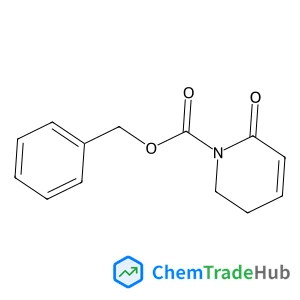
Benzyl 6-oxo-3,6-dihydro-1(2H)-pyridinecarboxylate
CAS Number:
725746-35-0
Molecular Formula:
C13H13NO3
Recommended Suppliers



Disclaimer
This page provides academic journal information for reference and research purposes only. We are not affiliated with any journal publishers and do not handle publication submissions. For publication-related inquiries, please contact the respective journal publishers directly.
If you notice any inaccuracies in the information displayed, please contact us at support@chemtradehub.com. We will promptly review and address your concerns.