












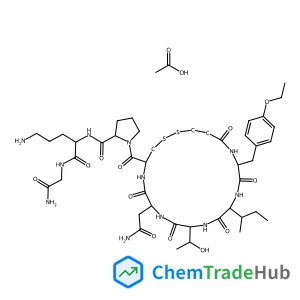
An hermaphroditic [c2]daisy chain
Literature Information
Publication Date
2002-11-12
DOI
10.1039/B206675K
Impact Factor
6.222
Authors
Sheng-Hsien Chiu, Stuart J. Rowan, Stuart J. Cantrill, J. Fraser Stoddart, Andrew J. P. White, David J. Williams
View Original
Abstract
A cyclic dimeric daisy chain compound, which has been assembled from a difunctional [2]rotaxane in a sequence of noncovalent and covalent synthetic steps, the most important of which is a bis-Wittig reaction, has been characterised by X-ray crystallography.
Related Literature
Highly cost-effective and high-strength hydrogels as dye adsorbents from natural polymers: chitosan and cellulose
Hu Tu, Yi Yu, Jiajia Chen, Xiaowen Shi, Hongbing Deng, Yumin Du
2017-03-06
Paper
DOI: 10.1039/C7PY00223H
Nano-structured magneto-responsive membranes from block copolymers and iron oxide nanoparticles
Mona Semsarilar, Rodrigo Fernández-Pacheco, Reyes Mallada, Isabel M. Coelhoso, Carla A. M. Portugal, João G. Crespo, André Deratani, Damien Quemener
2016-11-28
Paper
DOI: 10.1039/C6PY01870J
Inserting –CHCH– into P(VDF-TrFE) by C–F activation mediated with Cu(0) in a controlled atom transfer radical elimination process
Yanan Zhang, Yifei Zhao, Shaobo Tan, Zhicheng Zhang
2017-02-13
Paper
DOI: 10.1039/C6PY02119K
Self-assembled helical columnar superstructures with selective homochirality
Bin Mu, Qian Li, Xiao Li, Jian Chen, Jianglin Fang, Dongzhong Chen
2017-05-02
Paper
DOI: 10.1039/C7PY00471K
Synthesis and crosslinking study of isomeric poly(thioether ether imide)s containing pendant nitrile and terminal phthalonitrile groups
Nafeesa Mushtaq, Guofei Chen, Lala Rukh Sidra, Yang Liu, Xingzhong Fang
2016-11-11
Paper
DOI: 10.1039/C6PY01705C
Ligand-free iron-based electrochemically mediated atom transfer radical polymerization of methyl methacrylate
Jirong Wang, Mengying Tian, Shaoqiao Li, Rui Wang, Feipeng Du, Zhigang Xue
2018-08-01
Paper
DOI: 10.1039/C8PY00933C
(−)-Riboflavin (vitamin B2) and flavin mononucleotide as visible light photo initiators in the thiol–ene polymerisation of PEG-based hydrogels
G. Kwandou, P. T. Spicer
2016-12-20
Communication
DOI: 10.1039/C6PY02034H
You might also like
Compound Q&A
What industries use (1R,3S)-1,3-Cyclopentanediol (CAS: 16326-97-9)?
(1R,3S)-1,3-Cyclopentanediol finds applications in various industries. In the ph...
16326-97-9(1R,3S)-1,3-Cyclopen...
Compound Q&A
What precautions should be taken when handling N'-[4-(Dimethylamino)phenyl]-N,N-dimethyl-1,4-benzenediamine (CAS: 637-31-0)?
When handling N'-[4-(Dimethylamino)phenyl]-N,N-dimethyl-1,4-benzenediamine, it i...
637-31-0N'-[4-(Dimethylamino...
Compound Q&A
Are there alternatives to 5-(2,4-Difluorophenyl)-2-methoxypyrimidine (CAS: 1352318-16-1) in synthesis?
There are several alternatives to 5-(2,4-Difluorophenyl)-2-methoxypyrimidine in ...
1352318-16-15-(2,4-Difluoropheny...
Compound Q&A
What regulatory guidelines apply to 1-(3-Methoxyphenoxy)propan-2-ol (CAS: 382141-68-6)?
1-(3-Methoxyphenoxy)propan-2-ol (CAS: 382141-68-6) must comply with the Globally...
382141-68-61-(3-Methoxyphenoxy)...
Compound Q&A
Is Tetrodotoxin Citrate (CAS: 18660-81-6) safe?
Tetrodotoxin Citrate is extremely dangerous and should be handled with extreme c...
18660-81-6Tetrodotoxin Citrate
Compound Q&A
What are the main uses of 2-Methyl-2-propanyl [(1R,3S)-3-hydroxycyclopentyl]carbamate (CAS: 225641-84-9)?
2-Methyl-2-propanyl [(1R,3S)-3-hydroxycyclopentyl]carbamate (CAS: 225641-84-9) i...
225641-84-92-Methyl-2-propanyl ...
Compound Q&A
How should waste containing 4-(2-Hydroxyhexafluoroisopropyl)Benzoic Acid (CAS: 16261-80-6) be handled?
Waste containing 4-(2-Hydroxyhexafluoroisopropyl)Benzoic Acid (CAS: 16261-80-6) ...
16261-80-64-(2-Hydroxyhexafluo...
Compound Q&A
How is 2-Methyl-2-proanyl {(2S)-1-[(benzyloxy)amino]-3-hydroxy-3-methyl-1-oxo-2-butanyl}carbamate (CAS: 102507-19-7) typically synthesized?
2-Methyl-2-proanyl {(2S)-1-[(benzyloxy)amino]-3-hydroxy-3-methyl-1-oxo-2-butanyl...
102507-19-72-Methyl-2-propanyl ...
Compound Q&A
What is Benzeneethanamine, α-ethyl-, hydrochloride (1:1) (CAS: 20735-15-3)?
Benzeneethanamine, α-ethyl-, hydrochloride (1:1) is an organic compound with the...
20735-15-3Benzeneethanamine, α...
Compound Q&A
Are there alternatives to 3-{(E)-[4-(Dimethylamino)phenyl]diazenyl}benzoic acid (CAS: 20691-84-3) in synthesis?
In the synthesis of compounds similar to 3-{(E)-[4-(Dimethylamino)phenyl]diazeny...
20691-84-33-{(E)-[4-(Dimethyla...
Source Journal
Chemical Communications

CiteScore:
8.6
Self-citation Rate:
4.7%
Articles per Year:
2458
ChemComm publishes urgent research which is of outstanding significance and interest to experts in the field, while also appealing to the journal’s broad chemistry readership. Our communication format is ideally suited to short, urgent studies that are of such importance that they require accelerated publication. Our scope covers all topics in chemistry, and research at the interface of chemistry and other disciplines (such as materials science, nanoscience, physics, engineering and biology) where there is a significant novelty in the chemistry aspects. Major topic areas covered include: Analytical Chemistry Catalysis Chemical Biology and medicinal chemistry Computational Chemistry and Machine Learning Energy and sustainable chemistry Environmental Chemistry Green Chemistry Inorganic Chemistry Materials Chemistry Nanoscience Organic Chemistry Physical Chemistry Polymer Chemistry Supramolecular Chemistry
Recommended Compounds
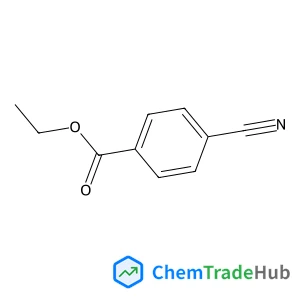
![N,N'-1,2-Ethanediylbis[2-(vinylsulfonyl)acetamide] structure](https://static.chemtradehub.com/structs/667/66710-66-5-b556.webp "N,N'-1,2-Ethanediylbis[2-(vinylsulfonyl)acetamide] structure")
N,N'-1,2-Ethanediylbis[2-(vinylsulfonyl)acetamide]
CAS Number:
66710-66-5
Molecular Formula:
C10H16N2O6S2
Recommended Suppliers





Disclaimer
This page provides academic journal information for reference and research purposes only. We are not affiliated with any journal publishers and do not handle publication submissions. For publication-related inquiries, please contact the respective journal publishers directly.
If you notice any inaccuracies in the information displayed, please contact us at support@chemtradehub.com. We will promptly review and address your concerns.