












Subpicosecond spin-flip induced by the photodissociation dynamics of ClF in an Ar matrix
Literature Information
Publication Date
2002-09-24
DOI
10.1039/B206382D
Impact Factor
3.676
Authors
M. Bargheer, R. B. Gerber, O. Kühn, J. Manz, M. Schröder, N. Schwentner
View Original
Abstract
Ultrafast spin-flip is used to monitor the subpicosecond intersystem crossing dynamics from the 1Π to the 3Π state following photodissociation of ClF isolated in an Ar matrix by means of pump–probe spectroscopy. After photoexcitation of the 1Π state analysis of the populations of triplet states shows that about 50 percent of the spin-flip occurs during the first bond stretch which takes about 250 fs. The early time dynamics of the Cl–F bond in an Ar matrix is investigated theoretically by selecting representative singlet and triplet excited states from a diatomics-in-molecules Hamiltonian. In a one-dimensional model, wave-packet simulations for the first excursion are performed which give a lower limit of about 60 fs for the spin-flip process. The ultrafast spin flip is supported by the caging of the wave packet by the neighboring Ar atoms. Already before collision of the F and Ar atoms the rather large energy gap between the 1Π and 3Π states in the Franck–Condon region is reduced rapidly to near degeneracy. As a consequence the spin–orbit interaction becomes dominant, inducing more than 40% admixture of the triplet character in the 1Π state. Subsequent kinetic energy transfer from ClF to Ar, not yet included in the model, should slow down the Cl and F atoms on their way back toward shorter bond distances, implying stabilization of the wave packet in the 3Π state, where it is monitored by the probe laser pulse.
Recommended Journals
Related Literature
A novel intrinsically microporous ladder polymer and copolymers derived from 1,1′,2,2′-tetrahydroxy-tetraphenylethylene for membrane-based gas separation
Xiaohua Ma, Ingo Pinnau
2015-12-09
Paper
DOI: 10.1039/C5PY01796C
RAFT polymerization of ciprofloxacin prodrug monomers for the controlled intracellular delivery of antibiotics
Debobrato Das, Selvi Srinivasan, Abby M. Kelly, David Y. Chiu, Bridget K. Daugherty, Daniel M. Ratner, Patrick S. Stayton, Anthony J. Convertine
2015-11-25
Paper
DOI: 10.1039/C5PY01704A
Oxidation and temperature dual responsive polymers based on phenylboronic acid and N-isopropylacrylamide motifs
Mei Zhang, Cheng-Cheng Song, Ran Ji, Zeng-Ying Qiao, Chao Yang, Fang-Yi Qiu, De-Hai Liang, Fu-Sheng Du, Zi-Chen Li
2016-01-14
Paper
DOI: 10.1039/C5PY01999K
Blending block copolymer micelles in solution; obstacles of blending
Daniel B. Wright, Joseph P. Patterson, Nathan C. Gianneschi, Christophe Chassenieux, Olivier Colombani, Rachel K. O'Reilly
2016-01-26
Paper
DOI: 10.1039/C5PY02006A
Chemically crosslinked yet reprocessable epoxidized natural rubber via thermo-activated disulfide rearrangements
L. Imbernon, E. K. Oikonomou, S. Norvez, L. Leibler
2015-04-30
Paper
DOI: 10.1039/C5PY00459D
Ring opening metathesis polymerization of cyclopentene using a ruthenium catalyst confined by a branched polymer architecture
Clément Mugemana, Konstantin V. Bukhryakov, Olivier Bertrand, Khanh B. Vu, Jean-François Gohy, Nikos Hadjichristidis, Valentin O. Rodionov
2016-03-22
Communication
DOI: 10.1039/C6PY00389C
One-pot catalyst-free synthesis of down- and upconversion fluorescent oligopyrazolines from diazoacetates and maleic anhydride
Xiangxiang Jia, Yan Li, Jinlong Wu, Cheng Chen, Lijian Liu
2015-04-09
Paper
DOI: 10.1039/C5PY00336A
The effect of ring size on the mechanical relaxation dynamics of polyrotaxane gels
K. Kato, K. Karube, N. Nakamura, K. Ito
2015-01-19
Paper
DOI: 10.1039/C4PY01644K
You might also like
Compound Q&A
What are the main uses of (5-Sulfamoyl-3-pyridinyl)boronic acid (CAS: 951233-61-7)?
(5-Sulfamoyl-3-pyridinyl)boronic acid is primarily used in chemical synthesis, p...
951233-61-7(5-Sulfamoyl-3-pyrid...
Compound Q&A
How is Benzyl 2-methyl-2-(methylsulfonyl)-4-pentenoate (CAS: 1942858-50-5) typically synthesized?
Benzyl 2-methyl-2-(methylsulfonyl)-4-pentenoate is typically synthesized via est...
1942858-50-5Benzyl 2-methyl-2-(m...
Compound Q&A
What precautions should be taken when handling 8-Fluoroquinolin-6-ol (CAS: 209353-22-0)?
When handling 8-Fluoroquinolin-6-ol (CAS: 209353-22-0), it is important to use p...
209353-22-08-Fluoroquinolin-6-o...
Compound Q&A
What are the physical and chemical properties of 1,3-Dibromo-5-(2-methyl-2-propanyl)benzene (CAS: 129316-09-2)?
1,3-Dibromo-5-(2-methyl-2-propanyl)benzene (CAS: 129316-09-2) is a crystalline c...
129316-09-21,3-Dibromo-5-(2-met...
Compound Q&A
What industries use Ethyl 7-chloro-4-oxo-1-(1,3-thiazol-2-yl)-1,4-dihydro-1,8-naphthyridine-3-carboxylate (CAS: 174726-87-5)?
Ethyl 7-chloro-4-oxo-1-(1,3-thiazol-2-yl)-1,4-dihydro-1,8-naphthyridine-3-carbox...
174726-87-5Ethyl 7-chloro-4-oxo...
Compound Q&A
What precautions should be taken when handling Delta-7-Avenasterol (CAS: 23290-26-8)?
When handling Delta-7-Avenasterol (CAS: 23290-26-8), it is important to wear app...
23290-26-8Delta-7-Avenasterol
Compound Q&A
What precautions should be taken when handling N-({(5R)-3-[3-Fluoro-4-(4-morpholinyl)phenyl]-2-oxo-1,3-oxazolidin-5-yl}methyl)acetamide (CAS: 872992-20-6)?
Proper handling involves the use of personal protective equipment such as gloves...
872992-20-6N-({(5R)-3-[3-Fluoro...
Compound Q&A
What precautions should be taken when handling 2-Methyl-2-proanyl 4-[(2-aminophenyl)amino]-1-piperidinecarboxylate (CAS: 79099-00-6)?
When handling 2-Methyl-2-proanyl 4-[(2-aminophenyl)amino]-1-piperidinecarboxylat...
79099-00-62-Methyl-2-propanyl ...
Compound Q&A
What is N-Methyl-4-chlorobenzylamine hydrochloride (CAS: 65542-24-7)?
N-Methyl-4-chlorobenzylamine hydrochloride (CAS: 65542-24-7) is a organic compou...
65542-24-7N-Methyl-4-chloroben...
Compound Q&A
Is [2-(Dodecyloxy)ethoxy]acetic acid (CAS: 27306-90-7) safe?
[2-(Dodecyloxy)ethoxy]acetic acid (CAS: 27306-90-7) is generally considered safe...
27306-90-7[2-(Dodecyloxy)ethox...
Source Journal
Physical Chemistry Chemical Physics

CiteScore:
5.5
Self-citation Rate:
10.3%
Articles per Year:
3036
Physical Chemistry Chemical Physics (PCCP) is an international journal co-owned by 19 physical chemistry and physics societies from around the world. This journal publishes original, cutting-edge research in physical chemistry, chemical physics and biophysical chemistry. To be suitable for publication in PCCP, articles must include significant innovation and/or insight into physical chemistry; this is the most important criterion that reviewers and Editors will judge against when evaluating submissions. The journal has a broad scope and welcomes contributions spanning experiment, theory, computation and data science. Topical coverage includes spectroscopy, dynamics, kinetics, statistical mechanics, thermodynamics, electrochemistry, catalysis, surface science, quantum mechanics, quantum computing and machine learning. Interdisciplinary research areas such as polymers and soft matter, materials, nanoscience, energy, surfaces/interfaces, and biophysical chemistry are welcomed if they demonstrate significant innovation and/or insight into physical chemistry. Joined experimental/theoretical studies are particularly appreciated when complementary and based on up-to-date approaches.
Recommended Compounds
![2-(5-Bromo-1H-pyrrolo[2,3-B]pyridin-3-YL)acetic acid structure](https://static.chemtradehub.com/structs/106/1060795-03-0-0589.webp "2-(5-Bromo-1H-pyrrolo[2,3-B]pyridin-3-YL)acetic acid structure")
2-(5-Bromo-1H-pyrrolo[2,3-B]pyridin-3-YL)acetic acid
CAS Number:
1060795-03-0
Molecular Formula:
C9H7BrN2O2
![2-Azaspiro[4.5]decane-3,8-dione structure](https://static.chemtradehub.com/structs/914/914780-96-4-e94b.webp "2-Azaspiro[4.5]decane-3,8-dione structure")
![4,10-Dihydroxy-3H-pyrano[3,4,5-kl]xanthen-3-one structure](https://static.chemtradehub.com/structs/125/1259330-61-4-de48.webp "4,10-Dihydroxy-3H-pyrano[3,4,5-kl]xanthen-3-one structure")
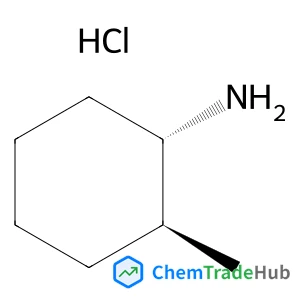
(1R,2R)-2-Methylcyclohexanamine hydrochloride (1:1)
CAS Number:
39558-31-1
Molecular Formula:
C7H16ClN
Recommended Suppliers







Disclaimer
This page provides academic journal information for reference and research purposes only. We are not affiliated with any journal publishers and do not handle publication submissions. For publication-related inquiries, please contact the respective journal publishers directly.
If you notice any inaccuracies in the information displayed, please contact us at support@chemtradehub.com. We will promptly review and address your concerns.