













Quantum-dressed classical mechanics: Theory and application
Literature Information
Publication Date
2002-05-30
DOI
10.1039/B202151J
Impact Factor
3.676
Authors
View Original
Abstract
A new method called “quantum dressed” classical mechanics has been formulated for treating problems within molecular dynamics, i.e. inelastic and reactive collisions, photodissociation, molecule–surface dynamics, non-adiabatic transitions etc. The method is based on an expansion of the wavefunction in a time-dependent basis set, the Gauss–Hermite basis set. From here it is possible to construct a discrete variable representation in which the grid points are defined by the Hermite part of the Gauss–Hermite basis set. The formulation introduces a set of grid points which follow the classical trajectory in space. With enough grid points the method approaches the exact quantum mechanical formulation. With just a single grid point in each dimension, we recover classical mechanics. Hence the new method adds a quantum option to ordinary Newtonian mechanics.
Related Literature
Nucleation and growth of lead oxide particles in liquid lead-bismuth eutectic
Kris Rosseel, Jun Lim, Alessandro Marino, Geraldine Heynderickx, Alexander Aerts
2017-10-05
Paper
DOI: 10.1039/C7CP05068B
Tuning of resonance energy transfer from 4′,6-diamidino-2-phenylindole to an ultrasmall silver nanocluster across the lipid bilayer
Jamuna K. Vaishnav, Tushar Kanti Mukherjee
2017-09-14
Paper
DOI: 10.1039/C7CP05225A
Neutron diffraction and gravimetric study of the iron nitriding reaction under ammonia decomposition conditions
Thomas J. Wood
2017-10-04
Paper
DOI: 10.1039/C7CP04494A
Divalent ions are potential permeating blockers of the non-selective NaK ion channel: combined QM and MD based investigations
Mahesh Sundararajan
2017-09-21
Paper
DOI: 10.1039/C7CP05586B
Probing photoinduced electron-transfer in graphene–dye hybrid materials for DSSC
Paola Guarracino, Teresa Gatti, Nicolò Canever, Mustapha Abdu-Aguye, Maria Antonietta Loi, Enzo Menna, Lorenzo Franco
2017-09-20
Paper
DOI: 10.1039/C7CP04308B
The adsorption of Cu on the CeO2(110) surface‡
Matthew R. Farrow, Nikolaos Dimitratos, David J. Willock
2017-08-23
Paper
DOI: 10.1039/C7CP04144F
Temperature dependence of the hydrogen bond network in trimethylamine N-oxide and guanidine hydrochloride–water solutions
Yury Forov, Mirko Elbers, Christoph J. Sahle, Christopher Weis, Naruki Tsuji, Masayoshi Itou, Yoshiharu Sakurai, Agnieszka Poulain, Christian Sternemann
2017-10-03
Paper
DOI: 10.1039/C7CP04958G
Binding of protofibrillar Aβ trimers to lipid bilayer surface enhances Aβ structural stability and causes membrane thinning
Xuewei Dong, Yunxiang Sun, Guanghong Wei, Buyong Ma
2017-09-19
Paper
DOI: 10.1039/C7CP05959K
Solid-state dynamics and single-crystal to single-crystal structural transformations in octakis(3-chloropropyl)octasilsesquioxane and octavinyloctasilsesquioxane
A. Kowalewska, M. Nowacka, M. Włodarska, B. Zgardzińska, R. Zaleski, M. Oszajca, J. Krajenta, S. Kaźmierski
2017-09-18
Paper
DOI: 10.1039/C7CP05233B
You might also like
Compound Q&A
What industries use (1R,3S)-1,3-Cyclopentanediol (CAS: 16326-97-9)?
(1R,3S)-1,3-Cyclopentanediol finds applications in various industries. In the ph...
16326-97-9(1R,3S)-1,3-Cyclopen...
Compound Q&A
What precautions should be taken when handling N'-[4-(Dimethylamino)phenyl]-N,N-dimethyl-1,4-benzenediamine (CAS: 637-31-0)?
When handling N'-[4-(Dimethylamino)phenyl]-N,N-dimethyl-1,4-benzenediamine, it i...
637-31-0N'-[4-(Dimethylamino...
Compound Q&A
Are there alternatives to 5-(2,4-Difluorophenyl)-2-methoxypyrimidine (CAS: 1352318-16-1) in synthesis?
There are several alternatives to 5-(2,4-Difluorophenyl)-2-methoxypyrimidine in ...
1352318-16-15-(2,4-Difluoropheny...
Compound Q&A
What regulatory guidelines apply to 1-(3-Methoxyphenoxy)propan-2-ol (CAS: 382141-68-6)?
1-(3-Methoxyphenoxy)propan-2-ol (CAS: 382141-68-6) must comply with the Globally...
382141-68-61-(3-Methoxyphenoxy)...
Compound Q&A
Is Tetrodotoxin Citrate (CAS: 18660-81-6) safe?
Tetrodotoxin Citrate is extremely dangerous and should be handled with extreme c...
18660-81-6Tetrodotoxin Citrate
Compound Q&A
What are the main uses of 2-Methyl-2-propanyl [(1R,3S)-3-hydroxycyclopentyl]carbamate (CAS: 225641-84-9)?
2-Methyl-2-propanyl [(1R,3S)-3-hydroxycyclopentyl]carbamate (CAS: 225641-84-9) i...
225641-84-92-Methyl-2-propanyl ...
Compound Q&A
How should waste containing 4-(2-Hydroxyhexafluoroisopropyl)Benzoic Acid (CAS: 16261-80-6) be handled?
Waste containing 4-(2-Hydroxyhexafluoroisopropyl)Benzoic Acid (CAS: 16261-80-6) ...
16261-80-64-(2-Hydroxyhexafluo...
Compound Q&A
How is 2-Methyl-2-proanyl {(2S)-1-[(benzyloxy)amino]-3-hydroxy-3-methyl-1-oxo-2-butanyl}carbamate (CAS: 102507-19-7) typically synthesized?
2-Methyl-2-proanyl {(2S)-1-[(benzyloxy)amino]-3-hydroxy-3-methyl-1-oxo-2-butanyl...
102507-19-72-Methyl-2-propanyl ...
Compound Q&A
What is Benzeneethanamine, α-ethyl-, hydrochloride (1:1) (CAS: 20735-15-3)?
Benzeneethanamine, α-ethyl-, hydrochloride (1:1) is an organic compound with the...
20735-15-3Benzeneethanamine, α...
Compound Q&A
Are there alternatives to 3-{(E)-[4-(Dimethylamino)phenyl]diazenyl}benzoic acid (CAS: 20691-84-3) in synthesis?
In the synthesis of compounds similar to 3-{(E)-[4-(Dimethylamino)phenyl]diazeny...
20691-84-33-{(E)-[4-(Dimethyla...
Source Journal
Physical Chemistry Chemical Physics

CiteScore:
5.5
Self-citation Rate:
10.3%
Articles per Year:
3036
Physical Chemistry Chemical Physics (PCCP) is an international journal co-owned by 19 physical chemistry and physics societies from around the world. This journal publishes original, cutting-edge research in physical chemistry, chemical physics and biophysical chemistry. To be suitable for publication in PCCP, articles must include significant innovation and/or insight into physical chemistry; this is the most important criterion that reviewers and Editors will judge against when evaluating submissions. The journal has a broad scope and welcomes contributions spanning experiment, theory, computation and data science. Topical coverage includes spectroscopy, dynamics, kinetics, statistical mechanics, thermodynamics, electrochemistry, catalysis, surface science, quantum mechanics, quantum computing and machine learning. Interdisciplinary research areas such as polymers and soft matter, materials, nanoscience, energy, surfaces/interfaces, and biophysical chemistry are welcomed if they demonstrate significant innovation and/or insight into physical chemistry. Joined experimental/theoretical studies are particularly appreciated when complementary and based on up-to-date approaches.
Recommended Compounds

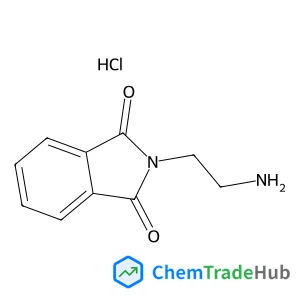
2-(2-Aminoethyl)-1H-isoindole-1,3(2H)-dione hydrochloride (1:1)
CAS Number:
30250-67-0
Molecular Formula:
C10H11ClN2O2

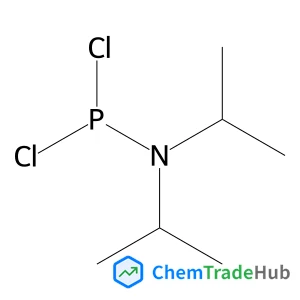
Recommended Suppliers




Disclaimer
This page provides academic journal information for reference and research purposes only. We are not affiliated with any journal publishers and do not handle publication submissions. For publication-related inquiries, please contact the respective journal publishers directly.
If you notice any inaccuracies in the information displayed, please contact us at support@chemtradehub.com. We will promptly review and address your concerns.